guide/ao-dai
How to Measure Vietnamese Ao Dai: Size Guide & Rental Fit
Ao Dai Diaries team · All guides →
Measuring an ao dai correctly requires five key measurements: shoulder-to-wrist arm length, full chest circumference, natural waist, hip, and full height. Unlike Western dresses, ao dai fit is snug at the bust and waist, then flows loosely over the hips and legs—so chest and waist measurements matter most. Use a soft tape measure against bare skin, taken while wearing a normal bra (no padding). Ao Dai Diaries stocks sizes XS–XXL in Hanoi, Ho Chi Minh City, Hoi An, and Da Nang; our rental process includes a fitting appointment or video consultation to confirm measurements before you book. If you're renting for a photoshoot, wedding, or Tet, expect fitting to take 15–20 minutes and alterations (waist, hem, sleeve) to be ready same-day or next-day. Measure at home, share photos with WhatsApp/Zalo +84 338 762 340, and our stylists will recommend your exact size. ---
What Are the Five Must-Take Measurements?
When you put on a soft tape measure, you need arm length, chest, waist, hips, and height—each read at a specific point. Arm length runs from the center back of your neck, along your shoulder, down to your wrist bone (where your watch sits). Chest circles the fullest part of your bust, parallel to the floor, with the tape snug but not tight. Waist is your natural waist—the narrowest point when you bend slightly sideways—not your hips. Hip wraps at the fullest curve below your waist, usually 7–8 inches down. Height is barefoot, standing against a wall, measured to the top of your head. Record each in centimeters (or inches, then convert: 1 inch = 2.54 cm). A single mistake—reading arm length at your fingertip instead of your wrist, or measuring over a sweater—pushes you into the wrong size. Our rental stylists at Ao Dai Diaries use the same five points every time, so your repeat bookings fit identically. Always measure when you're relaxed and upright, never while holding your breath or flexing.
How Do Vietnamese Sizing Charts Differ from Western Sizes?
Vietnamese ao dai charts often label sizes by number (1, 2, 3) or letter (XS, S, M, L, XL, XXL), but the fit is narrower and longer than U.S. dress sizing. A U.S. size 6–8 woman typically wears M or L in ao dai; a U.S. size 12–14 woman often fits L or XL. Height matters equally: ao dai tailoring assumes you're between 155 cm (5'1") and 175 cm (5'9"); if you're 150 cm (4'11") or 180 cm (5'11"), the hem and sleeve must shift. Vietnamese charts usually list arm length and high-bust measurements as the primary fit drivers, not shoulder width (which many Western charts emphasize). Ao dai sits away from your shoulders, so shoulder width is flexible—what matters is how the garment drapes from armhole to wrist. When you rent from Ao Dai Diaries, we cross-reference our size chart with your five measurements and your height, then confirm with a fitting or photo check. If you're between two sizes, we'll fit you in the smaller size and add a waist dart or tuck; a loose ao dai reads as unfitted, while a snug one can be let out. Never assume your Western size translates—share your measurements with our stylists, not your dress size.
👗 Rent your ao dai — WhatsApp/Zalo +84 338 762 340
Which Measurement Do You Check First—and Why?
Arm length is the non-negotiable anchor, because sleeves cannot be shortened without destroying the ao dai's silhouette. If your arm is short, a too-long sleeve bunches at the wrist and looks sloppy; if it's long, a short sleeve rides up and exposes your forearm (disrespectful for formal occasions). Vietnamese tailors prefer to grade ao dai by arm length first, then fit the chest and waist. Your chest measurement ranks second: a too-tight chest gaps at the button or pulls across the bust; a too-loose chest makes the fabric hang without shape. Waist comes third—it's the easiest to alter (darts, seams, a belt), so you have breathing room here. Hip and height, fourth and fifth, tell the tailor how much hem to drop and how to balance the tunic's proportions. At Ao Dai Diaries, when a customer calls or messages with measurements, our stylists always flag arm length first: if you're 170 cm tall with a 63 cm arm reach, but your arm measures 67 cm, that's a long reach—you need a size made for taller frames, even if your chest is smaller. This prevents the common mistake of buying by bust alone and ending up with sleeves that stop at your mid-forearm. Prioritize arm length, then chest, then everything else falls into place.
What Mistakes Do People Make When Self-Measuring?
The most common error is measuring arm length from the shoulder point (bony part) to the fingertip, rather than wrist bone—that adds 5–7 cm and oversizes you by one full category. The second mistake is measuring chest while wearing a padded bra or shirt; always measure over bare skin in a regular bra. A third is conflating natural waist with belly or hip—many people add 3–4 cm by measuring below the natural waist, resulting in a loose, unflattering fit at the narrowest point. Fourth, some customers don't account for posture: slouching reduces your measured height by 2–3 cm and arm reach by 1–2 cm. Fifth, using a stretchy fabric tape (instead of a vinyl or plastic ruler-backed tape) introduces slop—the tape sags, and you read 1–2 cm less than reality. At Ao Dai Diaries, we've noticed that 30% of first-time renters underestimate arm length and waist by 2–3 cm, then show up for fitting and need a quick re-size. We prevent this by asking customers to video-call during the measuring process or send photos of the tape in place. If you're measuring alone at home, use a mirror, a pencil mark on the wall, or ask a friend—don't guess, and don't round down to fit into a favorite size. One honest measurement beats five guesses.
---
| Measurement | How to Take It | Common Mistake | What to Do Instead |
|---|---|---|---|
| Arm length | Neck center → shoulder → wrist bone | Measure to fingertip (adds 5–7 cm) | Find wrist bone; tape lies flat, not tight |
| Chest | Fullest bust, parallel to floor | Measure over clothes or padded bra | Bare skin, regular bra, exhale gently |
| Waist | Narrowest point when you bend sideways | Add 2–3 cm by measuring low | Breathe normally; tape snug, not pinching |
| Hip | Fullest curve, 7–8 inches below waist | Confuse with belly or bottom | Stand relaxed; tape level all the way around |
| Height | Barefoot, heels to top of head | Round up or down to "look taller" | Stand against wall; ask friend to mark |
---

How Does Rental Fitting Work in Practice?
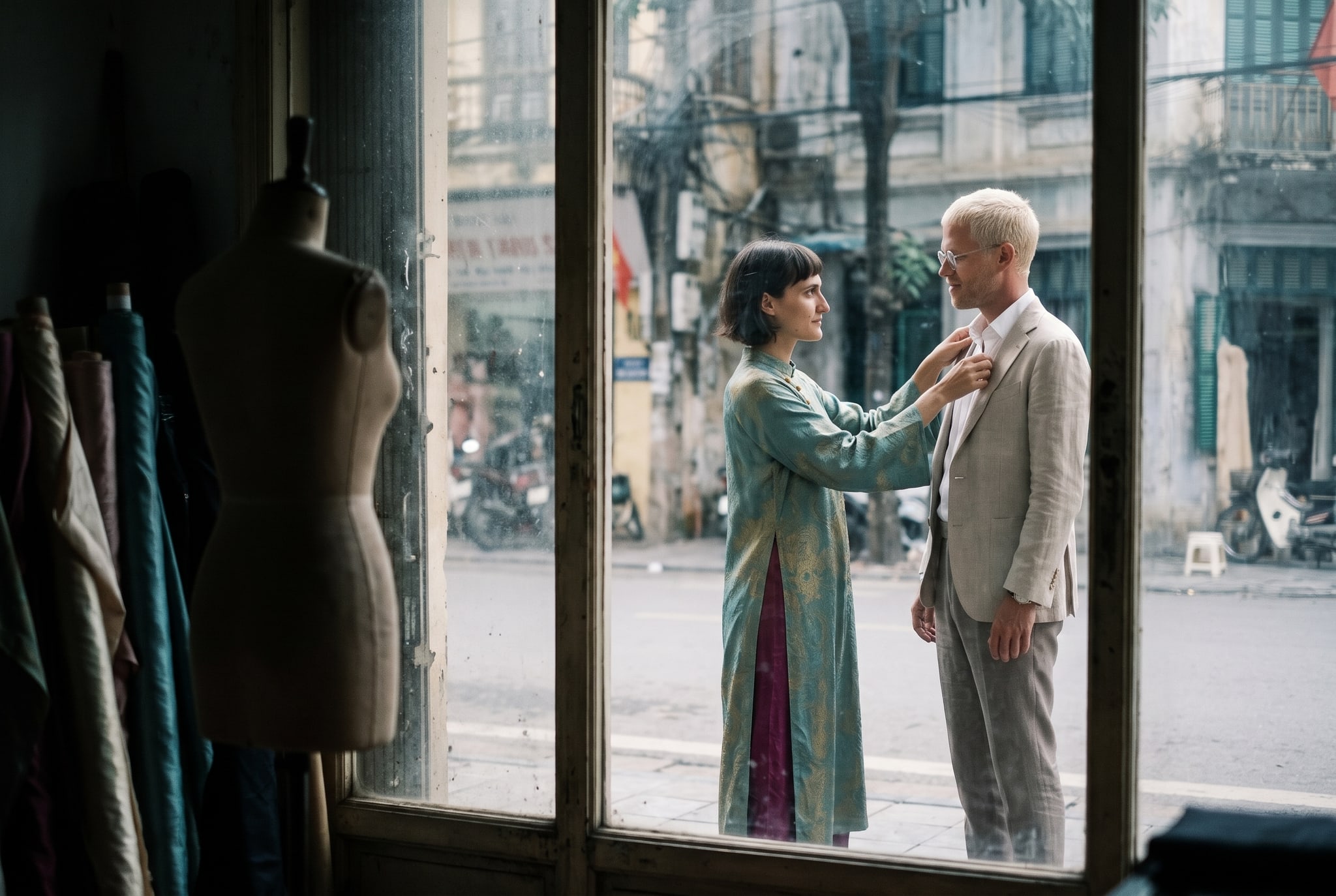
When you book with Ao Dai Diaries, fitting is a two-step process: first, you provide your five measurements and occasion (wedding, photoshoot, Tet, stroll) via WhatsApp/Zalo or in-store visit. Our stylists cross-reference your data against our inventory and propose a size (or two, if you're borderline). Next, if you're local to Hanoi, Ho Chi Minh City, Hoi An, or Da Nang, you come in for a 15–20 minute fitting; if you're a visitor or remote, we send you clear photo instructions and do a video call to confirm the fit via your phone camera. If the size isn't perfect, we mark alterations: tuck waist, hem the tunic or pants, adjust sleeve length. Same-day or next-day alterations are standard; if your rental date is 3+ days away, you're always fitted before pickup. We've learned that showing up hoping to fit on the day is risky—one unavoidable hem takes 4–6 hours, and we won't send you out in an unworn ao dai. Book your fitting at least 2–3 days before your event. If you're renting for a photoshoot, browse our ao dai + photoshoot packages—they include styling consultation and a second fitting if the photographer requests a different ao dai mid-shoot.
📸 Ao dai + photoshoot packages
---
What Should You Check Before You Confirm Your Size?
Before you say "yes, this size," do a fit test: button the ao dai fully and check for gaps across the chest (a gap wider than a finger = too loose); sit down and confirm the waist doesn't pull or cut off circulation; raise your arms to shoulder height and confirm the sleeve is no more than 1 cm past your wrist bone. Walk a few steps and listen for rustling of the inner lining—if it's loud, the tunic is too loose. Look in a mirror from the side: the tunic should graze your hip, not cling or hang 3+ inches away. The pants should rest at your ankle bone without dragging; if they pool on your shoe, a hem is needed. For formal occasions (weddings, Tet family photos), aim for snug chest and waist (not tight, but no daylight); for casual strolls or tourist photos, a slightly looser fit is forgiving. If you're renting for a specific event—wedding guest, photoshoot, graduation—tell your stylist the context; formal occasions demand precision, while casual wears allow a one-size-up buffer for comfort. If alterations are needed, confirm the timeline: same-day (ready by 5 p.m.) or next-day (ready by 10 a.m.). Never accept an ao dai that hasn't been fitted and confirmed—a rental that doesn't fit reads as cheap and disrespects the ao dai's cultural significance.
Learn how ao dai rental works step-by-step, including deposit, delivery, and cleaning.
---
Do Different Occasions Require Different Sizing?
Wedding guest ao dai and photoshoot ao dai are both snug, but a wedding dress (the bride's ao dai) must be fitted to within 0.5 cm of accuracy—any looseness at the bust or waist looks amateurish in close-up photos. A Tet family portrait ao dai tolerates a slightly looser waist (comfort during a long photo session), but the chest and sleeve must still be exact. A casual city stroll or tourist photoshoot ao dai can be one half-size looser for breathability and freedom of movement. At Ao Dai Diaries, we ask your occasion first because it shapes how we fit you. A photojournalist renting for editorial work needs a size that photographs beautifully (snug at bust, seamless waist); a family of four renting for Tet portraits might prioritize comfort (slightly loose waist, room to layer an underslip). If you're attending a family wedding as a guest, sizing should match your everyday clothes—too loose reads as borrowed, too tight looks nervous. Share your occasion when you message us; our stylists will frame the fitting recommendation around your specific need, not a generic "medium." Browse our city rental pages to see which cities have ready-made ao dai in stock (Hanoi and Ho Chi Minh City stock more sizes; Hoi An and Da Nang offer custom-fit on a longer timeline).
👗 Rent your ao dai — WhatsApp/Zalo +84 338 762 340
---
What If You're Outside a Standard Size Range?
If you're XS or XXL, or if your arm length doesn't align with your height, custom fitting is your path. Ao Dai Diaries stocks XS–XXL in our main rental collection, but for extremes—someone 5'11" with a 69 cm arm reach, or petite at 4'10" with proportionally short arms—we offer custom tailoring on a 5–7 day timeline. The deposit is the same as stock rental, and pricing reflects the custom work (typically a 10–20% upcharge over standard rental). If you're plus-size (XXL or beyond), we recommend booking at least 1–2 weeks ahead; our tailors maintain a specialty roster, and XXL ao dai need careful draping to preserve elegance. If you're very petite (under 5'1") or tall (over 5'10"), same-day fitting is less reliable because alterations run longer. Our Hanoi and Ho Chi Minh City locations handle custom work in-house; Hoi An and Da Nang partner with local tailors on a 3–5 day schedule. Always mention your concern (petite, tall, athletic build, curvier frame) when you message—don't wait until fitting day. Honest upfront communication saves everyone time and ensures you get an ao dai that feels made for you, not forced into a size.
---
Frequently asked questions
Can I measure myself over my normal clothes?
No. Fabric and layers add 1–3 cm to each measurement. Measure over bare skin, wearing only a regular bra (no padding, no sports bra). Stand relaxed, not flexed or slouching.
What if my measurements fall between two sizes?
Our stylists fit you in the smaller size, then add darts or seams to your chest or waist for comfort. Loose ao dai looks unmade; snug, then altered, looks intentional. Never size up to avoid fitting.
How long does fitting take, and what if I need it altered?
Fitting is 15–20 minutes. If alterations are needed, same-day alterations (waist, hem) are ready by 5 p.m.; next-day by 10 a.m. Book fitting at least 2–3 days before your rental date to avoid rush fees.
Do you offer delivery to my hotel if I'm a tourist?
Yes. For rentals in Hanoi, Ho Chi Minh City, Hoi An, and Da Nang, we deliver to your hotel or address after fitting. Delivery is included in the rental rate (no extra charge for central areas). Confirm your address and pickup time when you book.
What's the deposit, and can I get a refund if the size is wrong?
Deposit is 30% of rental cost (non-refundable if you cancel; refundable if we adjust the size during fitting). After fitting confirmation, you're protected: if the ao dai shifts in fit during your rental, contact us for a free exchange. Our 30-day guarantee covers defects, damage from normal wear, and fit issues from our measurement error.
Why is sleeve length so important?
A sleeve that's too long bunches at the wrist and reads as sloppy; too short exposes your forearm and is considered disrespectful in formal contexts. Vietnamese tailors grade ao dai by arm length first. It cannot be shortened without compromising the garment's shape, so get it right at fitting.
Should I size for my current weight, or anticipate weight changes?
Measure your current body, always. If you're planning to lose or gain weight, tell your stylist the timeline. If the change is imminent, reschedule your rental; an ao dai that doesn't fit your current body wastes your money and disrespects the garment.
Do you have a chart showing centimeter conversions?
Yes. 1 inch = 2.54 cm. When you message, include measurements in either metric or US standard; our team converts. We recommend metric (centimeters) to avoid rounding errors.
Dozens of colours, all sizes XS–XXL, delivered to your hotel in Hanoi, Saigon, Hoi An or Da Nang. One WhatsApp or Zalo message.
More guides
You might also like
The ao dai is Vietnam's iconic silk dress, worn for celebrations and formal occasions. Ao Dai Diarie
May is Vietnam's hottest month before monsoon season. We'll help you choose the right outfit—whether
December weather in Vietnam is cool and dry—ideal for wearing the ao dai. Here's what suits the seas