guide/ao-dai
How to Pose for Ao Dai Photos: A Stylist's Guide
Ao Dai Diaries team · 2026-10-03 · All guides →
The ao dai's floor-length silhouette and high collar require deliberate posture and hand placement to avoid looking rigid or disrespectful. Key principles: keep shoulders relaxed and slightly back, let your arms hang naturally or rest one hand on the opposite hip or waist, angle your body 45° to the camera to elongate your frame, and tilt your chin slightly forward. Walk slowly so the dress splits flow with intention—avoid sitting unless posed on the ground or steps. Avoid slouching, crossed arms, or turning your back fully to the camera. At Ao Dai Diaries, we guide you through fitting (XS–XXL available), styling (headdresses, accessories) and pairing photoshoots with rental across Hanoi, Ho Chi Minh City, Hoi An, and Da Nang. Most rentals include same-day or next-day delivery to your hotel, and a fitting consultation by phone before your shoot ensures your confidence on the day.
The ao dai's elegant drape and floor-length silhouette and high collar require deliberate posture and hand placement to avoid looking rigid or disrespectful. Key principles: keep shoulders relaxed and slightly back, let your arms hang naturally or rest one hand on the opposite hip or waist, angle your body 45° to the camera to elongate your frame, and tilt your chin slightly forward. Walk slowly so the dress splits flow with intention—avoid slouching, crossed arms, or turning your back fully to the camera. At Ao Dai Diaries, we guide you through fitting (XS–XXL available), styling (headdresses, accessories) and pairing photoshoots with rental across Hanoi, Ho Chi Minh City, Hoi An, and Da Nang. Most rentals include same-day or next-day delivery to your hotel, and a fitting consultation by phone before your shoot ensures your confidence on the day.
---
Why Does Posture Matter More in an Ao Dai Than Casual Clothes?
The ao dai's narrow bodice and high neckline expose your entire silhouette—slouching compresses your frame and flattens the dress's drape. Standing tall with your shoulders rolled back naturally elongates your neck, opens your chest, and lets the fabric cascade as intended. A slouch reads as disrespectful in Vietnamese culture; the dress demands grace. Keep your spine neutral, not exaggerated; imagine a string pulling from the crown of your head. This single shift transforms every photo without requiring gymnastics or fake poise.
---
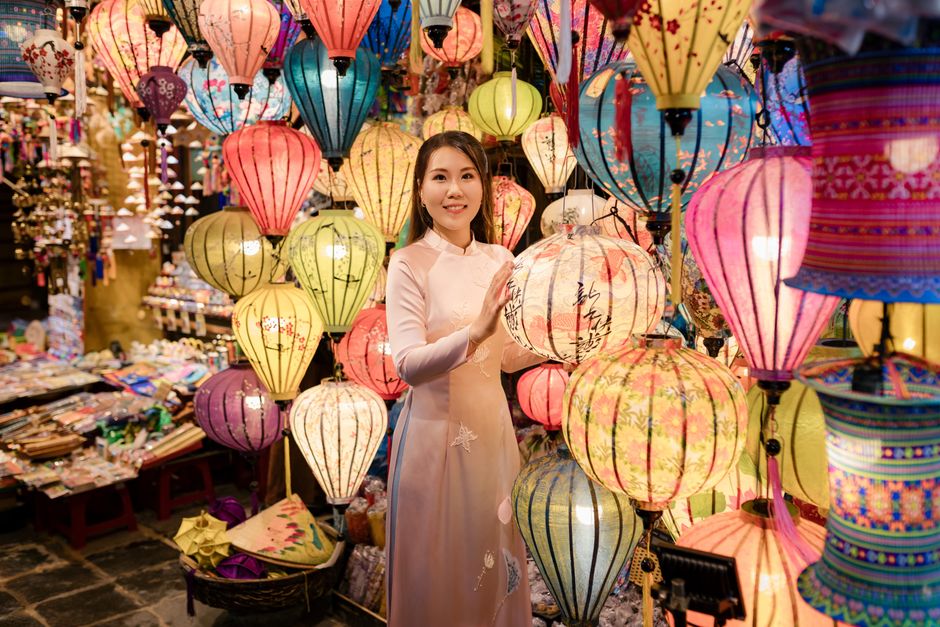
What Hand and Arm Positions Look Most Natural?
Awkward hands ruin otherwise beautiful shots. Let your arms hang at your sides with a slight bend in the elbows—never stiff or pinned. Rest your fingertips on your hip or gently hold the áo dài's side seam (the dress has two vertical slits; this is intentional and elegant). If one arm hangs and one rests, you create movement and balance. Avoid crossing your arms, which reads as defensive, or placing both hands on your hips, which feels posed and harsh. For sitting shots, fold one leg beneath you or cross them at the ankles, resting your hands on your lap or one on the opposite knee. These small choices communicate ease and respect for the garment.
---
How Should You Angle Your Body Toward the Camera?
A 45-degree angle (quarter-turn from the camera) is universally flattering and works especially well with the ao dài because it:
| Angle | Effect | Why It Works |
|---|---|---|
| Straight-on (0°) | Flattens figure; hides dress slits | Can look confrontational in ao dài |
| Quarter-turn (45°) | Elongates body; shows dress depth | Reveals front seam & slit elegantly |
| Profile (90°) | Emphasizes neckline & back drape | Risk of losing facial expression |
| Severe angle (>90°) | Disrespectful, hides face | Avoid unless artistic brief is clear |
Face the camera directly only for close-ups or formal portraits. For full-body or mid-length shots, turn your body and angle your face slightly back toward the lens—this creates dimension and shows the dress's construction. Walk slowly diagonally across the frame rather than straight toward or away; the slits will move with grace and the fabric will billow subtly.
---
Should You Sit, Stand, or Move During Your Photoshoot?
Movement photographs best. Walk at a slow, deliberate pace—think tai chi, not runway. The ao dài's split sides are designed to move; a still photo can look flat. Include a mix:
- Walking shots: Move perpendicular to the camera; let fabric flow naturally.
- Pause-and-turn moments: Stop, settle into posture, then let the photographer capture 3–5 frames. This gives fabric time to resettle.
- Sitting: Kneel on both knees or fold one leg beneath you on steps, curbs, or open ground (not on furniture unless it's part of the shot).
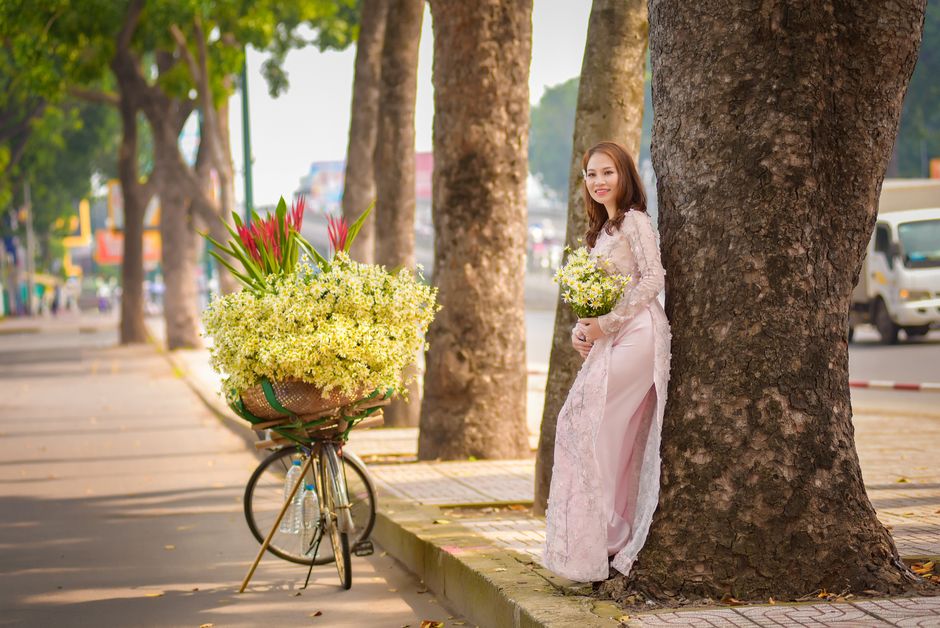
- Standing with props: Lean gently against a wall or tree; rest one foot slightly forward.
Avoid sitting in a chair or on benches unless the chair is decorative (e.g., vintage furniture in a studio). The narrow bottom of the ao dài doesn't sit comfortably in standard seating, and slouching occurs naturally—it photographs poorly. If your photoshoot includes a cafe or historical site, discuss poses with your photographer beforehand.
---
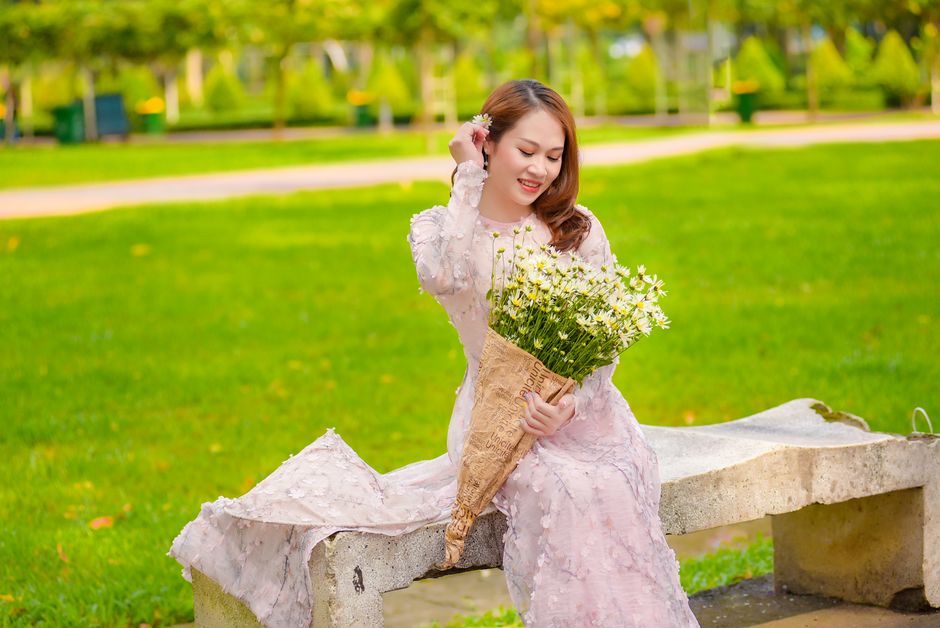
What Mistakes Should You Avoid to Keep the Dress Respectful?
The ao dài is sacred cultural wear, not a costume. Honor it by avoiding:
- Hunching or slouching: Looks disrespectful and unflattering.
- Sitting with legs wide open: The fabric gaps awkwardly; cross or fold instead.
- Pulling or bunching fabric: Let it hang naturally; this is why you're renting fitted sizes.
- Standing with feet too wide: Narrows your stance; keep feet hip-width or closer.
- Rapid spinning or exaggerated movements: Reads as playful disrespect; move slowly and deliberately.
- Removing the dress or loosening the áo in public: The dress is a complete, formal garment.
- Smoking, eating, or drinking heavily while wearing it: Staining is disrespectful and costly; avoid.
- Posing in sexualized ways: The ao dài is elegant, not provocative; keep poses graceful.
---
How Do Accessories and Headdresses Affect Your Posing?
A conical hat (non la) or decorative headdress changes posture; you'll naturally hold your head higher and slower to prevent shifting. Embrace this—it's the desired effect. Flowers in your hair add softness; tilt your chin slightly downward to show them. Jewelry (earrings, bracelets, rings) should be minimal and delicate; heavy pieces distract. A decorative clutch or fan can give your hands a task, reducing awkwardness. At Ao Dai Diaries, we style you during your fitting—if you're renting in Hanoi, Saigon, Hoi An, or Da Nang, ask us to recommend accessories that match your pose style and location.
---
What to Check Before Your Photoshoot
- Fit: Confirm your size at fitting (we cover XS–XXL; sleeves should sit mid-shoulder, no gaps at the collarbone).
- Fabric condition: The dress should be clean and wrinkle-free upon delivery. Report damage same-day.
- Photographer brief: Share poses and style with your photographer 24 hours before; directional clarity saves reshoot time.
- Venue: Confirm stairs, outdoor lighting, and whether sitting is needed; plan poses accordingly.
- Deposit: Standard rental deposit is held until return in good condition; accidental stains or minor wear are normal and covered under our 30-day smile guarantee.
- Hair and makeup: Aim for styles that frame your face and don't pull your neckline; the ao dài's high collar requires care.
---
👗 Rent your ao dai — WhatsApp/Zalo +84 338 762 340
---
Real Scenarios: How to Pose in Different Settings
Tet or Family Gathering: Stand with one foot slightly forward, hands relaxed at sides or one resting on hip. Smile genuinely. These are intimate moments; stillness reads as reverence, not stiffness.
Wedding or Formal Event: Full posture, minimal movement. Face the camera or photograph slightly at an angle (45°); reserve sitting for table moments. Avoid drawing attention away from the bride.
Solo Photoshoot in Hoi An or Da Nang: Walk slowly along the river or colonial streets. Pause every 10–15 steps. Let the photographer capture your motion and stillness. Wear comfortable shoes for walking (heels risk catching fabric in the slit).
Graduation or Milestone: Stand tall with both feet planted, hands relaxed. Make eye contact with the camera for main shots; turn slightly for fashion-style variety.
Each context has different energy. Discuss tone with your photographer and stylist to ensure poses match the occasion.
---
📸 Ao dai + photoshoot packages
---
The ao dài photographs beautifully when you move with intention and respect. Your body—posture, angles, stillness, and movement—frames the dress, not the reverse. Start with a rental fitting to confirm your size and style, then book a photoshoot that matches your moment, whether you're in Hanoi, Ho Chi Minh City, Hoi An, or Da Nang. Our team supports you from booking through return, ensuring your ao dài experience feels confident and culturally grounded.
Ready to book? Reach out on WhatsApp or Zalo—we'll match you with the perfect dress and photographer.
Frequently asked questions
Can I wear heels with an ao dài?
Flat shoes or low heels (under 2 inches) work best for walking. Tall heels risk catching on the dress's slit or the ground when you step. Confirm with your photographer if heels match your venue and pose plan.
Is it disrespectful to pose casually or playfully in an ao dài?
Gentle, graceful movement is encouraged. Avoid exaggerated silly faces, heavy slouching, or poses that mock Vietnamese culture. Respectful joy—genuine smiling, slow walking, thoughtful stillness—honors the dress and your moment.
How do I prevent wrinkles or fabric bunching during a long photoshoot?
Wear the dress correctly at fitting (no gaps, proper length). Move slowly and reset posture every few shots. The rental includes a fresh pressing; minor wrinkles during wear are normal and removable. Avoid sitting on rough surfaces (sand, unpaved ground) for extended periods.
What's the best time of day to photograph in an ao dài?
Early morning (6–8 a.m.) or late afternoon (4–6 p.m.) offers soft, flattering light. The white or pastel áo dài reflects midday sun harshly. Discuss lighting with your photographer when you book your photoshoot package.
How should I hold the dress slit when walking or sitting?
Don't hold it. The slit is intentional design. Let it move naturally with your steps. If you're very modest or cold, wear seamless shorts or leggings underneath (advised at fitting). The dress hangs and moves beautifully when you don't restrain it.
Can I rent an ao dài same-day if I'm arriving in Ho Chi Minh City unexpectedly?
Yes. Contact us on WhatsApp or Zalo +84 338 762 340 with your arrival details and size. We offer same-day rental and hotel delivery in Ho Chi Minh City, Hanoi, Hoi An, and Da Nang, pending availability. Book at least 2 hours before your photoshoot.
Frequently asked questions
Can I wear heels with an ao dài?
Flat shoes or low heels (under 2 inches) work best for walking. Tall heels risk catching on the dress's slit or the ground when you step. Confirm with your photographer if heels match your venue and pose plan.
Is it disrespectful to pose casually or playfully in an ao dài?
Gentle, graceful movement is encouraged. Avoid exaggerated silly faces, heavy slouching, or poses that mock Vietnamese culture. Respectful joy—genuine smiling, slow walking, thoughtful stillness—honors the dress and your moment.
How do I prevent wrinkles or fabric bunching during a long photoshoot?
Wear the dress correctly at fitting (no gaps, proper length). Move slowly and reset posture every few shots. The rental includes a fresh pressing; minor wrinkles during wear are normal and removable. Avoid sitting on rough surfaces (sand, unpaved ground) for extended periods.
What's the best time of day to photograph in an ao dài?
Early morning (6–8 a.m.) or late afternoon (4–6 p.m.) offers soft, flattering light. The white or pastel áo dài reflects midday sun harshly. Discuss lighting with your photographer when you book your [photoshoot package](/packages).
How should I hold the dress slit when walking or sitting?
Don't hold it. The slit is intentional design. Let it move naturally with your steps. If you're very modest or cold, wear seamless shorts or leggings underneath (advised at fitting). The dress hangs and moves beautifully when you don't restrain it.
Can I rent an ao dài same-day if I'm arriving in Ho Chi Minh City unexpectedly?
Yes. [Contact us on WhatsApp or Zalo +84 338 762 340](/ho-chi-minh-city) with your arrival details and size. We offer same-day rental and hotel delivery in Ho Chi Minh City, Hanoi, Hoi An, and Da Nang, pending availability. Book at least 2 hours before your photoshoot.
Dozens of colours, all sizes XS–XXL, delivered to your hotel in Hanoi, Saigon, Hoi An or Da Nang. One WhatsApp or Zalo message.
More guides
You might also like
Saigon offers stunning backdrops for ao dai photography. We'll show you the best real spots locals a
Renting an ao dai in Huế with makeup is the fastest way to experience Vietnam's imperial city in tra
Huế's royal heritage makes it the perfect backdrop for ao dai—Vietnam's ceremonial gown. We'll walk