guide/ao-dai
Lace Ao Dai: Choose the Right Style for Your Occasion
Ao Dai Diaries team · All guides →
A lace ao dai features intricate fabric overlays on silk or cotton, adding texture and sophistication to Vietnam's iconic dress. Unlike solid silk versions, lace designs create a romantic, semi-formal look suited to weddings, anniversaries, and photoshoots. Ao Dai Diaries rents lace ao dais in sizes XS–XXL across Hanoi, Saigon, Hoi An, and Da Nang, with same-day fitting available. Rentals include tailored sleeves, tunic (áo), and pants (quần), plus styling advice. Deposits are required; rental periods run 1–7 days. Lace versions typically cost more than plain silk due to fabric complexity—expect premium pricing. Always confirm sizing at fitting; lace can show wrinkles if packed tightly, so request gentle handling during delivery to your hotel.
A lace ao dai blends Vietnam's centuries-old dress code with delicate embroidery or lace overlays—adding texture, depth, and formality. Whether you're a foreign tourist capturing authentic photoshoots or a local honoring a milestone, lace elevates the traditional silhouette without breaking custom. Ao Dai Diaries rents lace ao dais fitted to your body across Hanoi, Saigon, Hoi An, and Da Nang; this guide walks you through choosing the right style, understanding sizing, and avoiding common rental mistakes.
What makes lace ao dais different from plain silk versions?
Lace overlays sit atop the tunic's front panels, sleeves, or back yoke—adding visual interest without changing the dress's structure. Plain silk ao dais are sleeker, lighter, and better for casual wear or strolls through Old Town; lace versions signal formality, romance, and celebration. Lace designs can include geometric patterns, floral embroidery, or transparent panels that reveal silk underneath. The trade-off: lace wrinkles more easily during transport and requires careful folding to prevent creasing. If you're renting for a wedding or photoshoot where pristine appearance matters, lace is ideal; for casual city wear, solid silk suits better. Lace also photographs better—the texture catches light and adds dimension in photos.
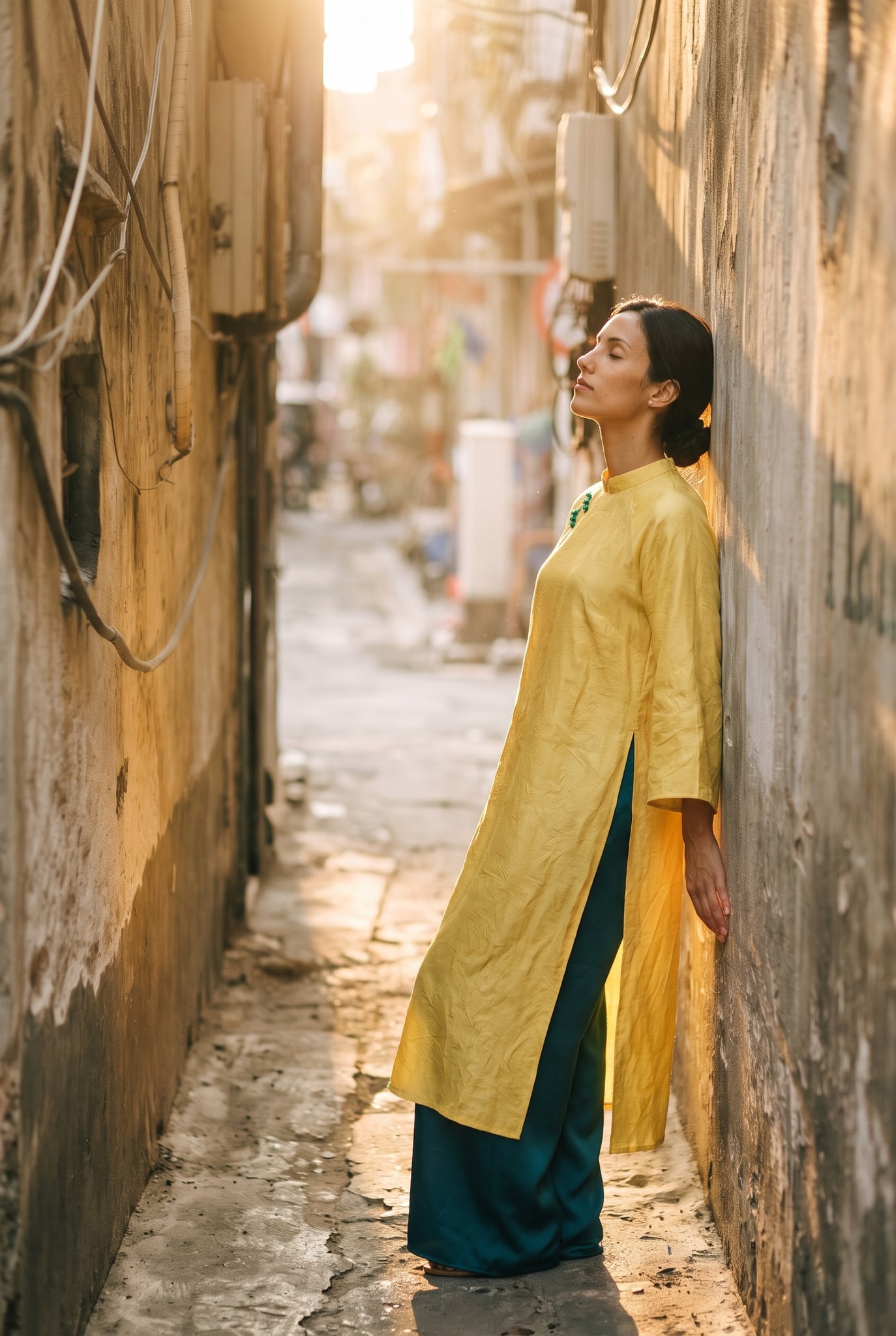
Which lace ao dai style suits your occasion best?
Wedding guest or bridal party: Choose a lace ao dai with metallic thread (gold or silver) or pearl-studded overlays—these signal celebration without competing with the bride. Photoshoot in a historic city: Sheer lace panels over burgundy, emerald, or soft pink silk create dreamy, Instagram-worthy contrast. Tet or family gathering: Embroidered lace in red or gold pays homage to tradition while feeling fresh and upscale. Anniversary or formal dinner: Minimalist lace—thin geometric lines or scattered beading—keeps elegance understated. Graduation: Pastel lace (blush, lavender, or pale blue) feels youthful; darker lace can look too formal. Each occasion rewards a different lace density; heavier lace signals high ceremony, while delicate lace suits informal celebrations.
| Occasion | Lace Style | Color Picks | Why It Works |
|---|---|---|---|
| Wedding (guest) | Metallic thread + beads | Gold, silver, cream | Dressy without upstaging bride |
| Photoshoot | Sheer floral panels | Jewel tones, pastels | Photographs beautifully; adds depth |
| Tet celebration | Embroidered geometric | Red, gold, white | Festive + respectful of tradition |
| Anniversary dinner | Minimalist scattered beads | Burgundy, navy, blush | Elegant + understated |
| Graduation | Delicate tonal lace | Pastels, neutrals | Youthful + celebratory |
| City stroll | Lace edges only | Any color | Lighter, more practical |
How do you get the right fit when renting lace?
Lace ao dais require precise fitting because loose fabric shows wrinkles, and tight fabric bunches the lace. At fitting (available same-day in all four cities), the stylist measures your shoulders, chest, waist, hips, and inseam—then alters the tunic and pants to match. Lace across the chest can pull if the tunic is undersized; undersized sleeves bunch the lace at your wrist. Always try the ao dai standing and raising your arms to confirm the lace sits flat across your shoulders and back. The pants should graze your ankles without dragging (lace hems snag easily). If you're renting 2+ days before your event, request a second fitting 24 hours prior—lace can shift during storage. Ao Dai Diaries staff in Hanoi, Saigon, Hoi An, and Da Nang will not release your rental until the fit is confirmed; this protects you from last-minute surprises.
👗 Rent your ao dai — WhatsApp/Zalo +84 338 762 340
What should you check before ordering lace ao dai rental?
Before booking, confirm these details to avoid disappointment:
- Lace condition: Ask the stylist if the lace has any tears, loose beads, or stains—request photos if ordering by WhatsApp. Lace snags during washing; some shops repair these, others charge extra.
- Lace type: Overlay (sits on top of silk) vs. insertion (woven into fabric). Overlay lace is easier to clean if stained; insertion lace is more durable but harder to repair.
- Sleeve length: Lace sleeves can be elbow, three-quarter, or full. Confirm which comes with your rental—sleeves affect how the lace drapes over your arms.
- Tunic sheer: Some lace panels are sheer; others have silk backing. Ask if you need an undershirt; sheer lace over bare skin can feel drafty at air-conditioned venues.
- Undergarment fit: Lace can be semi-transparent. The stylist will recommend fitted undergarments (áo lót) that don't show through—these are usually included or available for a small fee.
- Delivery and pickup: Confirm timing, hotel delivery, and whether the ao dai arrives in a protective garment bag (essential for lace to prevent wrinkles during transit).
- Stain policy: Ask what happens if you spill on the lace—some shops include minor stain removal; others charge cleaning fees. Read the rental agreement carefully.
Lace ao dais rent at a premium compared to plain silk versions because the fabric is delicate, labor-intensive to maintain, and harder to clean. Deposits (typically held until return) cover potential damage. The rental period—1, 2, 3, 7 days—affects total cost; day-of delivery adds a small fee. Ask Ao Dai Diaries to quote your specific needs via WhatsApp/Zalo +84 338 762 340; transparent pricing upfront prevents disputes.
Why rent instead of buy a lace ao dai?
Buying a custom lace ao dai from a tailor in Hoi An or Saigon costs significantly more than short-term rental and requires 2–4 weeks for tailoring. Rental lets you wear designer-quality, fitted lace for one event without storage or long-term upkeep. Lace requires hand-washing in cold water, lay-flat drying, and careful storage—mistakes fade the silk or damage the lace. Rental companies handle this; you return the ao dai, and professionals care for it. If you're visiting Vietnam for 1–3 weeks and attending multiple events, renting 2–3 different lace ao dais costs less than buying one and far less than shipping custom pieces home. Rental also means your ao dai is professionally fitted, not guessed; this confidence matters on your big day. For locals celebrating annually (Tet, weddings), renting avoids closet clutter and ensures you always have pristine, on-trend styles.
📸 Ao dai + photoshoot packages
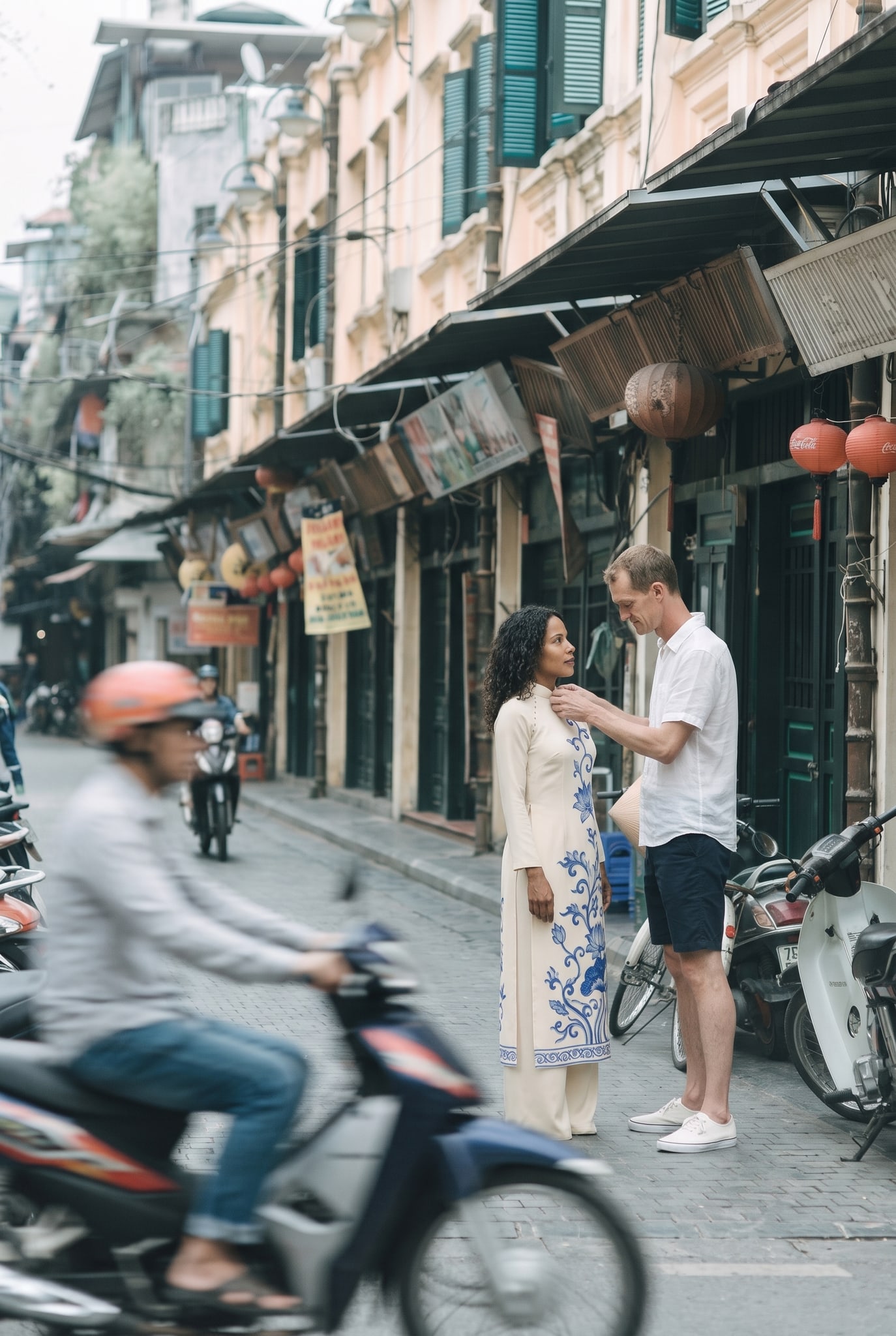
How to care for your lace ao dai during the rental period.
Treat the ao dai as you would a rented wedding gown: minimal movement, avoid liquids, and keep it away from rough surfaces. Hang it in a cool, dry place—not in direct sunlight, which can fade the silk. If you get a small stain (sauce, coffee), dab gently with a cool, damp cloth and let it air-dry; do NOT scrub or use soap. Never sit for long periods in lace ao dais without a protective layer underneath; body oils and sweat can stain quickly. Avoid perfume and deodorant spray near the lace; these can bleach or discolor delicate fabric. At the end of your rental period, return the ao dai on time; late returns typically incur extra fees. If the ao dai has visible damage (torn lace, missing beads, large stains), inform Ao Dai Diaries immediately—some damage is normal wear; others require damage fees. Honesty about stains and tears during return protects your deposit.
Where to rent lace ao dai across Vietnam.
Hanoi: Rent ao dai in Hanoi—Old Town and French Quarter locations offer same-day fitting for weddings, anniversaries, and photo tours. Busy during Tet (January–February); book 2–3 weeks in advance.
Saigon (Ho Chi Minh City): Rent ao dai in Saigon—District 1 and Binh Thanh have multiple rental shops with extensive lace collections. Photoshoot packages include styling and delivery to historic landmarks (Reunification Palace, Ben Thanh Market).
Hoi An: Rent ao dai in Hoi An—Ancient Town is ao dai rental's epicenter. Lace rentals here often bundle with photoshoots among lantern-lit streets; book at least 1 day ahead for fitting.
Da Nang: Rent ao dai in Da Nang—Smaller selection than Hanoi or Saigon, but quality is high. Ideal for coastal photoshoots; ask about beachside delivery.
Contact Ao Dai Diaries across all cities via WhatsApp/Zalo +84 338 762 340 for availability and instant quotes.
Lace ao dai rental pricing: what to expect.
Lace ao dais rent at a higher rate than solid silk versions due to fabric care and durability risk. While exact pricing varies by city, season, and lace complexity, budget accordingly: premium lace designs cost more than entry-level overlays. Deposits (held until return) ensure accountability; most shops refund deposits fully if the ao dai is returned clean and on time. Additional costs may include delivery to your hotel, same-day rush fitting, and professional cleaning (if you damage the ao dai during rental). Off-season rentals (March–August) may offer discounts; peak season (September–February, especially Tet) carries premium rates. Ask Ao Dai Diaries to break down costs: rental fee, deposit, delivery, insurance (if available), and any add-ons (styling, hair, makeup). Transparency prevents surprises and helps you budget for your entire event.
👗 Rent your ao dai — WhatsApp/Zalo +84 338 762 340
Decision framework: choosing lace vs. silk ao dai.
| Factor | Lace Ao Dai | Plain Silk Ao Dai |
|---|---|---|
| Best for | Formal events, photoshoots, weddings, anniversaries | Casual strolls, everyday wear, Tet relaxed mood |
| Rent cost | Higher premium tier | Budget-friendly, entry-level |
| Photographic impact | High—texture, dimension, elegance | Medium—clean lines, understated |
| Care during wear | Careful handling, avoid sitting long | More forgiving; easier to move in |
| Fitting precision | Critical (wrinkles show) | Flexible (forgives loose fit) |
| Storage risk | Wrinkles, snags, beads lose | Minimal; natural fabric resilient |
| Ideal season | Autumn–spring (cooler, less sweat) | Summer (lightweight, breathable) |
| Rental duration | 1–3 days (intense events) | 1–7 days (flexible use) |
Choose lace if your event is high-stakes and photo-heavy; choose silk if comfort and practicality matter more.
For further reading on ao dai traditions, sizing, and rental logistics, see our complete ao dai rental guide.

Frequently asked questions
Can I wear undergarments under a lace ao dai?
Yes, and you should. Ask your stylist to recommend fitted, skin-tone undergarments (áo lót) that don't show through sheer lace panels. Most rental shops include these or sell them cheaply; this is a smart investment to protect the ao dai and your confidence.
What if the lace ao dai gets stained during my rental?
Dab immediately with a cool, damp cloth—do not scrub. Inform Ao Dai Diaries at return; minor stains are often forgiven, but major stains may incur a cleaning fee (deducted from your deposit). Honesty prevents disputes.
How long does lace ao dai fitting take?
Same-day fitting in Hanoi, Saigon, Hoi An, and Da Nang usually takes 30–60 minutes. The stylist measures, pins, and stitches alterations on-site. For rush orders (same-day events), arrive early to allow time for sewing.
Is lace ao dai appropriate for casual city walks?
Technically yes, but lace signals formality. For casual strolls, a solid silk ao dai is more practical—lighter, less wrinkle-prone, and better for warm weather. Reserve lace for occasions where elegance matters more than comfort.
Can I request a specific lace pattern or color?
Yes. Contact Ao Dai Diaries via WhatsApp/Zalo +84 338 762 340 with photos of your preferred style. Availability depends on inventory and season; they'll quote you within 24 hours and may offer alternatives if your choice is unavailable.
What's the difference between overlay lace and insertion lace?
Overlay lace sits sewn on top of silk (easier to clean, repair-friendly). Insertion lace is woven into the fabric itself (more durable, harder to fix if torn). Ask your stylist which type your rental includes; this affects care and damage policies.
Dozens of colours, all sizes XS–XXL, delivered to your hotel in Hanoi, Saigon, Hoi An or Da Nang. One WhatsApp or Zalo message.
More guides
You might also like
The ao dai is Vietnam's iconic silk dress, worn for celebrations and formal occasions. Ao Dai Diarie
May is Vietnam's hottest month before monsoon season. We'll help you choose the right outfit—whether
December weather in Vietnam is cool and dry—ideal for wearing the ao dai. Here's what suits the seas