guide/ao-dai
Traditional Vietnamese Male Ao Dai: Rent vs. Buy for 2026
Ao Dai Diaries team · All guides →
A traditional Vietnamese male ao dai is the nation's formal dress: a graceful, floor-length tunic with a buttoned front, worn over straight-leg trousers. Unlike the form-fitting women's version, men's ao dai drape from the shoulders with modest slit panels at the hips, creating a tall, dignified silhouette. For over a century, it has marked Tet celebrations, weddings, graduations, and official ceremonies. In 2026, rental has become the practical choice for travelers and locals alike—no storage, instant access to tailored fits, and no risk of damage to a piece you'll wear once.
👗 Rent your ao dai — WhatsApp/Zalo +84 338 762 340
What sizes and fits work for male ao dai?
Men's ao dai comes in sizes XS to XXL through Ao Dai Diaries rental. Proper fit means the tunic falls to mid-shin (not knee, not ankle); sleeves touch your wrist bone; the shoulder seam sits flush on your shoulder point. A poorly fitted ao dai—too short, too loose, or sleeves pooling at your hands—photographs badly and feels uncomfortable. Most foreign men need a fitting appointment to check torso length and arm proportions. The same sizing does not fit every body; a tall man might wear an M in length but L in chest. Rental fitters measure you in person—no guesswork. Before booking, note your height, chest, and natural waist; send these via WhatsApp to +84 338 762 340, and a fitter will confirm whether same-day or pre-arrival fitting is best.
Conclusion: Correct fit is non-negotiable; always reserve time for a professional fitting.
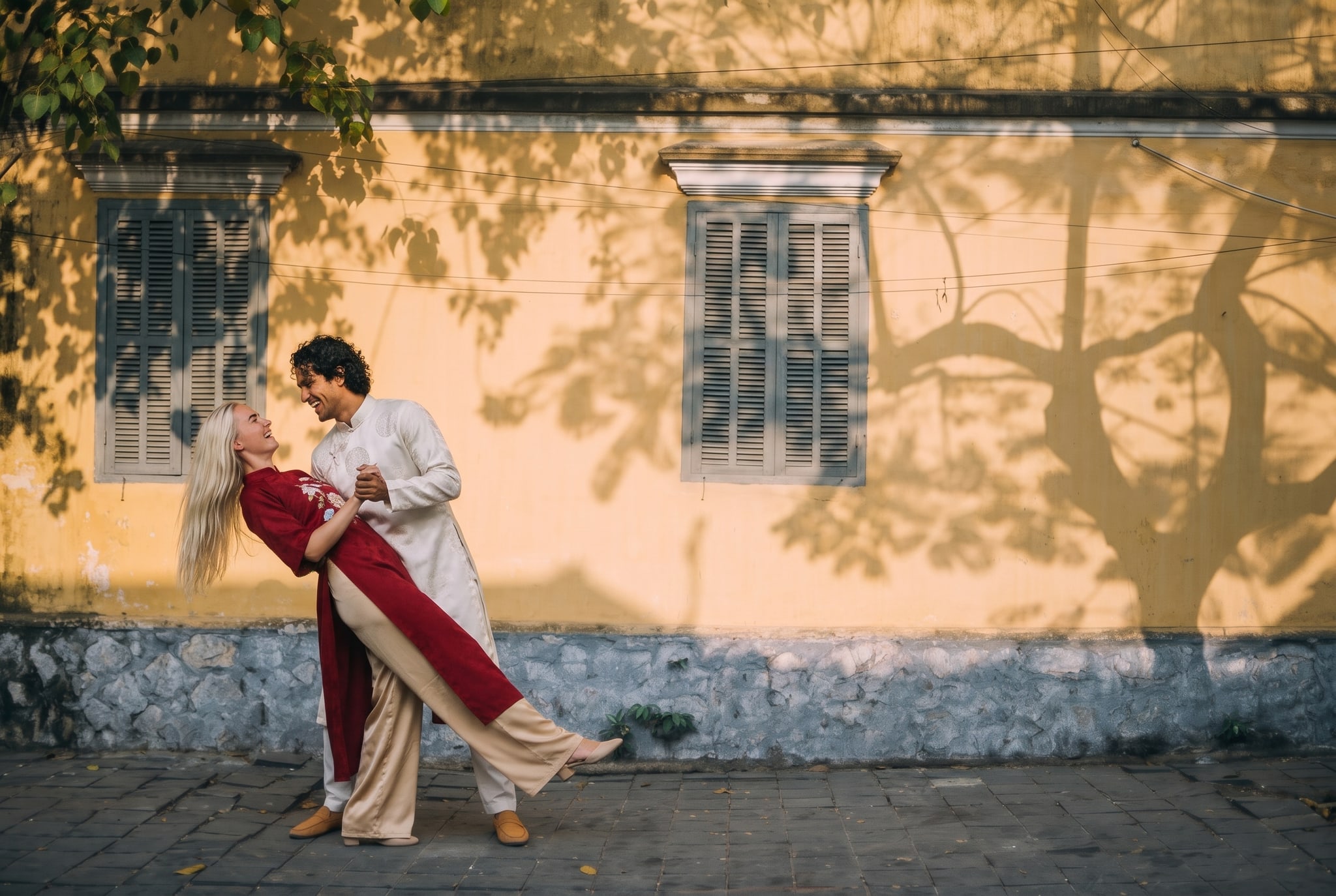
How much does renting a male ao dai cost across Vietnam's cities?
Rental pricing varies by city, fabric, and embellishment level across Hanoi, Saigon, Hoi An, and Da Nang. Basic rental (plain silk or cotton, no beading) costs less; embroidered or brocade options run higher. Rental by city shows local pricing and available stock. Hanoi and Saigon, as major tourism hubs, offer the widest selection and competitive rates. Hoi An, the historical town, emphasizes artisanal tailoring—you'll find detailed hand-embroidery but typically longer fittings. Da Nang balances choice and value, with same-day service available year-round. There is no single "standard" price; instead, compare by outfit type (plain vs. embroidered), event (Tet, wedding, photoshoot), and delivery (pickup vs. hotel drop-off). Request a quote on WhatsApp with your event date and preferred style.
Conclusion: Price depends on city, fabric, and occasion; always ask upfront.
Rental vs. buying: which makes sense for a male ao dai?
| Decision | Best for | Cost basis | Commitment | Wear frequency |
|---|---|---|---|---|
| Rent | Tourists, one-time events, trial | Lower upfront; no hidden costs | 2–5 days typical | Once every 2–3 years |
| Buy (ready-made) | Locals, annual Tet, weddings | Higher; materials + tailoring | Permanent ownership | 2+ times yearly |
| Buy (custom tailored) | Regular wear, perfect fit heirlooms | Highest; multiple fittings | Investment piece | 3+ times yearly, decades |
Rental makes sense if you're a tourist, attending one wedding, or trying the ao dai for the first time. You avoid storage, shipping costs, and the risk of stains on silk. Buying ready-made (off-the-rack tunic + pants) suits locals who wear it for annual Tet or multiple family events; you'll recoup rental costs after 3–4 uses. Custom tailoring is for those who wear ao dai regularly and want a heirloom piece tailored to exact body measurements. Tourists should rent; locals with annual events should buy ready-made; professionals and cultural ambassadors should invest in custom tailoring. Use this framework: if you'll wear it fewer than 3 times in five years, rent.
Conclusion: Rent once; buy if you'll wear it 3+ times over five years.
What styling and etiquette rules matter for wearing a male ao dai?
The male ao dai demands respect; it is not a costume. Wear it with a calm posture, composed expression, and mindfulness of its cultural weight. Never treat it as a novelty or joke. Traditionally, the ao dai pairs with formal shoes (leather dress shoes or black loafers, not sneakers) and a formal hat is optional but elegant (a simple black fedora or formal cap). Undershirt: wear a plain white or neutral vest or t-shirt beneath the tunic to prevent transparency and add comfort. Hair should be neat; facial hair is acceptable if well-groomed. Accessories are minimal—a simple watch, ring, or pendant; avoid loud jewelry. Photography: the ao dai photographs best outdoors in natural light, in traditional settings (pagodas, rivers, tea gardens), or at formal venues (weddings, temples). Avoid casual backgrounds (malls, Western fast-food restaurants) as they undercut the dignity of the garment. When sitting for photos, cross your legs gently or sit upright; do not slouch or sprawl. If attending a temple or religious event, check the host's dress code; some sacred spaces request additional modesty (covered forearms, closed shoes). Return the rental clean and on time; damage (stains, rips, lost buttons) incurs fees. Treat the ao dai as you would a borrowed heirloom.
Conclusion: Respect the ao dai's cultural meaning; never wear it carelessly or disrespectfully.
Where and how to rent a male ao dai: step-by-step checklist
Before you book:
- [ ] Know your event date and type (wedding, Tet, photoshoot, city walk).
- [ ] Measure yourself: height, natural waist, chest, inseam; or send a photo to the fitter.
- [ ] Confirm rental duration needed (same-day, overnight, 3-day).
- [ ] Check city availability: Hanoi, Saigon, Hoi An, Da Nang.
- [ ] Reserve via WhatsApp +84 338 762 340 or email; state your size, color preference, event.
At fitting:
- [ ] Arrive on time; fitter will pin and adjust tunic length and sleeve cuff.
- [ ] Try walking, sitting, bowing; movement should feel natural and unrestricted.
- [ ] Request hair/makeup advice for the event; some fitters offer styling tips.
- [ ] Ask about included undergarments and shoe recommendations.
- [ ] Confirm return logistics (dropoff location, time, condition check).
Day of event:
- [ ] Dress carefully; have a family member or friend check the back seams and buttons.
- [ ] Avoid eating oily foods or applying makeup near the tunic collar.
- [ ] If outdoors, be aware of wind; the tunic's front flaps can shift—adjust between photos.
- [ ] Use a garment bag for transport if walking or driving.
Upon return:
- [ ] Inspect for stains or damage before returning to the shop.
- [ ] Hand over to the fitter; they will document condition and process your deposit refund.
Conclusion: Preparation, timely fitting, and careful return preserve the rental and ensure a smooth experience.
📸 Ao dai + photoshoot packages | 📍 See rental by city
---
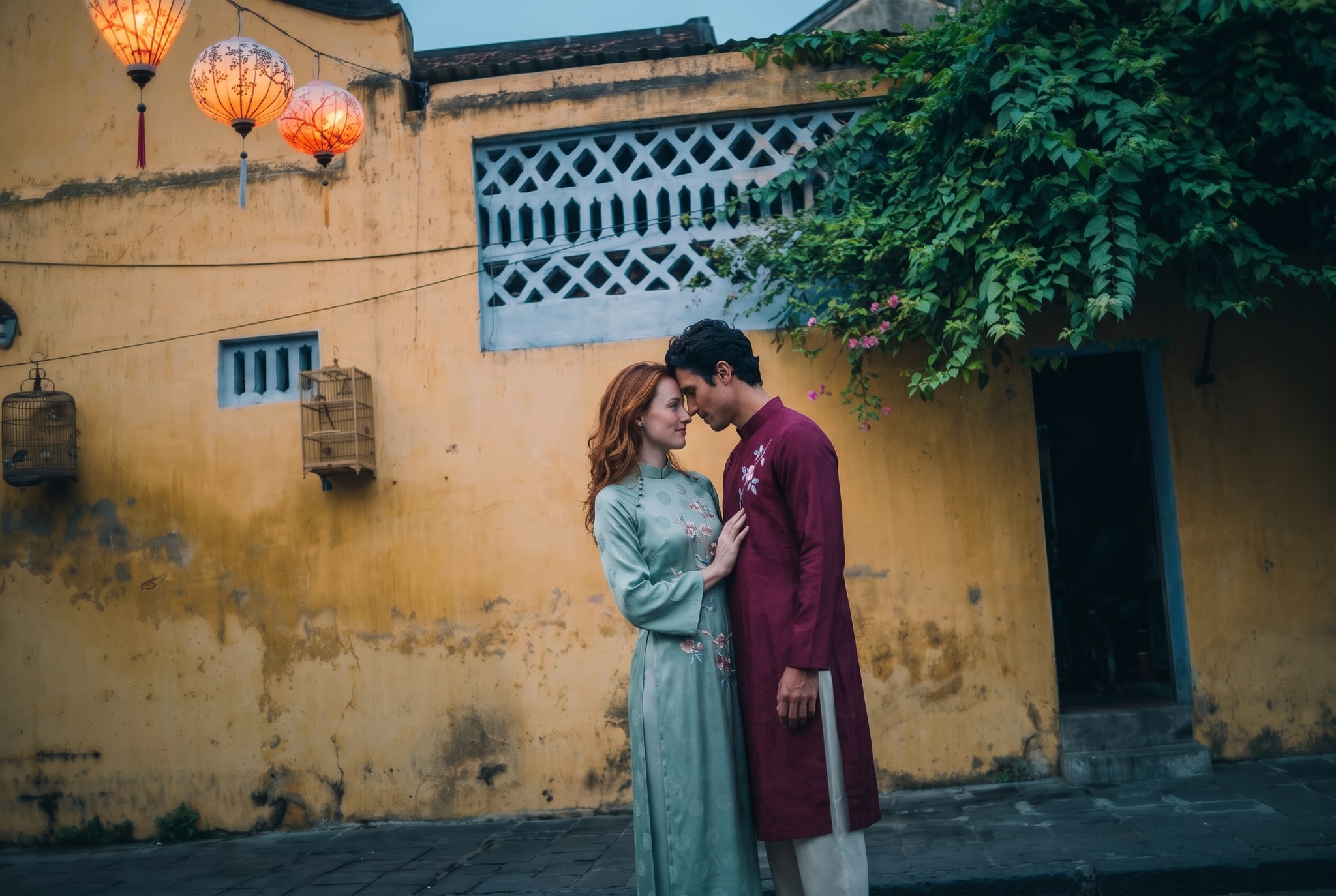
Comparing male ao dai by color, fabric, and occasion
| Color | Best for | Fabric | Occasion |
|---|---|---|---|
| White | Weddings (groom or guest), formal day events | Silk, linen blend | Daytime ceremonies |
| Navy / Dark blue | Tet, government events, formal dinners | Silk, cotton jacquard | Versatile, any season |
| Black | Formal evening, funerals, Tet evening wear | Silk brocade, velvet | Night events, mourning |
| Burgundy / Maroon | Weddings (guest), Tet, engagement | Silk embroidery, damask | Celebrations |
| Gold / champagne | Weddings (groom), Tet gala, photography | Silk with metallic thread | Festive, luxury wear |
Plain colors suit formal events and city walks; embroidered or brocaded fabric (traditional damask or metallic thread work) elevates weddings and Tet celebrations. White and navy are versatile across seasons; burgundy and gold are occasion-specific. Silk wrinkles less than cotton and drapes more elegantly, but costs more and requires careful ironing post-rental. Cotton is practical for warm weather and easier to launder but shows creases quickly. Choose by event tone: white for daylight formality, dark colors for evening, metallics for celebration. See the full ao dai guide for traditional color meanings in Vietnamese culture.
---
What common mistakes to avoid when renting a male ao dai
Mistake 1: Ordering without a fitting. Remote sizing (height + chest only) often misses the critical tunic length. A too-short ao dai (ending at the knee instead of mid-shin) photographs poorly and looks disrespectful. Always arrange an in-person or video-guided fitting.
Mistake 2: Renting last-minute. Popular sizes in peak Tet or wedding season book out days ahead. Reserve at least one week in advance; two weeks is safer.
Mistake 3: Ignoring care instructions. Silk stains easily; a coffee splash or makeup transfer costs a damage fee. Avoid eating oily food and keep distance from crowds when wearing a light-colored tunic.
Mistake 4: Pairing with casual shoes or modern accessories. A formal ao dai with sneakers and a smartwatch looks incoherent. Commit to the aesthetic: leather shoes, minimal jewelry, neat hair.
Mistake 5: Returning late or in poor condition without warning. Most rental shops charge late fees (per hour or per day). Document the tunic's condition before returning; if damage is visible, notify the fitter immediately rather than hoping it goes unnoticed.
Mistake 6: Choosing embellishment over fit. A heavily embroidered ao dai looks stunning in photos but may be heavy, hot, or restrictive during a long event. Prioritize comfort and fit; embroidery is a bonus, not a substitute for proper tailoring.
Conclusion: Fit first, book early, treat the garment with care.
👗 Rent your ao dai — WhatsApp/Zalo +84 338 762 340
---
Traditional vs. modern interpretations of the male ao dai
The traditional male ao dai—the formal national dress—features a plain or subtly embroidered tunic, floor-length, with straight-leg trousers and a high neck. It is worn at state functions, national holidays, and formal ceremonies. The modern rental interpretation (2026) includes variations: shorter tunic lengths for comfort (to the knee instead of mid-shin), lighter cotton blends for tropical heat, and subtle embroidery or brocade for visual interest. Some rental shops offer contemporary cuts—slightly tapered trousers, fitted shoulders—that honor tradition while appealing to younger, fashion-forward renters. Neither is wrong; context matters. A wedding guest should wear traditional length and fabric. A photoshoot or city walk can embrace a modern cut. Government or ceremonial events demand strict traditional dress. Ao Dai Diaries offers both; when booking, specify whether you want formal traditional or contemporary stylized. Ask your fitter for guidance based on your event and body type.
Conclusion: Traditional = formal and respectful; modern = comfortable and photogenic.
---
How rental actually works: from booking to return
Step 1: Contact & consultation (WhatsApp +84 338 762 340, 2–4 hours). Send your measurements, event date, and preferred color/style. A fitter replies with availability, pricing, and next steps.
Step 2: Fitting appointment (in-person, 30–45 minutes). Visit the rental shop (or arrange a hotel visit) for professional measurements. The fitter tries different sizes, pins the tunic length, checks sleeve fit, and discusses styling. You confirm the rental duration and a return date/time.
Step 3: Deposit & reservation (same-day). Pay a deposit (typically refundable; amount depends on rental cost and tunic quality). The shop reserves your specific tunic and dates.
Step 4: Pickup or delivery. If same-day rental, take the ao dai after 2–3 hours (time needed for final pressing and undergarment attachment). If multi-day, pickup is usually the day before your event; delivery to your hotel is available (confirm extra cost with your fitter). The tunic arrives pressed, with buttons attached, and a care card.
Step 5: Wear & enjoy. Treat it with respect. Avoid eating oily food, sitting in dirty chairs, and applying makeup near the collar. If outdoors, be aware of wind and dust.
Step 6: Return & deposit refund. Return to the shop (or arrange courier pickup) by the agreed time. The fitter inspects the tunic for stains, rips, or missing buttons. If condition is good, your deposit is refunded (usually within 1–3 business days to your original payment method). Any damage is documented and a fee is deducted.
From booking to return, the entire rental lifecycle takes 1–10 days depending on your event date and city.
Conclusion: Rental is straightforward; plan at least one week ahead for peace of mind.
---
Frequently asked questions
Can I rent a male ao dai if I'm not Vietnamese or don't speak Vietnamese?
Yes. Ao Dai Diaries works with international tourists daily. Fitters speak English and communicate via WhatsApp, email, and WeChat. Bring measurements or arrange a hotel fitting. Respect the cultural meaning of the ao dai and follow etiquette; the garment's origins and dignity are what matter, not your nationality.
What if my rental ao dai doesn't fit on the day of my event?
Contact your fitter immediately (ideally, test the fit 1–2 days before the event during a trial fitting). Rental shops can usually make minor adjustments (hem an extra inch, tighten seams) within 24 hours. If the tunic is severely wrong, the fitter may swap it for another size; this is why same-day rental or overnight delivery with a pre-event fitting is safer than remote ordering.
How much does it cost to rent a male ao dai, and what's included?
Rental cost varies by city, fabric quality, and event type; request a quote via WhatsApp +84 338 762 340 with your specifics. Rental typically includes the tunic, trousers, basic undergarment (undershirt or vest), and professional fitting. A damage deposit is required upfront (refundable if the tunic is returned in good condition). Hotel delivery and styling consultations may incur extra fees depending on your city and rental shop.
What's the difference between renting and buying a male ao dai, and which should I choose?
Rent if you're a tourist or attending one event (no storage, no shipping, no stain risk). Buy ready-made if you live in Vietnam and attend multiple formal events yearly (costs more upfront but reusable). Buy custom-tailored if you wear ao dai regularly and want a heirloom piece. Use the rule of thumb: rent if you'll wear it fewer than 3 times in five years.
What shoes and accessories should I wear with a male ao dai?
Wear formal leather dress shoes (black or dark brown, polished) or black loafers. Avoid sneakers, sandals, and casual footwear. Accessories should be minimal and formal: a simple watch, small ring, or discreet pendant. A formal hat (black fedora or cap) is optional but elegant. Hair should be neat; avoid loud jewelry or modern tech accessories. The goal is to create a cohesive, dignified look that honors the ao dai's cultural weight.
How do I care for a rented ao dai to avoid damage fees?
Treat it as a borrowed heirloom. Avoid oily foods, excessive makeup, perfume, and dirty seating. Use a garment bag for transport. If outdoors, be aware of wind and dust. Do not attempt dry cleaning or ironing; the rental shop handles that. Return on time and in clean condition. Minor wrinkles and normal wear are acceptable; stains, rips, and missing buttons are not. When in doubt, notify the fitter immediately after any incident rather than hiding it. ===
Dozens of colours, all sizes XS–XXL, delivered to your hotel in Hanoi, Saigon, Hoi An or Da Nang. One WhatsApp or Zalo message.
More guides
You might also like
The ao dai is Vietnam's iconic silk dress, worn for celebrations and formal occasions. Ao Dai Diarie
May is Vietnam's hottest month before monsoon season. We'll help you choose the right outfit—whether
December weather in Vietnam is cool and dry—ideal for wearing the ao dai. Here's what suits the seas