guide/ao-dai
Vietnamese Ao Dai Cultural Significance: What Every Renter Should Know
Ao Dai Diaries team · All guides →
The ao dai is Vietnam's formal and ceremonial dress since the 18th century, evolving from Chinese court robes into a distinctly Vietnamese silhouette: a high-collared, floor-length silk tunic split at the sides, worn over fitted trousers. It appears at weddings, Tet festivals, graduations, and state occasions—and tourists rent it for photoshoots and cultural immersion. Ao Dai Diaries offers rental fittings in Hanoi, Ho Chi Minh City, Hoi An, and Da Nang with same-day and delivery options; typical rentals are 1–3 days. The significance lies in its modesty, elegance, and national identity: wearing it is not costume play but participation in living heritage. Before renting, confirm the occasion (formal events require silk; casual walks allow lighter fabrics), your exact measurements (rental size XS–XXL), and whether you need styling help. Respect the ao dai by avoiding irreverent poses, treating it gently, and returning it clean.
The ao dai is Vietnam's floor-length ceremonial tunic—the nation's formal dress since the 18th century. It symbolizes grace, modesty, and cultural pride. Before renting, understand why it matters, where each style comes from, and how to wear it with respect.
Why Is the Ao Dai Vietnam's National Symbol?
The ao dai carries 300 years of Vietnamese identity. During French colonial rule (1887–1954), it became an act of cultural resistance—a statement of Vietnamese identity when French colonial fashion was imposed. Today, it remains worn at state ceremonies, by schoolgirls nationwide, and at every major celebration. The silhouette—high collar, narrow waist, floor-length—is instantly recognizable. Wearing it abroad makes you visibly Vietnamese; renting it as a foreigner signals respect for the culture. When you wear an ao dai, you're not dressing up—you're participating in a living symbol of nationhood.
👗 Rent your ao dai — WhatsApp/Zalo +84 338 762 340

What Are the Regional Styles You'll See Across Vietnam?
Northern ao dai (Hanoi, Hue) tend toward classic ivory silk or pastel muted tones—formal and reserved. Southern ao dai (Ho Chi Minh City) embrace brighter colors, embroidery, and modern fabrics. Hoi An, a UNESCO town, specializes in hand-tailored silk and brocade versions for weddings and photoshoots. Da Nang rentals often blend both: traditional elegance with contemporary comfort. Each city's rental shops stock what suits local occasions. If you're planning a photoshoot in Hoi An's ancient town, hand-embroidered silk elevates the look; for a casual Hanoi street walk, lighter cotton-silk blends work better and feel less formal. Check rental options by city to see what's available where you'll be wearing it.
How Do You Rent an Ao Dai—and What Does Fitting Really Involve?
Rental works in four simple steps: book via WhatsApp/Zalo with your dates and city, visit the shop for a fitting (or request hotel delivery in some cities), confirm your measurements and style choice, and pick up or receive your ao dai on rental day.
Fitting specifics:
- Measure your height, bust, waist, and inseam (shops provide a fitting form).
- Sizes range XS to XXL; tailors adjust the tunic length to your ankle bone.
- Collar tightness and armhole fit are checked in-person (crucial for comfort).
- Trial walk in the rental shop—sit, stand, climb stairs in it to ensure fit.
- Deposit (typically see packages & prices / ~see packages & prices) secures the rental; final balance due on pickup or delivery.
Learn how ao dai rental works step-by-step. Same-day rentals are possible in major cities if you book early morning. Delivery to your hotel adds a small fee but saves time for travelers. Most rentals are 1–3 days; weekly discounts apply if you need it longer.
What Occasions Require an Ao Dai—and Which Style for Each?
| Occasion | Best Ao Dai Type | Fabric & Color | Duration & Notes |
|---|---|---|---|
| Tet festival (lunar new year) | Formal silk tunic | Traditional red, gold, pastels | 1–7 days; most popular rental season |
| Wedding (guest or family) | Embroidered silk or brocade | Jewel tones, gold thread | 1–2 days; Hoi An tailors excellent |
| Photoshoot (tourist/professional) | Lightweight silk-cotton blend | Bold colors, pastels, or ivory | 2–4 hours; packages available |
| Graduation ceremony | Formal silk, often ivory | Ivory, pale blue, pale pink | 1 day; school-approved styles |
| City stroll/casual | Cotton-linen or lightweight silk | Any color; comfort prioritized | 3–6 hours; Hanoi & Saigon popular |
| School or office wear | Daily silk blend | Pastels, whites | Varies; rental less common for daily wear |
Choose based on formality and comfort. Formal events (weddings, Tet) deserve silk and proper tailoring—expect rental to reflect that. Casual photoshoots suit lighter fabrics and quicker fittings. Browse our city rental guides to see what's typical for your event.
📸 Ao dai + photoshoot packages
What Are the Unwritten Rules for Wearing an Ao Dai Respectfully?
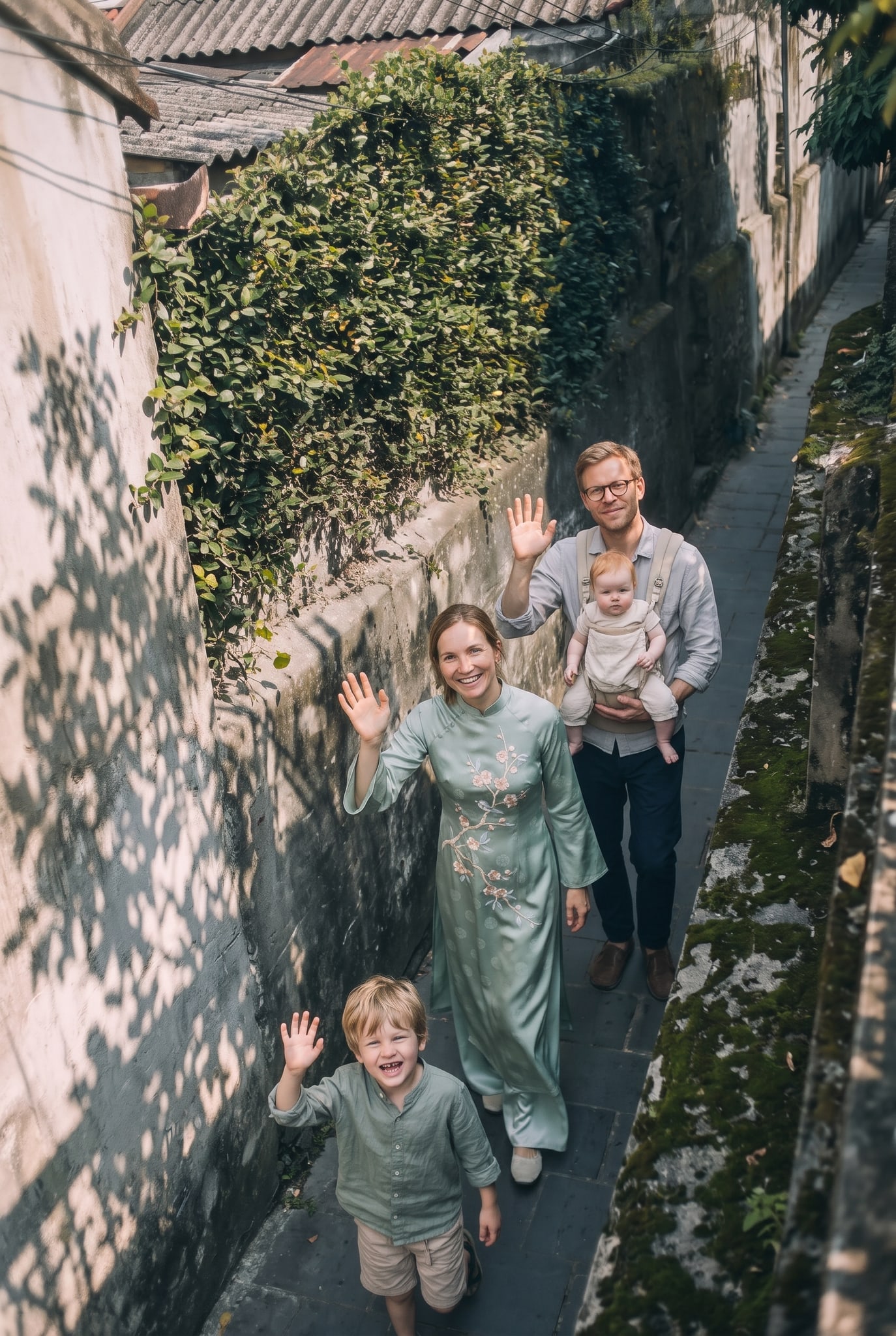
The ao dai is not a costume. It's a living cultural garment. Respect it by:
- Posture & movement: Sit and stand upright; the split tunic reveals legs when you slouch or spread your knees. Keep legs together or crossed.
- Photography: Avoid sexualized, irreverent, or disrespectful poses (e.g., lying on the ground, squatting, sitting cross-legged in open splits). Poses showing your legs should be modest—standing, walking, or seated with legs together.
- Cleanliness: Return the ao dai clean. If you spill food or mud, mention it at return; most shops charge see packages & prices (~see packages & prices) for dry cleaning if damage occurs.
- Sacred contexts: Do not wear an ao dai to a temple or funeral unless invited by a local who approves the context. It's not forbidden, but temples appreciate modest, reverent dress.
- Pairing & accessories: Wear it with traditional silk pants (always included in rental), ballet flats or embroidered slippers—never athletic shoes. A conical hat (non la) or silk scarf completes formal looks.
- Duration limits: Rental is typically 1–7 days. Wearing it daily for a month signals tourism, not cultural participation—locals may find it performative.
Vietnamese people appreciate when foreigners wear the ao dai thoughtfully. Bad etiquette includes posing provocatively, treating it like a Halloween costume, or wearing it in drunken states at nightclubs. Ao Dai Diaries can guide you on appropriate styling and etiquette during your fitting.
How Do You Choose Between Renting in Hanoi, Saigon, Hoi An, or Da Nang?
Each city offers distinct rental experiences tied to its ao dai culture:
Hanoi — Capital city, classical heritage. Northern formal styles dominate (ivory, muted silk). Best for: Tet, formal photoshoots, cultural immersion. Fittings are precise; tailors often adjust on-site same-day. Busier shops, faster turnaround.
Ho Chi Minh City (Saigon) — Modern, vibrant, faster-fashion ao dai. Brighter colors, contemporary fabrics, trendy embroidery. Best for: casual photoshoots, fashion-forward looks, quick rentals. Delivery to hotels is common; more English-speaking staff.
Hoi An — UNESCO ancient town, hand-tailored silk capital. Bespoke ao dai made to order in 3–5 days, or rentals of heirloom-quality pieces. Best for: weddings, luxury photoshoots, once-in-a-lifetime events. Expect higher rental costs but unmatched quality and embroidery. Walking through Hoi An in an ao dai is a pilgrimage—the town is its birthplace.
Da Nang — Central coast, balanced modern-traditional. Mix of northern formality and southern vibrancy. Best for: beach photoshoots, casual events, travelers splitting time between Hoi An and urban areas. Shorter wait times; good value.
See rental by city to compare what's available.
---
What Should You Check Before You Book a Rental?
Use this checklist to avoid problems:
- Confirm your exact dates — rental prices often drop for 2–3+ day bookings.
- Know your measurements — height (cm), bust (cm), waist (cm), inseam (cm). Use the shop's fitting form.
- Specify the occasion — formal (silk, embroidered) or casual (cotton-blend, plain). Each affects price and style.
- Ask about deposit policy — how much, when it's returned, what damages incur fees (typically small stains are waived; rips or heavy soiling cost see packages & prices).
- Confirm pickup/delivery & hours — most shops close 18:00–19:00; plan fittings in the morning.
- Request fitting photos — have the shop send photos of your fitted ao dai so you know what to expect and can request adjustments before pickup.
- Clarify inclusions — does rental include the silk pants, non la (conical hat), and accessories, or are those add-ons?
- Book styling help if needed — first-time wearers benefit from a 15–30 minute tutorial (hair, posture, how to walk in the split). Ask if this is free or a small add-on.
- Check cancellation policy — can you reschedule if weather or plans change?
- Get emergency contact info — in case of damage, loss, or fit issues, who do you call?
👗 Rent your ao dai — WhatsApp/Zalo +84 338 762 340
Frequently asked questions
Is renting an ao dai cheaper than buying one?
Yes. A rental is 300,000–see packages & prices (~see packages & prices–see packages & prices) for 1–3 days. A quality silk ao dai costs 2–5 million VND (~see packages & prices–see packages & prices) to buy, or 10+ million (~see packages & prices+) for hand-tailored Hoi An silk. Renting lets you wear it once respectfully without long-term storage or care.
Can I wear an ao dai to a temple or religious ceremony?
Yes, if a Vietnamese friend or family member invites you and approves the context. Temples expect modest, reverent dress. Avoid bright neon or provocative styling. Ask your local host to confirm appropriateness—they know the ceremony's tone better than rental staff.
What happens if I damage the ao dai during the rental period?
Small stains or wrinkles are typically waived. Rips, burns, or heavy soiling usually cost 200,000–see packages & prices (~see packages & prices–see packages & prices) in dry cleaning or repair fees. Be honest at return; most shops are understanding if you report damage immediately. Deposit usually covers minor issues.
Is there a "right age" to wear an ao dai, or is it for everyone?
No age limit. Children, teens, adults, and seniors all wear the ao dai at celebrations. Rental shops size XS–XXL to fit most body types. Formal weddings or Tet events see multi-generational ao dai wearing. Your comfort and respect for the garment matter more than age.
How long do I need to allow for a fitting if I'm renting for the first time?
Plan 30–45 minutes. This includes measuring, trying on 1–2 options, adjustments, and a short walk-around to ensure comfort. Same-day rentals need a morning appointment (by 09:00–10:00) if you want pickup in the afternoon. Hotel delivery takes an extra 1–2 hours.
Can I request a specific color or embroidery style before I visit?
Yes. Message the rental shop on WhatsApp/Zalo with photos of styles you like and your color preferences. Most shops have 10–50 pieces in stock and can reserve your choice or suggest similar options. Custom embroidery rentals (as opposed to quick rental) need 3–5 days lead time, mostly available in Hoi An. === 📍 See rental by city | 👗 Book now — WhatsApp/Zalo +84 338 762 340
Frequently asked questions
Is renting an ao dai cheaper than buying one?
Yes. A rental is 300,000–see packages & prices (~see packages & prices–see packages & prices) for 1–3 days. A quality silk ao dai costs 2–5 million VND (~see packages & prices–see packages & prices) to buy, or 10+ million (~see packages & prices+) for hand-tailored Hoi An silk. Renting lets you wear it once respectfully without long-term storage or care.
Can I wear an ao dai to a temple or religious ceremony?
Yes, if a Vietnamese friend or family member invites you and approves the context. Temples expect modest, reverent dress. Avoid bright neon or provocative styling. Ask your local host to confirm appropriateness—they know the ceremony's tone better than rental staff.
What happens if I damage the ao dai during the rental period?
Small stains or wrinkles are typically waived. Rips, burns, or heavy soiling usually cost 200,000–see packages & prices (~see packages & prices–see packages & prices) in dry cleaning or repair fees. Be honest at return; most shops are understanding if you report damage immediately. Deposit usually covers minor issues.
Is there a "right age" to wear an ao dai, or is it for everyone?
No age limit. Children, teens, adults, and seniors all wear the ao dai at celebrations. Rental shops size XS–XXL to fit most body types. Formal weddings or Tet events see multi-generational ao dai wearing. Your comfort and respect for the garment matter more than age.
How long do I need to allow for a fitting if I'm renting for the first time?
Plan 30–45 minutes. This includes measuring, trying on 1–2 options, adjustments, and a short walk-around to ensure comfort. Same-day rentals need a morning appointment (by 09:00–10:00) if you want pickup in the afternoon. Hotel delivery takes an extra 1–2 hours.
Can I request a specific color or embroidery style before I visit?
Yes. Message the rental shop on WhatsApp/Zalo with photos of styles you like and your color preferences. Most shops have 10–50 pieces in stock and can reserve your choice or suggest similar options. Custom embroidery rentals (as opposed to quick rental) need 3–5 days lead time, mostly available in Hoi An. === [📍 See rental by city](/rent) | [👗 Book now — WhatsApp/Zalo +84 338 762 340](https://wa.me/84338762340)
Dozens of colours, all sizes XS–XXL, delivered to your hotel in Hanoi, Saigon, Hoi An or Da Nang. One WhatsApp or Zalo message.
More guides
You might also like
The ao dai is Vietnam's iconic silk dress, worn for celebrations and formal occasions. Ao Dai Diarie
May is Vietnam's hottest month before monsoon season. We'll help you choose the right outfit—whether
December weather in Vietnam is cool and dry—ideal for wearing the ao dai. Here's what suits the seas