guide/ao-dai
Vietnamese Ao Dai History: From Dynasty Roots to Modern Rental
Ao Dai Diaries team · All guides →
The ao dai emerged in the 18th century as the Nguyễn Dynasty's formal robe, a modified version of the Chinese-influenced áo giao领 tunic that became distinctly Vietnamese. It consists of a long, fitted silk tunic split at the sides worn over wide trousers, symbolizing grace, femininity, and cultural pride. By the 20th century, it was the everyday dress for Vietnamese women; today it's worn for Tet, weddings, graduations, photoshoots, and formal events—rarely as daily wear except in heritage contexts. Ao Dai Diaries rents authentic, tailored ao dai across Hanoi, Saigon, Hoi An, and Da Nang, with sizes XS–XXL, same-day fitting, and delivery to your hotel. Costs vary by silk quality and embroidery; budget-friendly rentals work for casual photoshoots, while premium silk with hand-embroidered designs suit weddings and formal ceremonies. The key is choosing a rental that respects the garment's cultural weight—never wear it casually to bars or disrespectfully. ---
Why did the ao dai take its current form in the 18th century?
Vietnam's áo dài evolved from earlier áo giao领 robes worn during Chinese occupation, but the Nguyễn Dynasty (1802–1945) transformed it into a distinctly Vietnamese silhouette. Tailors elongated the tunic, narrowed the waist, and split the skirts at both sides to reveal straight-leg trousers underneath—a radical shift that balanced elegance with practicality for tropical climate and freedom of movement. This form persisted through French colonialism and into independence, becoming a nationalist symbol by the 20th century. When you rent an ao dai today, you're wearing a design refined over two centuries, each curve and proportion carrying intention. Understanding this history means understanding why fit and posture matter: the ao dai is designed to highlight a straight spine and graceful silhouette—slouching or rushing undermines the garment's purpose.
👗 Rent your ao dai — WhatsApp/Zalo +84 338 762 340
What's the difference between an everyday ao dai and one for weddings or formal events?
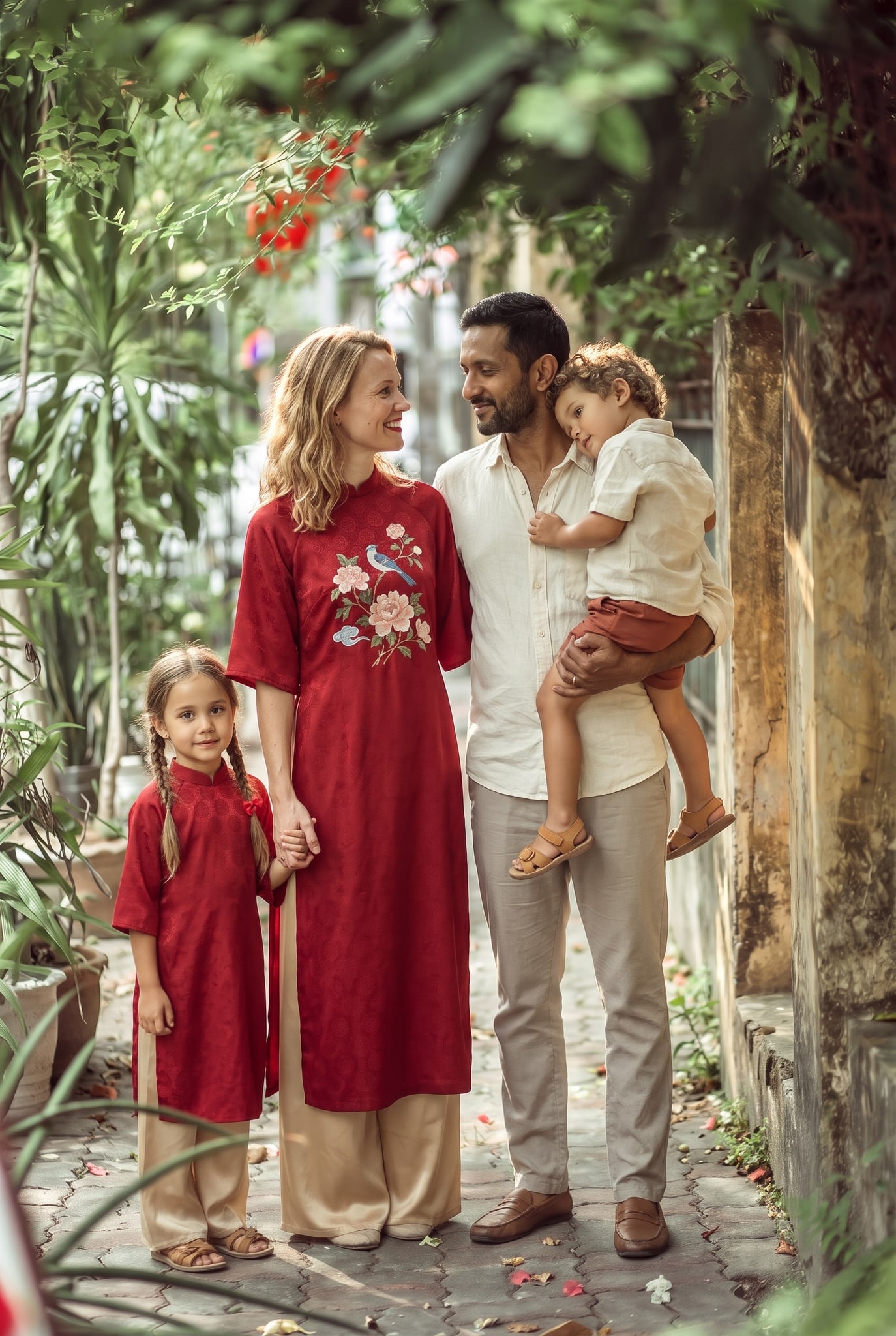
Everyday ao dài—historically worn by women in villages, markets, and home—were usually plain silk or cotton in solid colors (white, cream, pale pastels) with minimal embroidery. Formal and ceremonial ao dài feature rich silk damask, brocade, or satin; intricate hand-embroidered dragons, phoenixes, peonies, and plum blossoms; metallic threading; and layered linings. Wedding ao dài often include a coordinating overtunic or jacket, elaborate beading on the chest, and gold or silver accents. A photoshoot ao dài balances visual impact with comfort—usually medium-weight silk with focused embroidery on the chest and shoulders. Rental costs scale with embroidery density and silk grade; a premium hand-embroidered silk ao dài for a wedding will cost more than a clean-lined photoshoot version. At Ao Dai Diaries, our fitting advisors ask about your event and comfort level, then recommend appropriate styles. If you're unsure, our how-it-works page explains the fitting and selection process step by step.
| Occasion | Typical Features | Who Wears It | What to Expect from Rental |
|---|---|---|---|
| Photoshoot (heritage site) | Medium silk, minimal embroidery, vibrant solid color or subtle floral | Tourists, travelers, families | Comfortable fit, emphasis on photo appeal, same-day turnaround |
| Tet holiday | Family-matching ao dài, often new or newly tailored, medium–premium silk | Vietnamese families, multi-generational | Cultural authenticity, careful pressing, deposit for care |
| Wedding (guest) | Premium silk, refined embroidery on chest/sleeves, pastels or jewel tones | Wedding guests, young women | Formal elegance, full-day wear comfort, professional styling |
| Wedding (bride) | Custom, hand-embroidered heavy brocade, layered overtunic, gold accents | Bride, mother of bride | Tailor-fitted, ceremonial authority, handled by specialist |
| Graduation | Medium–premium silk, modern color palette, modest embroidery or none | Students, young professionals | Understated elegance, photo-ready, flexibility for movement |
---
How did French colonialism and war reshape what the ao dai means to Vietnamese people?
During French colonialism (1887–1954), Vietnamese elites wore European dress as a status marker, yet the ao dài persisted among common people and gradually gained nationalist symbolism. By the mid-20th century, it became a statement of Vietnamese identity—especially visible in photographs from the independence movement and the war years (1955–1975). After reunification, the ao dài was revived as a badge of national pride, worn by schoolgirls (still a tradition today), flight attendants, and women in formal settings. This history means the ao dai is never neutral: wearing it consciously—not as a "costume"—honors those who preserved it as a symbol of survival and cultural continuity. When renting for a photoshoot or event, approach it with that respect. Ao Dai Diaries staff remind guests that the ao dai is not a Halloween outfit; it's a living cultural garment worn by millions.
📸 Ao dai + photoshoot packages
What role does regional variation play in choosing which ao dai to rent?
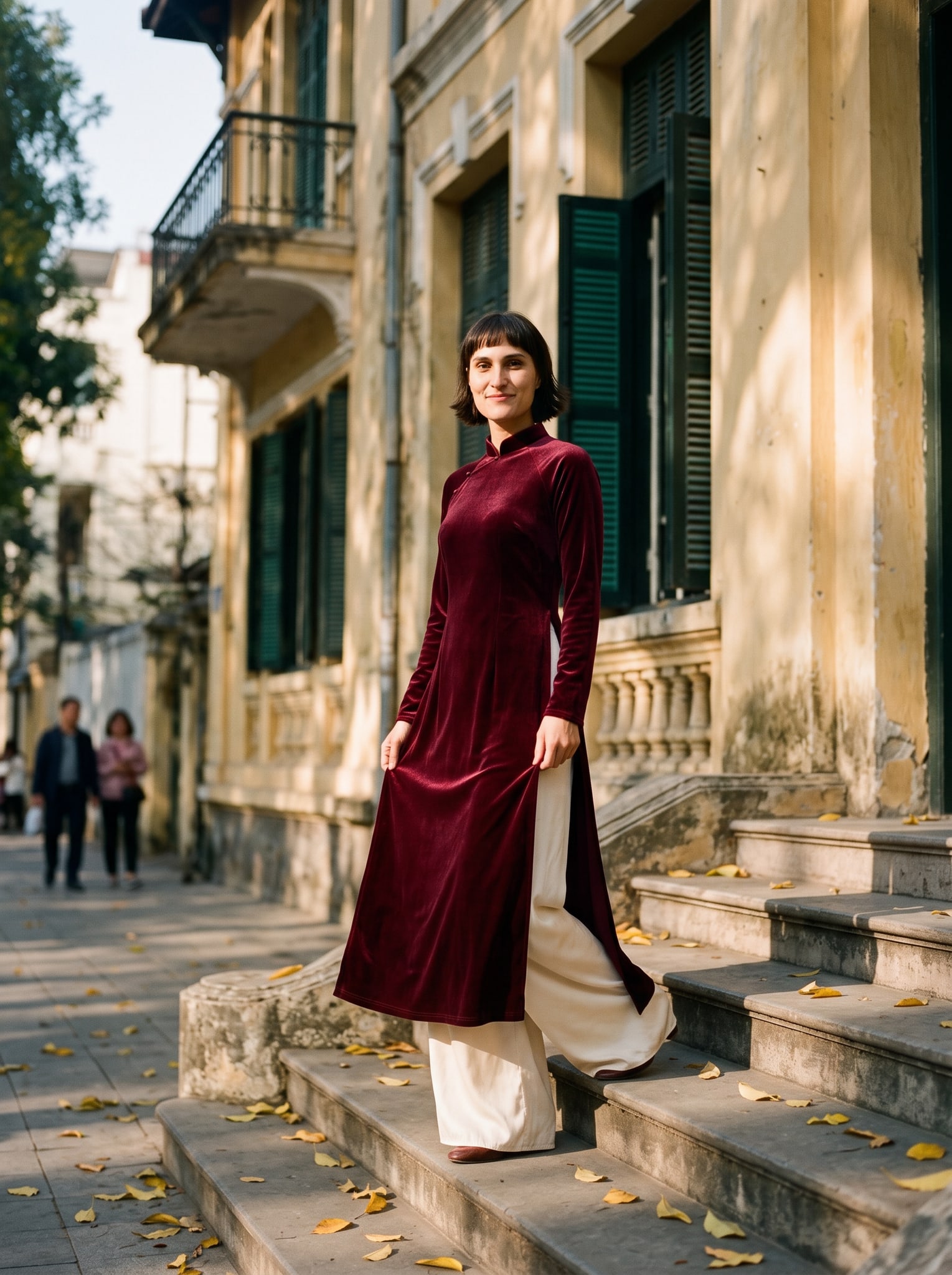
Northern (Hanoi, Red River Delta) ao dài traditionally feature paler silks, softer embroidery, and a more reserved aesthetic reflecting Confucian-influenced court culture. Central (Hoi An, Huế) styles honor royal heritage with richer colors, gold threading, and bolder floral motifs. Southern (Ho Chi Minh City, Mekong Delta) ao dài embraced brighter hues, looser fits, and contemporary embroidery post-war, reflecting a more relaxed regional character. Hoi An is particularly known for ao dài tailoring—centuries of silk-weaver tradition means local rentals often emphasize hand-embroidered precision and heritage accuracy. If you're visiting Hoi An, rent locally to access designs that reflect the town's own textile legacy. If you're in Hanoi, northern Hanoi-based rentals tend toward classic, understated elegance. Saigon offers modern, globally-minded styles, and Da Nang bridges central and southern traditions. Choosing a rental shop in the region you're visiting connects you to local craft—and usually ensures better fit, since staff know regional body proportions and style preferences.
📍 See rental by city
How do I wear and care for an ao dai respectfully to avoid mishaps?
Before wearing:
- Have a professional fitting (30 minutes) to check tunic alignment, trouser break, and undergarment visibility—never request alterations if renting.
- Confirm whether you're wearing a silk slip or strapless bra to avoid visible bra straps or lumpy layers.
- Practice sitting, walking, and climbing stairs beforehand; the split skirts require slightly wider strides than Western dress.
During wear:
- Keep your posture upright; slouching defeats the garment's visual purpose and can crease expensive silk.
- Avoid leaning against walls, sitting on outdoor chairs, or handling greasy food while wearing; even a small stain on white silk is visible and costly to clean.
- Don't pose in squatting positions or overly contorted angles for photos—these risk tearing the side seams.
After wear:
- Return the ao dai unwrapped and unfolded in the provided garment bag within the rental period (usually 24–48 hours for same-day rentals).
- If you've perspired heavily, inform staff so they can dry-clean before returning to inventory.
- Any stains or damage should be reported immediately; most rental deposits cover normal wear, but negligence (spilled wine, torn seams from rough handling) may incur fees.
At Ao Dai Diaries, staff give a 5-minute care briefing before you leave with your rental. We've found that guests who respect these guidelines have the best experience—and the ao dai looks stunning in photos without worry.
---
What should you check before booking an ao dai rental?
| Checklist Item | Why It Matters | Red Flag |
|---|---|---|
| Event date & time window | Rental periods are fixed (same-day, 24h, 48h); confirming early ensures availability. | Shop can't confirm date or offers vague "whenever you want" timings. |
| Your sizing (chest, waist, shoulder) | Ao dài fit is snug; wrong size = discomfort and unflattering photos. | Staff don't ask for measurements or assume "one size fits all." |
| Silk type & embroidery | Budget cotton-blend photoshoot ao dài ≠ hand-embroidered silk wedding ao dài. | Price quote doesn't match fabric quality described. |
| Deposit & cancellation terms | Most rentals require a damage deposit (returnable if garment is unharmed). | No deposit mentioned, or deposit is non-refundable. |
| Alterations policy | Reputable shops don't alter rented ao dài; they ensure fit during fitting. | Shop insists on hemming or taking in the waist before rent. |
| Cleaning & stain policy | Understand whether minor wear is covered or if stains = extra fees. | Staff can't explain what "normal wear" means. |
| Delivery to hotel | Many Hanoi, Saigon, Hoi An, Da Nang shops deliver; confirm timing. | Shop only operates from a fixed location with no delivery option. |
👗 Rent your ao dai — WhatsApp/Zalo +84 338 762 340
---
What to check before you book:
- Confirm your event date, time window, and return deadline. Rental shops operate on fixed windows (same-day, 24-hour, 48-hour). Booking last-minute risks unavailability.
- Provide your measurements or arrive for in-person sizing. Ao dài must fit snugly at the waist and chest; estimate sizes from online conversion charts often fail. Email or WhatsApp a photo of yourself with a tape measure if booking remotely.
- Clarify silk type, embroidery level, and color options. Budget versions suit casual photoshoots; formal events need premium silk. Ask whether the rental price includes styling advice or accessories (headpiece, belt).
- Understand deposit, damage, and stain policies. A returnable deposit (usually covering minor wear) is standard. Ask what counts as damage vs. normal wear—perspiration marks, minor wrinkles, and light creasing are typical; torn seams, large stains, or broken clasps are not.
- Confirm delivery to your hotel or hotel address requirements. Most central Hanoi, Saigon, Hoi An, Da Nang rentals offer delivery; rural or island locations may require shop pickup.
- Ask about care instructions and drop-off protocol. Return should be same day (or within your rental window) in the provided garment bag. No ironing, folding in plastic, or delaying return.
---
Ready to wear Vietnam's iconic dress?
Ao Dai Diaries operates in Hanoi, Ho Chi Minh City / Saigon, Hoi An, and Da Nang, with same-day fitting and delivery to your hotel. Whether you're celebrating Tet, attending a wedding, taking heritage-site photos, or walking the old quarter, we'll help you choose a style that honors the ao dài's history and suits your body, budget, and occasion. Our pillar guide covers styling, etiquette, and regional traditions in depth. Message us on WhatsApp or Zalo +84 338 762 340 with your event date, size, and color preference—or browse our rental packages for inspiration.
📸 Ao dai + photoshoot packages
---
Frequently asked questions
Is wearing an ao dai disrespectful if I'm not Vietnamese?
No. The ao dai is a cultural garment, not a closed tradition. Vietnamese people appreciate when visitors wear it respectfully—with proper fitting, good posture, and awareness that it's not a "costume." Avoid wearing it to bars, nightclubs, or contexts where it might be mocked. Museums, temples, heritage sites, family events, and formal celebrations are ideal. Ao Dai Diaries staff guide guests on appropriate contexts during fitting.
How do I know if an ao dai fits correctly?
A proper fit means: tunic hugs your ribs and waist with no bunching, neckline sits at your collarbone, sleeves end at your wristbone, side seams fall straight and open gracefully (not twisted), trousers break just above your shoe at the ankle, and you can breathe, sit, and walk comfortably. If the tunic flares or balloons, it's too large. If it pulls at the chest or underarms, it's too small. A professional fitting takes 20–30 minutes; never skip this step.
Can I wear an ao dai to a wedding if I'm a guest?
Yes, and it's a thoughtful choice. Guest ao dài should be sophisticated but not more elaborate than the bride's. Choose medium-to-premium silk in pastels, jewel tones, or cream (never white, which is reserved for brides and funerals in Vietnamese tradition). Avoid over-the-top embroidery or gold accents that might compete with the bride. Our rental packages include wedding-guest ao dài styled appropriately; ask about coordinating with other guests or the wedding's color scheme.
What's the difference between a photoshoot ao dai and a wedding ao dai in terms of rental cost?
Photoshoot ao dài emphasize visual impact for cameras—often medium silk with focused embroidery on the chest and shoulders, in bold solid colors or ombré. Wedding ao dài are premium silk, heavier, more fully embroidered, often with an overtunic or layered design, and tailored for all-day comfort and formal presence. Photoshoot rentals are typically more affordable due to simpler construction; wedding rentals cost more for materials and labor. Exact pricing depends on silk grade and embroidery—contact us on WhatsApp +84 338 762 340 for a quote based on your event.
Can I request a custom color or style for my rental?
It depends on timing and inventory. Standard rental collections offer classic colors and designs; custom requests (non-standard ombré, specific embroidery motif, custom color match) may require tailor-made rental or a longer lead time, which increases cost. If booking more than 2 weeks ahead, ask about custom options. For last-minute rentals (same-day, 24-hour), you'll choose from available stock. Always confirm what's possible during your initial WhatsApp inquiry.
What happens if I damage or stain an ao dai during my rental?
Most rental deposits cover normal wear (light perspiration marks, minor wrinkles, creasing). Damage caused by negligence—large stains (spilled wine, food), torn seams, broken buttons, or muddy hemlines—may incur repair or cleaning fees deducted from your deposit, or you may be charged the full cost of repair. Always report stains or tears immediately upon return; some stains can be lifted professionally if caught same-day. Honesty builds trust; shops are understanding about accidents if you report them promptly. Read your rental agreement's damage policy before signing.
Frequently asked questions
Is wearing an ao dai disrespectful if I'm not Vietnamese?
No. The ao dai is a cultural garment, not a closed tradition. Vietnamese people appreciate when visitors wear it respectfully—with proper fitting, good posture, and awareness that it's not a "costume." Avoid wearing it to bars, nightclubs, or contexts where it might be mocked. Museums, temples, heritage sites, family events, and formal celebrations are ideal. Ao Dai Diaries staff guide guests on appropriate contexts during fitting.
How do I know if an ao dai fits correctly?
A proper fit means: tunic hugs your ribs and waist with no bunching, neckline sits at your collarbone, sleeves end at your wristbone, side seams fall straight and open gracefully (not twisted), trousers break just above your shoe at the ankle, and you can breathe, sit, and walk comfortably. If the tunic flares or balloons, it's too large. If it pulls at the chest or underarms, it's too small. A professional fitting takes 20–30 minutes; never skip this step.
Can I wear an ao dai to a wedding if I'm a guest?
Yes, and it's a thoughtful choice. Guest ao dài should be sophisticated but not more elaborate than the bride's. Choose medium-to-premium silk in pastels, jewel tones, or cream (never white, which is reserved for brides and funerals in Vietnamese tradition). Avoid over-the-top embroidery or gold accents that might compete with the bride. Our [rental packages](/packages) include wedding-guest ao dài styled appropriately; ask about coordinating with other guests or the wedding's color scheme.
What's the difference between a photoshoot ao dai and a wedding ao dai in terms of rental cost?
Photoshoot ao dài emphasize visual impact for cameras—often medium silk with focused embroidery on the chest and shoulders, in bold solid colors or ombré. Wedding ao dài are premium silk, heavier, more fully embroidered, often with an overtunic or layered design, and tailored for all-day comfort and formal presence. Photoshoot rentals are typically more affordable due to simpler construction; wedding rentals cost more for materials and labor. Exact pricing depends on silk grade and embroidery—contact us on WhatsApp +84 338 762 340 for a quote based on your event.
Can I request a custom color or style for my rental?
It depends on timing and inventory. Standard rental collections offer classic colors and designs; custom requests (non-standard ombré, specific embroidery motif, custom color match) may require tailor-made rental or a longer lead time, which increases cost. If booking more than 2 weeks ahead, ask about custom options. For last-minute rentals (same-day, 24-hour), you'll choose from available stock. Always confirm what's possible during your initial WhatsApp inquiry.
What happens if I damage or stain an ao dai during my rental?
Most rental deposits cover normal wear (light perspiration marks, minor wrinkles, creasing). Damage caused by negligence—large stains (spilled wine, food), torn seams, broken buttons, or muddy hemlines—may incur repair or cleaning fees deducted from your deposit, or you may be charged the full cost of repair. Always report stains or tears immediately upon return; some stains can be lifted professionally if caught same-day. Honesty builds trust; shops are understanding about accidents if you report them promptly. Read your rental agreement's damage policy before signing.
Dozens of colours, all sizes XS–XXL, delivered to your hotel in Hanoi, Saigon, Hoi An or Da Nang. One WhatsApp or Zalo message.
More guides
You might also like
The ao dai is Vietnam's iconic silk dress, worn for celebrations and formal occasions. Ao Dai Diarie
May is Vietnam's hottest month before monsoon season. We'll help you choose the right outfit—whether
December weather in Vietnam is cool and dry—ideal for wearing the ao dai. Here's what suits the seas