guide/ao-dai
Vietnamese Ao Dai Patterns: Choose the Right Style for You
Ao Dai Diaries team · All guides →
Vietnamese ao dai patterns fall into three main categories: classical silk with subtle woven designs (worn for formal events and family gatherings), hand-embroidered or brocade patterns (heritage wear for weddings and Tet), and modern printed or block-dyed textiles (ideal for photoshoots and casual celebrations). Pattern choice depends on your occasion, skin tone, and whether you're renting or buying. Ao Dai Diaries rental inventory spans all three types across Hanoi, Ho Chi Minh City, Hoi An and Da Nang—from traditional reproduction pieces to contemporary designer cuts. Most patterns are offered in sizes XS–XXL. Rental includes fitting, same-day or next-day collection, and often hotel delivery. Before choosing, consider the season (lightweight cotton-blend prints for summer, heavier brocades for winter), your photoshoot or event's backdrop (bold patterns work better outdoors; subtle weaves suit formal indoor settings), and whether you prefer authentic heritage or contemporary reinterpretation. --- 👗 Rent your ao dai — WhatsApp/Zalo +84 338 762 340 ---
What are the main Vietnamese ao dai pattern families?
Vietnamese ao dai patterns evolved across dynasties and regions, creating distinct families that still define rental and retail choices today. Classical woven silk patterns feature subtle geometric or floral designs woven into pure silk during production—no printing or embroidery added. These are formal, timeless, and favored for weddings, graduations, and government events. Hand-embroidered and brocade patterns layer silk thread on silk base cloth, creating raised, tactile designs often depicting peonies, dragons, clouds, or auspicious symbols; these are expensive, heavy, and worn for Tet and major family ceremonies. Modern printed and block-dyed patterns use contemporary techniques—digital printing, natural indigo batik, or screen printing—on cotton-silk blends; these are lighter, more affordable, and perfect for tourists, photoshoots, and casual celebrations.
Each family signals respect and occasion. Wearing a classical silk pattern to a street photoshoot is not wrong, but wasted; wearing a printed pattern to a formal wedding as a guest can read as underdressed. The pattern family you choose is your first decision before size or color.
How do pattern, skin tone and body shape work together?
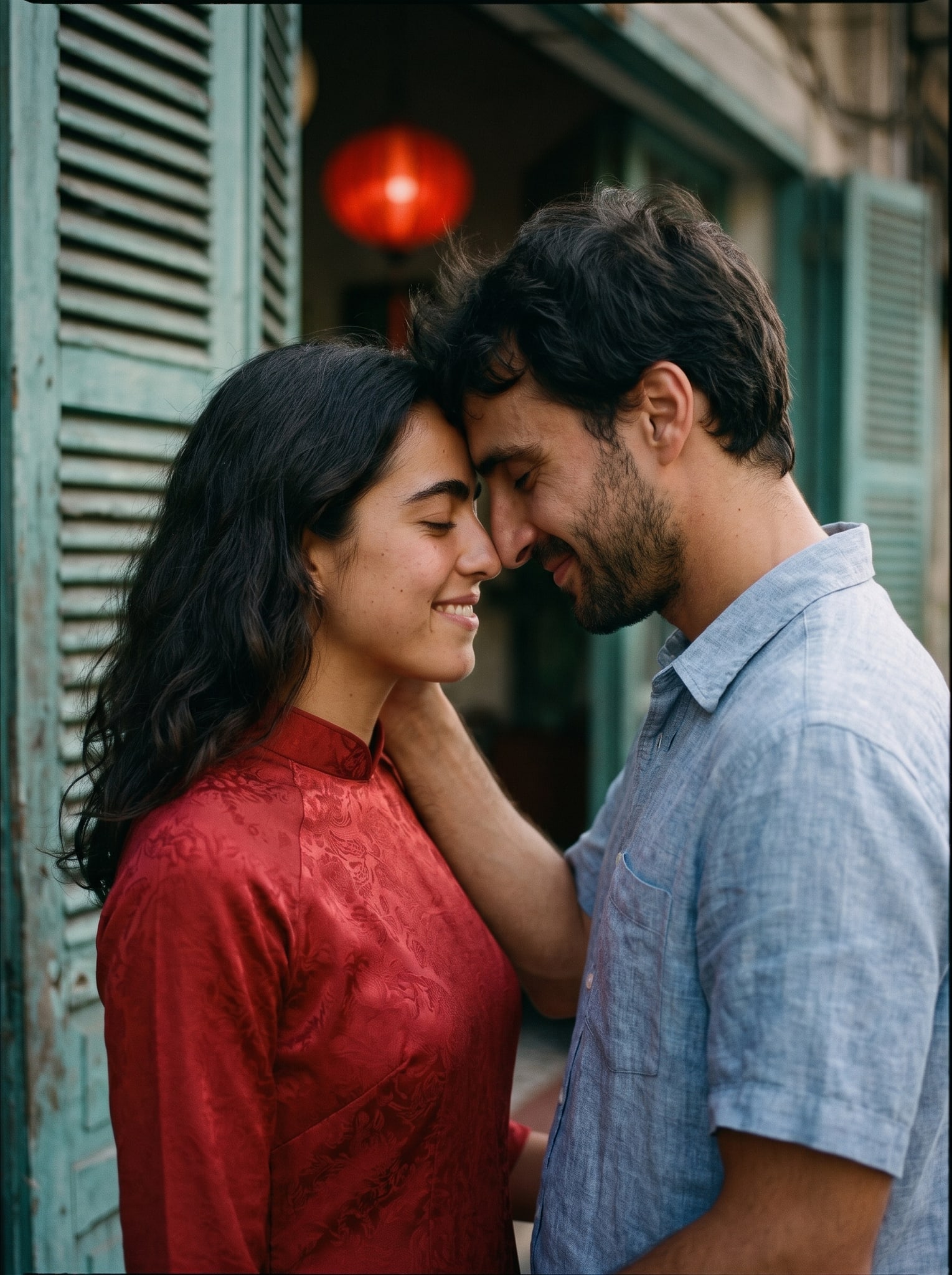
Pattern visibility depends on three factors working together: the pattern's scale (large florals vs. tiny geometric repeats), your skin tone's contrast with the fabric color, and how the ao dai's silhouette—particularly the fitted bodice and side panels—showcases the pattern across your chest, waist and hips.
Large-scale patterns (peonies, dragons, bold stripes) read clearly on any skin tone and suit rectangular or pear-shaped frames because they draw the eye outward, balancing narrower shoulders. Fine, dense patterns (intricate geometric weaves, all-over embroidery) suit olive, tan and deeper skin tones where contrast makes them visible; on very light skin, they can disappear, so pair them with contrasting trim or áo dài with white or cream base. Directional patterns (vertical lines, wavy motifs) elongate the silhouette—excellent if you're petite; horizontal or scattered patterns suit taller frames.
The ao dai's side panels (running from armpit to hem on each side) are often a plain or tonal contrast. Choosing a pattern in the main body and a coordinating solid or complementary pattern in the side panels is traditional and flattering. Before renting, check how the pattern falls on your specific measurements—most rental shops offer a fitting appointment precisely for this reason.
Classical silk vs. embroidered vs. printed: which should you rent?
| Pattern Type | Best For | Weight & Feel | Care After Rental | Who It Suits |
|---|---|---|---|---|
| Classical woven silk | Formal events, weddings, graduations | Heavy, cool, drapes smoothly | Dry clean only; rental shop handles it | All occasions, conservative guests |
| Hand-embroidered brocade | Tet, family ceremonies, heirloom moments | Very heavy (4–5 kg), raised texture, stiff | Dry clean, specialist; rental shop arranges | Special occasions, family tradition focus |
| Modern printed cotton-silk | Photoshoots, city strolls, casual celebrations | Light (1–2 kg), soft, slightly wrinkled | Hand wash or gentle cycle; easy to manage | Tourists, everyday wear, hot climates |
Classical silk projects formality and heritage but requires confidence in formal settings; wear it if you're attending a wedding or official ceremony. Embroidered brocade is rare in rental (because it's expensive and fragile) but available in premium collections; it's for once-in-a-lifetime moments. Printed cotton-silk is the workhorse: affordable, practical, comfortable for 4–8 hours of a photoshoot, and forgiving if you're still learning how to walk in an ao dai. Most first-time renters choose printed or classical silk; embroidery is a second or third rental investment.
📸 Ao dai + photoshoot packages
Where do Vietnamese ao dai patterns come from?
Understanding pattern origins helps you choose one that resonates with your reason for wearing the ao dai. Northern (Hanoi) patterns traditionally feature fine geometric weaves and cloud motifs, reflecting Confucian elegance and the cool climate's preference for heavier silks. Central (Hoi An, Da Nang) patterns draw from maritime and silk-trading heritage—indigo batik, resist-dye techniques, and floral blocks—lighter and more colorful. Southern (Ho Chi Minh City) patterns blend French colonial influence (bolder colors, looser fits) with Khmer and Cham textile traditions, resulting in more saturated dyes and larger floral sprawls.
If you're renting in Hanoi, expect classical woven silks and conservative neutrals in the mainstream inventory, with modern prints in dedicated tourist-focused shops. Hoi An is the pattern epicenter—tailors there still hand-embroider and custom-dye ao dai, and rental shops often stock signature indigo and block-dyed pieces. Ho Chi Minh City and Da Nang rental shops cater to tourists and weddings, so you'll find the full range but with emphasis on printed and contemporary styles.
Choosing a pattern from the region you're visiting deepens the experience—wearing Central indigo while exploring Hoi An's old town, or a Northern classical weave in Hanoi's temples, connects you to the place's textile history.
How do you avoid pattern regret when renting?
Pattern regret happens when you choose based on a photo alone, without considering lighting, your full outfit, and how the pattern photographs. Here's a decision checklist:
Before booking:
- See it in person or video call. Photos flatten patterns and distort color under shop lighting. Ask the rental shop to WhatsApp or Zalo you a short video in natural daylight.
- Confirm your event's lighting. Formal indoor wedding? Choose subtle classical weaves; outdoor photoshoot at sunset? Bold printed patterns pop in warm light.
- Check the full outfit. The ao dai pattern is only part of the look—it's coordinated with white silk pants (always), a silk or beaded belt, and optional silk stole (khăn dù). Ask how many matching options are included in the rental; sometimes you pay extra for premium trims.
- Try it on fitted. Rental shops fit the ao dai to your measurements. During fitting, walk, sit, and move in it. Busy patterns can look chaotic if the fit is loose; subtle patterns need a snug bodice to show their detail.
Common pitfalls:
- Choosing a pattern so bold it dominates your face in photos—the ao dai should frame you, not overpower you.
- Renting a heavy embroidered piece for a 6-hour street photoshoot—you'll be exhausted. Reserve embroidery for 2–3 hour formal events.
- Not discussing pattern availability in your size. Classical woven silks in size XXL are rarer; printed patterns are usually more available across the full size range.
- Forgetting that certain colors (deep reds, blacks, all-white) carry cultural weight in Vietnam—red and gold for luck and celebration, black and white for mourning. Confirm your choice is appropriate for the occasion.
What's the rental process for choosing a pattern?
Most ao dai rental shops follow this workflow:
- Contact them. WhatsApp, Zalo, or visit in person 2–5 days before your event. Provide your occasion, date, measurements (or agree to a fitting appointment), and any pattern preferences.
- Browse photos or videos. Shops share their inventory by pattern type and color. Ask for videos in natural light if photos feel flat.
- Fitting appointment (optional but recommended). Visit the shop, try on 3–4 pieces, and confirm the fit. Fitting typically takes 30–45 minutes and is free.
- Final selection. Choose the pattern, confirm the color, agree on rental dates, and confirm any add-ons (silk stole, beaded belt, hair flower).
- Deposit and payment. Pay a refundable deposit (usually 20–30% of rental cost); full balance is due on pickup or hotel delivery.
- Pickup or delivery. Same-day or next-day collection, or hotel delivery (sometimes with a fee).
- Return and care. Rental shops handle cleaning after return. You return the ao dai within 24 hours of your event; late returns incur fees.
Pattern choice typically happens in steps 2–3. Don't rush it—a good rental shop will have time to discuss your skin tone, the event's vibe, and what pattern will make you feel confident and photogenic.
---
👗 Rent your ao dai — WhatsApp/Zalo +84 338 762 340
---
Should you buy or rent an ao dai with your chosen pattern?
Rent if: You're a tourist, visiting Vietnam for 1–4 weeks, or wearing the ao dai for one specific event (photoshoot, wedding, Tet). Renting costs less, includes professional fitting and cleaning, and requires no shipping or storage. You can try multiple patterns without commitment. Rental shops in all four main cities have extensive inventory.
Buy if: You plan to wear the ao dai multiple times over several years, want a piece you can customize (adding embroidery, altering hems), or are looking for a gift that carries personal significance. Buying costs more upfront (and shipping from Vietnam to the US takes 5–10 days), but you own a lasting garment. Authentic hand-embroidered pieces are only available for purchase, not rental, because of their fragility and cost.
For most travelers, renting is the answer. For expatriates or Vietnamese diaspora returning home, buying a signature piece—especially one from Hoi An's artisan tailors—can become a treasured investment.
---
What to check before you book
- Pattern visibility in your size. Does the rental shop have your size in the pattern you've chosen? Large patterns can look overwhelming in smaller frames; fine patterns need medium or larger canvas to read. Confirm before committing.
- Color accuracy. Ask for a photo or video in daylight and the evening lighting where you'll wear it. Phone cameras and shop lighting distort colors.
- Pattern placement. In premium rentals, the main pattern is usually centered on the bodice and front panels; check that it's not cut off awkwardly at the armpit or side seams.
- Maintenance after rental. Confirm the rental price includes post-event cleaning. Some shops charge extra for stains or damage beyond normal wear.
- Refund policy if plans change. Ask about cancellation or postponement terms. Most shops allow postponement; cancellations closer than 48 hours may forfeit the deposit.
- Add-on clarity. Confirm whether silk stole, belt, hair flower, and any jewelry are included in the rental price or cost extra.
---
Start your ao dai journey
Explore the full ao dai rental guide to learn fitting, etiquette, and styling. Ready to choose your pattern and rent?
📸 Ao dai + photoshoot packages | 📍 See rental by city
Frequently asked questions
What's the most popular ao dai pattern for photoshoots in Vietnam right now?
Modern printed patterns—especially indigo batik and watercolor florals—dominate photoshoot rentals because they photograph beautifully in natural light and suit casual, contemporary aesthetics. Classical weaves remain popular for formal events and weddings.
Can I rent a custom-pattern ao dai, or must I choose from existing inventory?
Most rental shops offer fixed inventory; custom dyeing or embroidering is a purchase service (through tailors in Hoi An or Hanoi), not a rental option. Rental turnaround is 1–5 days; custom work takes 1–4 weeks.
How do I know if a pattern will suit my skin tone before renting?
Always request a video call or video in daylight, not just static photos. Skin tone + pattern color + lighting together determine how the pattern reads. A fitting appointment lets you see it on your body in the shop's lighting and natural daylight.
Are hand-embroidered patterns available to rent, or only to buy?
Most rental shops keep embroidered pieces for sale only, because embroidery is fragile and expensive to repair. A few premium rental collections (typically in Hanoi or Hoi An) rent embroidered ao dai at higher rates for special occasions; inquire directly.
What's the typical cost difference between renting a printed pattern and a classical silk pattern?
Printed cotton-silk rentals are usually lower cost than classical silk rentals, because printed pieces are faster to produce and easier to clean and maintain. Exact pricing varies by city and shop; contact your local rental service for current rates.
If I'm 5'10" (tall), which patterns should I avoid?
Horizontal or scattered small-scale patterns can make taller frames look too linear. Choose vertical-striped or large-scale patterns that break up the silhouette. A snug-fitted ao dai in a bold single-color or directional pattern is most flattering for height.
Dozens of colours, all sizes XS–XXL, delivered to your hotel in Hanoi, Saigon, Hoi An or Da Nang. One WhatsApp or Zalo message.
More guides
You might also like
The ao dai is Vietnam's iconic silk dress, worn for celebrations and formal occasions. Ao Dai Diarie
May is Vietnam's hottest month before monsoon season. We'll help you choose the right outfit—whether
December weather in Vietnam is cool and dry—ideal for wearing the ao dai. Here's what suits the seas