guide/ao-dai
Vietnamese Ao Dai vs Chinese: Which to Buy or Rent?
Ao Dai Diaries team · All guides →
A Vietnamese ao dai is tailored in Vietnam—usually hand-sewn or made in smaller workshops—with silk, cotton, or premium blends native to Vietnam, following traditional patterns developed over centuries. Chinese-made ao dai typically come from larger factories, prioritize speed and volume, and often use polyester or lower-grade silk. Vietnamese pieces fit curvier, Southeast Asian body frames; Chinese versions run boxier, wider. Price: Vietnamese rentals start around see packages & prices (see packages & prices) per day at Ao Dai Diaries; Chinese wholesale imports cost less upfront but wear faster and fade. For photoshoots, weddings, and Tet, rent Vietnamese—tailors know your body and swap sizes same-day. For budget travel wear, Chinese suits casual strolls. Check thread quality, seam finish, and sleeve length before committing; avoid suspiciously cheap options that shrink or pill after one wear. ---
What is the actual construction difference?
Vietnamese ao dai makers—whether in Hanoi, Saigon, or Hoi An—hand-stitch seams or use semi-automated machines in smaller ateliers, measuring each customer individually. Seams are reinforced at stress points (shoulders, underarms); hems are finished by hand or precision machinery. Chinese factories produce in batches of thousands, relying on high-speed automation with minimal hand-finishing. Result: Vietnamese seams last 50+ wears; Chinese seams fray after 10–15. Buttonholes and placket edges on Vietnamese pieces are bound (fabric wrapped around the edge); Chinese versions often leave raw edges or use cheap binding. This durability matters if you rent repeatedly or own for years.
Why does fit differ so much between the two?
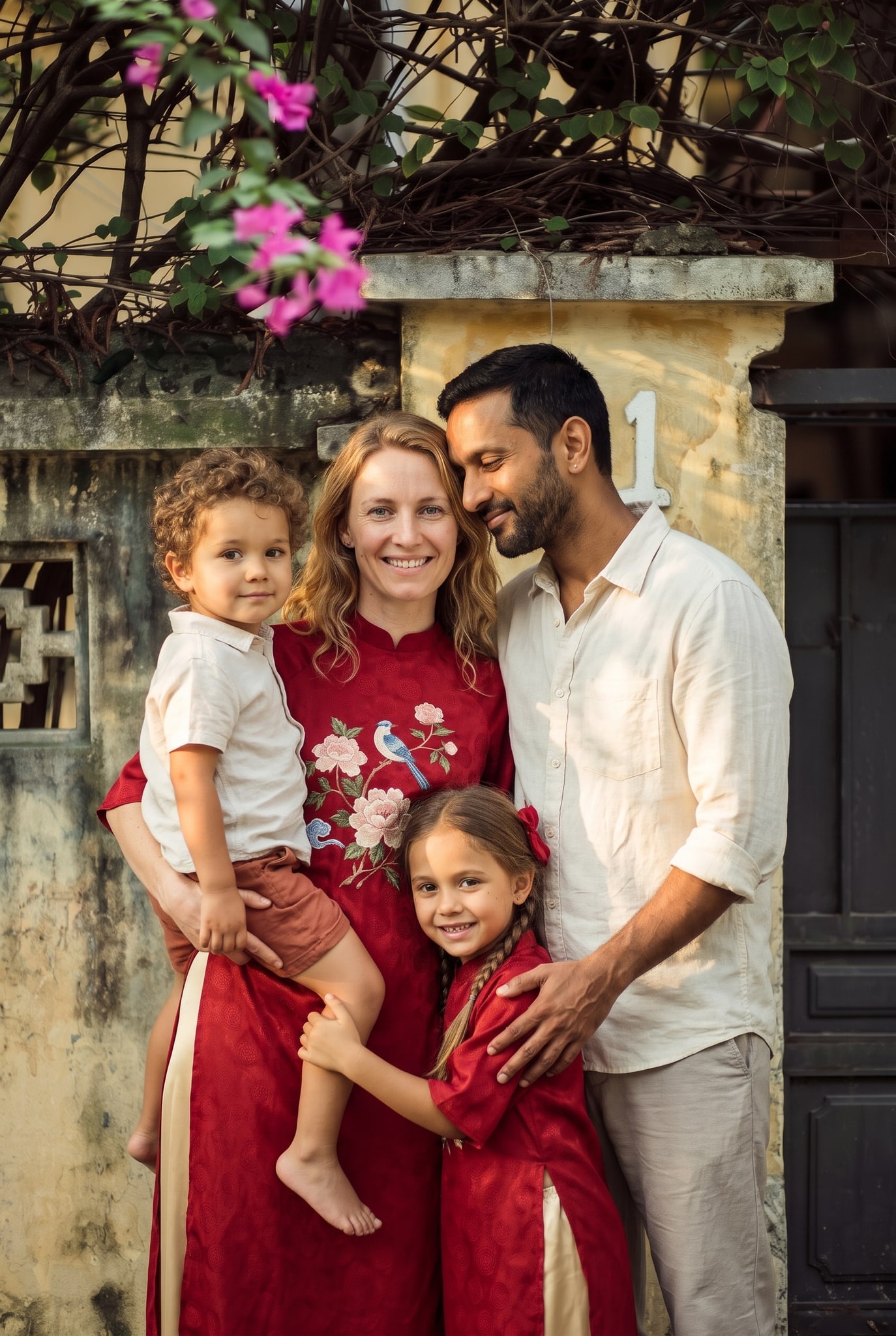
Vietnamese tailors draft ao dai patterns assuming Southeast Asian proportions—narrower shoulders, smaller wrists, higher hip placement, shorter torso-to-knee ratios. They measure your bust, waist, hips, shoulder width, and armhole depth. Chinese mass-production uses standard size grids (XS, S, M, L, XL, XXL) based on average Chinese body charts, which tend to have broader shoulders and longer arms. When a Vietnamese woman or Southeast Asian traveler tries on a Chinese ao dai, the neckline gaps, sleeves bunch, and the pants leg drags. Conversely, a Northern Chinese wearer in Vietnamese-cut pieces may feel uncomfortably snug at the chest. Book a fitting at an Ao Dai Diaries location—Hanoi, Saigon, Hoi An, or Da Nang—so you see this in person.
What fabric and finish quality really costs?
Vietnamese suppliers source silk (often from Hoi An silk villages), cotton blends, and linen locally or from trusted Asian mills. Fabric is tested for shrinkage, color fastness, and weave integrity before cutting. Chinese factories buy polyester and low-grade silk in bulk—cheaper per meter but prone to pilling, color bleeding, and static. A Vietnamese silk ao dai feels cool, drapes with body movement, and holds dye. A Chinese polyester version feels plastic-y, clings in humidity, and fades after 5–10 washes. Price: Vietnamese rentals reflect quality—see packages & prices (see packages & prices/day) depending on fabric and embroidery. Chinese wholesale pieces cost see packages & prices retail because fabric and dye cost see packages & prices Feel the fabric before you rent or buy; genuine silk has a subtle sheen and no static cling.
Should you rent or buy—and where?
Rent if: you're visiting Vietnam for ≤2 weeks, want a perfect fit same-day, or need sizes that don't exist in your home country. Rental at Ao Dai Diaries includes fitting, delivery to your hotel, and a 30-day satisfaction guarantee. You pay a refundable deposit (typically see packages & prices / see packages & prices) plus daily rental. Perfect for photoshoots, weddings, Tet, and strolls.
Buy if: you live in Vietnam, plan to wear the ao dai ≥20 times/year, or want a custom keepsake. Vietnamese tailors charge see packages & prices (see packages & prices) for bespoke work; Chinese imports cost see packages & prices retail online but require exchanges and shipping hassles.
| Decision | Best for | Cost | Fit | Durability |
|---|---|---|---|---|
| Rent Vietnamese | Travelers, events, photoshoots | see packages & prices/day | Exact (measured) | N/A (return after wear) |
| Buy Vietnamese | Locals, frequent wearers, heirlooms | see packages & prices+ | Tailored | 50+ wears, lasts years |
| Buy Chinese | Budget travelers, casual wear | see packages & prices | Standard sizes only | 10–15 wears, fades fast |
📍 See rental by city | 📸 Ao dai + photoshoot packages

How do you spot quality before ordering or renting?
Thread: Hold the ao dai to light. Threads should not show gaps or loose loops. Vietnamese pieces use polyester or silk thread that matches the fabric color exactly; Chinese versions often have mismatched thread (white on black) and loose tension.
Seams: Run your finger along inside seams. Vietnamese seams are smooth, straight, and reinforced at corners. Chinese seams feel bumpy, wavy, or have visible knots underneath.
Buttons: Vietnamese ao dai use quality shell, ceramic, or wooden buttons (sewn with dense stitching). Chinese versions glue plastic buttons that pop off.
Fabric edge: Edges should be finished—either rolled, bound with bias tape, or serged. Unfinished raw edges = poor quality.
Fit check: In person, the ao dai should skim your body without gaping at the neck or pulling at the bust. Sleeves should end at your wrist bone. Pants should brush the floor or ankle. Armholes should sit flush without bunching.
👗 Rent your ao dai — WhatsApp/Zalo +84 338 762 340
What are the honest drawbacks of each option?
Vietnamese pieces: Higher upfront cost; fewer sizes in ready-to-wear ranges (must custom-order or rent). Fit-and-fetch process takes 3–7 days if not renting. Long-term care (hand-wash, cool iron, fold flat) requires commitment.
Chinese pieces: Shrink 2–5% after first wash; colors fade unevenly; seams split under arm after 10–15 wears; polyester traps odor. Returns or exchanges from overseas take 20+ days and often involve restocking fees. Sizing runs inconsistent across vendors.
Rental: Daily cost adds up if you're in Vietnam for a month (900,000+ VND / see packages & prices+ USD). You don't own the piece for memories. Deposits are non-refundable if you damage the ao dai beyond normal wear.
Honest take: For a one-time photoshoot or wedding, rent Vietnamese from Ao Dai Diaries. For everyday wear or travel wardrobe, buy Vietnamese and invest in care. Skip Chinese versions unless you're a budget backpacker accepting 10–15 wears max and don't mind fading.
---
What to check before you buy or book
- Measure yourself: Bust, waist, hips, shoulder width, armhole depth, inseam. Give these to the tailor or rental shop—Ao Dai Diaries staff will ask.
- Know your occasion: Photoshoots, formal events, casual strolls, and daily wear each have different fabric weights and embroidery levels. Tell us so we match you to the right piece.
- Request photos or a video call: If buying online, ask the seller for close-ups of seams, buttons, and fabric finish under natural light.
- Ask about care: Will the piece shrink? Iron setting? Hand-wash or machine? Get this in writing.
- Confirm refund/exchange: If renting, clarify damage coverage and timeline. If buying, know the return window.
- Plan your photoshoot or event: Browse our photoshoot packages so you book the ao dai and photographer together—we handle styling too.
---
👗 Rent your ao dai — WhatsApp/Zalo +84 338 762 340
---

Frequently asked questions
Is a Vietnamese ao dai always better than Chinese?
Not always. Vietnamese pieces excel at fit, durability, and heritage—ideal for events and keepsakes. Chinese versions suit budget travelers who wear once or twice. Quality varies within each; always inspect seams, buttons, and fabric before committing.
Can I rent a Chinese ao dai to save money?
Rental prices reflect fabric and tailoring, so Vietnamese rentals cost slightly more (see packages & prices–32/day vs. ~see packages & prices–10 for lower-grade Chinese). Rental includes fitting, so you avoid sizing gambles. For short trips, renting Vietnamese outweighs buying cheap Chinese.
What happens if my rented Vietnamese ao dai gets damaged?
Normal wear (fading, light creasing) is covered by our 30-day satisfaction guarantee. Rips, stains, or missing buttons may incur repair fees (typically 100,000–see packages & prices / see packages & prices–see packages & prices). Clarify damage terms before you rent; it's listed on your rental agreement.
How long does a Vietnamese ao dai last if I wear it weekly?
5–10 years with proper care (hand-wash, cool iron, fold flat). Chinese versions last 1–2 years of weekly wear before seams split and colors fade unevenly. Investment in Vietnamese pays off over time.
Should I buy or rent my ao dai for a wedding in Hanoi?
Rent if you're flying in—Hanoi rentals include same-day fitting and delivery to your hotel, so you skip luggage stress. Buy if you live in Hanoi and plan to wear it for multiple events. Either way, book 3–5 days ahead so we match you to the perfect style and size.
Frequently asked questions
Is a Vietnamese ao dai always better than Chinese?
Not always. Vietnamese pieces excel at fit, durability, and heritage—ideal for events and keepsakes. Chinese versions suit budget travelers who wear once or twice. Quality varies within each; always inspect seams, buttons, and fabric before committing.
Can I rent a Chinese ao dai to save money?
Rental prices reflect fabric and tailoring, so Vietnamese rentals cost slightly more (see packages & prices–32/day vs. ~see packages & prices–10 for lower-grade Chinese). Rental includes fitting, so you avoid sizing gambles. For short trips, renting Vietnamese outweighs buying cheap Chinese.
What happens if my rented Vietnamese ao dai gets damaged?
Normal wear (fading, light creasing) is covered by our 30-day satisfaction guarantee. Rips, stains, or missing buttons may incur repair fees (typically 100,000–see packages & prices / see packages & prices–see packages & prices). Clarify damage terms before you rent; it's listed on your rental agreement.
How long does a Vietnamese ao dai last if I wear it weekly?
5–10 years with proper care (hand-wash, cool iron, fold flat). Chinese versions last 1–2 years of weekly wear before seams split and colors fade unevenly. Investment in Vietnamese pays off over time.
Should I buy or rent my ao dai for a wedding in Hanoi?
Rent if you're flying in—[Hanoi rentals](/hanoi) include same-day fitting and delivery to your hotel, so you skip luggage stress. Buy if you live in Hanoi and plan to wear it for multiple events. Either way, book 3–5 days ahead so we match you to the perfect style and size.
Dozens of colours, all sizes XS–XXL, delivered to your hotel in Hanoi, Saigon, Hoi An or Da Nang. One WhatsApp or Zalo message.
More guides
You might also like
The ao dai is Vietnam's iconic silk dress, worn for celebrations and formal occasions. Ao Dai Diarie
May is Vietnam's hottest month before monsoon season. We'll help you choose the right outfit—whether
December weather in Vietnam is cool and dry—ideal for wearing the ao dai. Here's what suits the seas