guide/ao-dai
Vietnamese Hat for Ao Dai: What Fits Your Look & Occasion
Ao Dai Diaries team · All guides →
A Vietnamese hat—most commonly a nón lá (conical palm leaf hat) or khăn đóng (silk turban)—is a traditional headpiece worn with ao dai for formal occasions, photoshoots, and cultural events. Nón lá suits outdoor or casual heritage photoshoots; khăn đóng (traditional silk wraps) elevates weddings and formal ceremonies. Both are available through Ao Dai Diaries rental packages or purchased separately from artisan makers in Hanoi, Hoi An, and Da Nang. A nón lá costs roughly see packages & prices (see packages & prices) for rental-grade quality; khăn đóng silk ranges see packages & prices (see packages & prices) depending on silk quality and embroidery. The key is matching hat style to your occasion and face shape—oversized nón lá can overwhelm petite renters, while khăn đóng requires proper tying to avoid looking costume-like. Always request fitting guidance when booking to avoid awkward photoshoots. 👗 Rent your ao dai — WhatsApp/Zalo +84 338 762 340 ---
What Are the Main Vietnamese Hat Styles for Ao Dai?
Vietnam has two primary hat traditions paired with ao dai: the nón lá (conical palm leaf hat, iconic nationwide) and the khăn đóng (silk turban or head wrap, more formal). The nón lá is lightweight, sun-protective, and historically worn by farmers and travelers; it suits outdoor photoshoots, Tet celebrations, and romantic heritage images. The khăn đóng—a pre-tied or wrapped silk cloth in jewel tones (emerald, crimson, gold)—signifies elegance and formality; it's traditional for weddings, graduations, and temple visits. Regional variations exist: Northern areas favor starched khăn đóng in muted silks; Southern styles embrace brighter nón lá with embroidered or beaded details. Choose based on your event formality and location.
Which Hat Works Best for Photoshoots?
📸 Ao dai + photoshoot packages
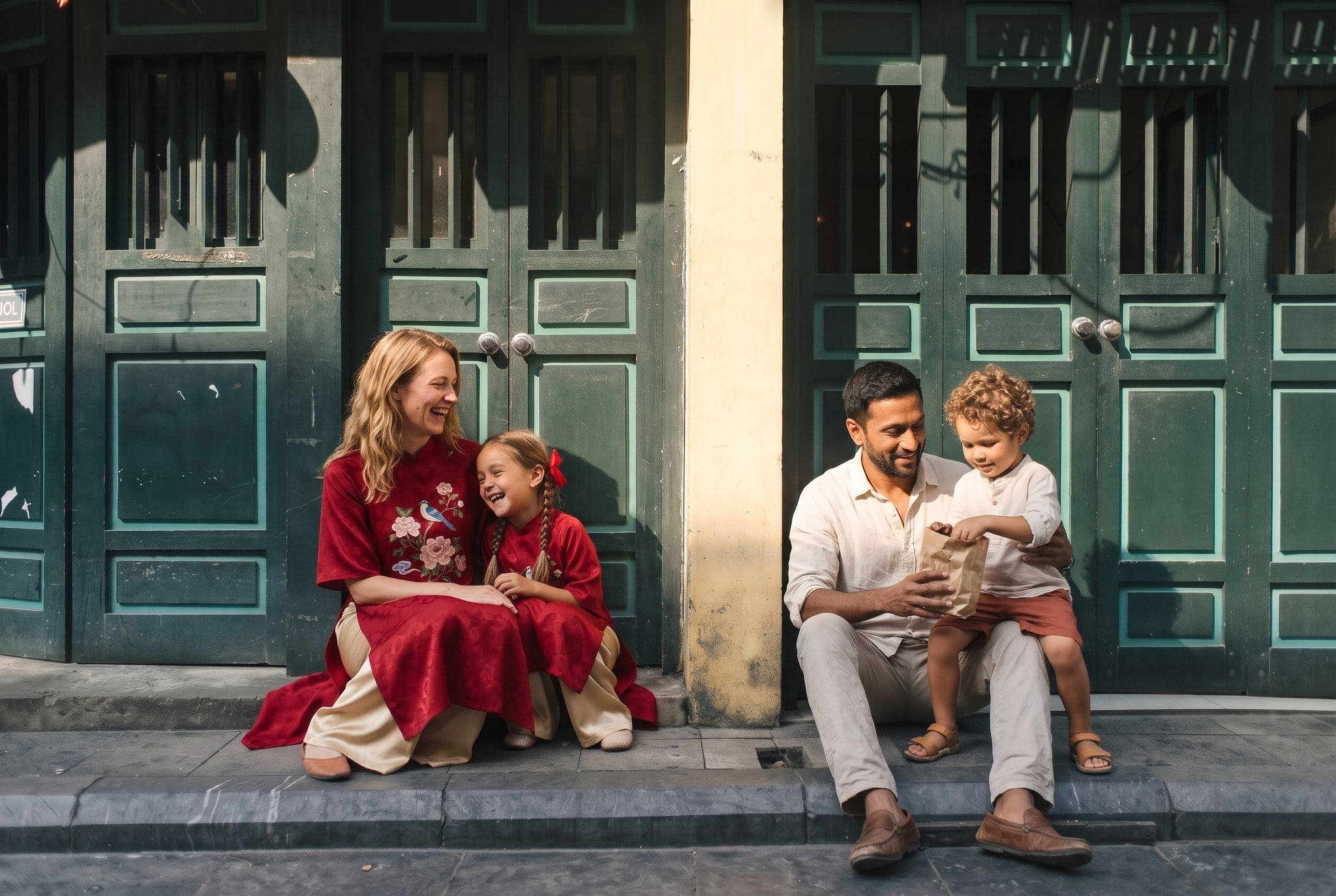
For fashion or travel photography, the nón lá creates cinematic depth—its broad brim frames your face and provides natural shade for outdoor shots. Photographers in Hoi An and Da Nang consistently request it because it flatters most angles and photographs authentically without looking staged. Khăn đóng works for indoor, formal studio shots (weddings, professional portraits) where softer lighting suits the shine of silk. If you're unsure, most ao dai rental packages include styling consultations via WhatsApp/Zalo—send a photo of your planned shoot location (+84 338 762 340) and our team matches the hat. A flat-topped nón lá suits round faces; taller conical versions elongate square faces. Avoid oversized versions; they slip and distract in photos.
How Do You Wear a Khăn Đóng Properly?
A khăn đóng (silk turban) is tied, not simply placed—improper tying looks costumey and disrespects the tradition. The cloth (typically 2–3 meters) wraps around the head, securing loose strands of your ao dai's long hair, then ties at the nape or side with tails pinned underneath or left to drape. Start by draping the silk across your forehead, wrap sides snugly around your crown, then cross the tail behind your head and secure with a small knot or pin. The knot should sit centered or slightly left—never haphazardly. When renting via Ao Dai Diaries, ask for a 5-minute wrap tutorial before you leave the fitting room; many renters in Hanoi and Hoi An skip this and struggle during events. A poorly tied khăn đóng can slip throughout a ceremony—mortifying and disrespectful.
Nón Lá vs. Khăn Đóng: Which Should You Choose?
| Hat Type | Best For | Formality | Care & Comfort | Who It Suits |
|---|---|---|---|---|
| Nón Lá | Outdoor photos, Tet, casual heritage strolls | Casual to semi-formal | Lightweight, breathable, folds flat | All face shapes; sun-protective |
| Khăn Đóng | Weddings, temple visits, formal portraits | Formal to ceremonial | Requires tying skill, silks wrinkle; cooler in heat | Elongates round faces; formal presence |
Decision: Choose nón lá if your event is outdoors, daytime, or photography-focused. Choose khăn đóng for indoor ceremonies, formal dinners, or situations where you want understated elegance. When renting ao dai in Hanoi, Saigon, Hoi An, or Da Nang, book both and decide at the fitting—no rental penalty for choosing one at the last moment.
What Sizes and Fits Are Available, and What Could Go Wrong?
Vietnamese hat sizes are less standardized than Western hats. Nón lá come in three rough sizes: small (ages 5–12, ~30 cm crown), medium (teens–most adults, ~35 cm), and large (tall/broad-shouldered adults, ~40 cm). The brim width (typically 50–65 cm) matters more than crown size—oversized brims slip down or fly off in wind. Khăn đóng are one-size-fits-most cloths (2–3 meters), but tying difficulty varies: if you have short hair or a large head circumference, wrapping can bunch uncomfortably. Common problems:
- Nón lá too large: Slides forward, obstructs eyes. Request "fitted with chin strap" when booking.
- Nón lá palm leaf cracking: Older hats splinter if mishandled. Inspect at pickup; Ao Dai Diaries inspects all hats before dispatch.
- Khăn đóng silk fraying: Check hem stitching before accepting. If traveling over 3 hours to your event, request a backup khăn đóng sent to your hotel.
- Fit mismatch at event: You cannot return a hat mid-ceremony. Always attend your fitting—video fittings via WhatsApp are second-best if traveling.
Hanoi fittings are same-day; Saigon requires 24 hours. Book early.
👗 Rent your ao dai — WhatsApp/Zalo +84 338 762 340

What's the Rental Process, Pricing, and What to Check Before Ordering?
Ao Dai Diaries rental for hats + ao dai:
- Contact via WhatsApp/Zalo (+84 338 762 340) with your event date, city, and photo reference.
- Quote provided based on hat type and ao dai style (prices vary; ask for exact figures).
- Deposit placed (typically 30–50% of rental cost, refundable if you return hat undamaged within 24 hours of event).
- Fitting appointment scheduled (same-day in Hanoi/Saigon; 1–2 days in Hoi An/Da Nang).
- Hat + ao dai delivered to your hotel or picked up from our studio.
- Return by agreed date—late returns incur daily fees.
What to check before ordering:
- ✓ Event date confirmed? Hats rent fast during Tet and wedding season (October–November).
- ✓ Location confirmed? Outdoor venues need wind-resistant nón lá; indoor needs khăn đóng expertise.
- ✓ Face shape noted? Send a selfie; our stylists suggest the flattering option.
- ✓ Deposit amount accepted? Ask for breakdown in VND and USD.
- ✓ Damage waiver available? Ask if accidents (mild soiling, minor stitching) are covered—this isn't stated upfront and varies.
- ✓ Return logistics clear? Will you return to our studio or have it collected from your hotel? Confirm before paying.
Avoid booking fewer than 5 days before your event; rush fittings stress everyone. Avoid purchasing used nón lá online unless inspected in person—palm leaves deteriorate fast in humidity.
📍 See rental by city for fittings nearest you.
---
How Do You Style a Vietnamese Hat With Your Ao Dai?
Hair and makeup anchor your hat's impact. For nón lá: Wear your hair down or in a low bun; high buns clash with the conical crown. Avoid heavy forehead bangs—the hat's brim will crush them. Minimal makeup (Vietnamese women traditionally let the hat do the talking) looks more authentic than bold eyeshadow. For khăn đóng: Hair must be off your face; side-sweep or low bun is traditional. The silk wraps around your hairline, so flyaways show. Use a light hairspray; heavy products stain khăn đóng. Makeup can be slightly bolder (khăn đóng is formal), but avoid glossy lips that transfer to the silk. Avoid large earrings with khăn đóng—they tangle and look overdone. Jewelry-wise, simple bracelets or a delicate pendant suit both; chunky jewelry competes visually with the ao dai and hat. When renting, ask the fitter about your chosen hairstyle—they'll pin or adjust the hat accordingly.
Regional Rental Differences: Hanoi, Saigon, Hoi An, Da Nang
Each city has distinct hat traditions reflected in rental stock:
- Hanoi: Nón lá with hand-embroidered silk panels (Northern heritage); khăn đóng in deep jewel tones. High formality expected.
- Saigon / Ho Chi Minh City: Mix of traditional nón lá and modern synthetic versions (more affordable, less authentic). Khăn đóng less common; nón lá dominates.
- Hoi An: Artisan nón lá in dozens of colors; khăn đóng with Hoi An silk (famously soft). Most photogenic combination for heritage strolls.
- Da Nang: Coastal nón lá (windproof, tighter weave); fewer khăn đóng rentals. Best for beach-adjacent photoshoots.
Rental stock differs; if your heart is set on a specific style, mention it when booking. Hoi An artisans often have exclusive colors Saigon doesn't stock.
📍 See rental by city to choose your location, or contact +84 338 762 340 if unsure which city serves your venue.
---
Cultural Respect: What Not to Do With a Vietnamese Hat
Vietnamese hats carry centuries of cultural weight. Never:
- Wear a khăn đóng backwards or inside-out (disrespectful; signals bad luck).
- Leave a nón lá or khăn đóng on a bed (considered disrespectful to the wearer's spirit in some traditions).
- Alter or cut a khăn đóng silk (it's not yours to modify).
- Joke about the hat's appearance or remove it indoors during formal ceremonies (guests keep hats on during traditional Vietnamese weddings and temple visits unless specifically invited to remove them).
- Sell a rented hat online after your event (it's stolen property; Ao Dai Diaries retains ownership and can pursue renters who do this).
Wear your hat with quiet confidence. Vietnamese people appreciate visitors who show respect for their traditions through proper styling, not flawless execution. If you tie your khăn đóng "wrong," locals will gently help you retie it—embrace that warmth.
---
👗 Rent your ao dai — WhatsApp/Zalo +84 338 762 340
For personalized hat + ao dai styling tailored to your event, book a rental consultation or explore our full ao dai guide for occasions, etiquette, and regional traditions.
---
Frequently asked questions
Can I wear a Vietnamese hat if I'm not Vietnamese?
Yes—visitors and international guests are welcomed to wear ao dai and hats for cultural events, photoshoots, and celebrations. Wear it respectfully (proper fit, correct tying, no mockery) and locals will appreciate your interest. Avoid tourist costumes; a well-fitted ao dai + hat looks authentic and honors the tradition.
What's the difference between a nón lá and a coolie hat?
A nón lá is the traditional Vietnamese conical hat made of palm leaf or bamboo. A "coolie hat" is a Western term sometimes used dismissively for the same hat—avoid that word. Call it a nón lá; it shows respect and cultural awareness.
Do I need a hat with my ao dai for a formal wedding?
A khăn đóng (silk turban) is traditional for Vietnamese weddings, especially if you're a guest or in the bridal party. A nón lá is too casual. Confirm the dress code when invited; if ao dai is requested, assume a khăn đóng is expected unless told otherwise.
How do I stop a nón lá from blowing off in wind?
Request a hat with a chin strap or elastic loop (most rental nón lá include one). Tie it under your chin snugly but not so tight it's uncomfortable. Avoid breezy beaches or rooftop shoots without a strap—the hat can fly off and float away.
Can I rent a hat separately from an ao dai?
Yes, though most Ao Dai Diaries rental packages bundle both for styling cohesion. If you own an ao dai and only need a hat, contact +84 338 762 340 to request hat-only rental; deposits and pricing differ from full ao dai rentals.
What happens if I damage a khăn đóng silk during my event?
Minor soiling (mud, light wine spill) is typical wear; Ao Dai Diaries cleans those. Deep stains, tears, or permanent marks (ballpoint pen, bleach) may incur cleaning or replacement fees (exact amount clarified at deposit stage). Always ask about damage waiver options before booking.
Frequently asked questions
Can I wear a Vietnamese hat if I'm not Vietnamese?
Yes—visitors and international guests are welcomed to wear ao dai and hats for cultural events, photoshoots, and celebrations. Wear it respectfully (proper fit, correct tying, no mockery) and locals will appreciate your interest. Avoid tourist costumes; a well-fitted ao dai + hat looks authentic and honors the tradition.
What's the difference between a nón lá and a coolie hat?
A nón lá is the traditional Vietnamese conical hat made of palm leaf or bamboo. A "coolie hat" is a Western term sometimes used dismissively for the same hat—avoid that word. Call it a nón lá; it shows respect and cultural awareness.
Do I need a hat with my ao dai for a formal wedding?
A khăn đóng (silk turban) is traditional for Vietnamese weddings, especially if you're a guest or in the bridal party. A nón lá is too casual. Confirm the dress code when invited; if ao dai is requested, assume a khăn đóng is expected unless told otherwise.
How do I stop a nón lá from blowing off in wind?
Request a hat with a chin strap or elastic loop (most rental nón lá include one). Tie it under your chin snugly but not so tight it's uncomfortable. Avoid breezy beaches or rooftop shoots without a strap—the hat can fly off and float away.
Can I rent a hat separately from an ao dai?
Yes, though most [Ao Dai Diaries rental packages](/packages) bundle both for styling cohesion. If you own an ao dai and only need a hat, contact +84 338 762 340 to request hat-only rental; deposits and pricing differ from full ao dai rentals.
What happens if I damage a khăn đóng silk during my event?
Minor soiling (mud, light wine spill) is typical wear; Ao Dai Diaries cleans those. Deep stains, tears, or permanent marks (ballpoint pen, bleach) may incur cleaning or replacement fees (exact amount clarified at deposit stage). Always ask about damage waiver options before booking.
Dozens of colours, all sizes XS–XXL, delivered to your hotel in Hanoi, Saigon, Hoi An or Da Nang. One WhatsApp or Zalo message.
More guides
You might also like
The ao dai is Vietnam's iconic silk dress, worn for celebrations and formal occasions. Ao Dai Diarie
May is Vietnam's hottest month before monsoon season. We'll help you choose the right outfit—whether
December weather in Vietnam is cool and dry—ideal for wearing the ao dai. Here's what suits the seas