guide/ao-dai
Vietnamese Woman Wearing Ao Dai: Rent, Style & Etiquette Guide
Ao Dai Diaries team · All guides →
An ao dai is Vietnam's iconic silk tunic worn over fitted pants—a symbol of elegance and cultural pride. When a Vietnamese woman (or anyone) wears one, it's typically for formal occasions: weddings, Tet, graduations, photoshoots or temple visits. Ao Dai Diaries rents authentic, well-fitted garments in sizes XS–XXL across Hanoi, Ho Chi Minh City, Hoi An and Da Nang, with same-day and delivery-to-hotel options available. Rentals include fitting consultation to ensure the tunic drapes correctly at the shoulder and waist—crucial for the silhouette. Deposits are required (refundable); rental periods range from a few hours to multi-day. The key etiquette rule: treat the ao dai as sacred dress, never for mockery or disrespect. Costs vary by city and quality; book via WhatsApp/Zalo to confirm current rates and availability for your date.
A Vietnamese woman wearing ao dai is instantly recognizable—the flowing silk tunic, high neckline, and elegant side slits create a silhouette that's both modest and graceful. Whether you're a tourist wanting an authentic cultural immersion or Vietnamese celebrating a milestone, understanding how to rent, wear and respect this garment makes all the difference.
What makes an ao dai hang correctly on a woman's body?
The ao dai's fit depends on precise measurements at three points: shoulder width, bust, and hip. A well-fitted tunic sits flush across the back shoulders (no bunching), follows your natural waist with a gentle taper, and splits cleanly at the hip so the front and back panels drape symmetrically. The collar should sit snug at the base of your neck without gaping. When you move—walking, sitting, bowing—the fabric should flow without restricting; if it pulls at the underarms or rides up at the shoulders, the size is wrong. At Ao Dai Diaries, your rental includes a fitting session where staff adjust the internal ties (if any) and confirm the tunic and pants sit at the correct heights. This step prevents common mistakes: oversizing to "be comfortable" (which destroys the silhouette) or undersizing to look slimmer (which is both uncomfortable and disrespectful to the garment's cultural integrity). A properly fitted ao dai flatters all body types because the design is inherently proportional.
👗 Rent your ao dai — WhatsApp/Zalo +84 338 762 340
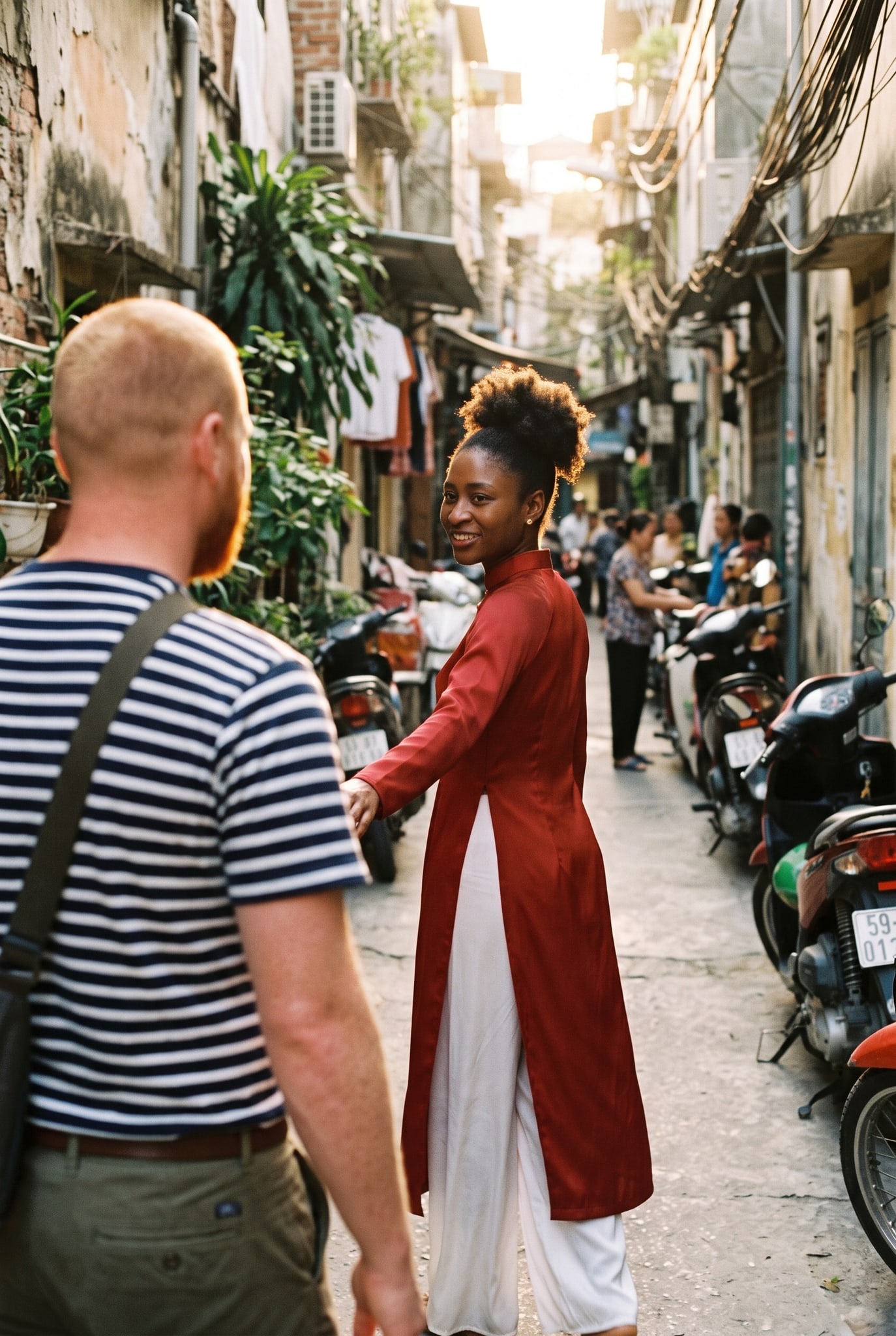
Which cities offer the most reliable ao dai rental, and what's the geographic difference?
Hanoi, Ho Chi Minh City (Saigon), Hoi An and Da Nang each have distinct ao dai rental ecosystems. Hanoi rentals favor business-formal and traditional designs (ideal for weddings, temple visits, official events); the Old Quarter and French Quarter have high foot traffic for same-day rentals. Ho Chi Minh City skews younger, trendy and photoshoot-focused, with delivery-to-hotel logistics highly developed for tourists. Hoi An is the cultural heartland—many rental shops here use local tailors and offer custom colors; the town's lantern-lit streets are the ao dai photoshoot capital. Da Nang blends beach-town accessibility with quality inventory; it's less crowded than Hoi An but equally stunning for visuals. Across all four, Ao Dai Diaries coordinates same-day fittings and delivery, but booking 1–2 days ahead ensures your size and color preference. Hoi An and Hanoi tend to have longer wait times during Tet (January–February); HCMC and Da Nang maintain steadier supply year-round. Choose your city based on your event location, not just rental availability—you want the ao dai photoshoot backdrop to match your rental base.
How do you avoid common ao dai rental mistakes before booking?
Most renters make three errors: (1) assuming "one size fits most," (2) choosing an ao dai by color alone without considering skin tone and occasion, and (3) not confirming the rental period (same-day vs. multi-day rates differ). Before you book, measure yourself honestly: shoulder width (collarbone to collarbone), natural waist, and hip circumference. State your occasion clearly—a wedding ao dai has different weight and formality than a casual photoshoot piece. Confirm whether your rental includes alterations for length (if you're very tall or short, off-the-rack pants may need hemming). Ask about the condition of the garment: look for stains, tears, or weak seams in photos or during fitting. Request the deposit amount upfront and clarify the refund timeline. Specify your event date and time so staff blocks inventory. Never assume rush delivery is free; check with how it works or ask via WhatsApp/Zalo +84 338 762 340. Finally, if you're unsure about etiquette or styling, ask—Ao Dai Diaries staff are trained to guide you, especially if you're a first-time wearer.
What's the decision framework for choosing between traditional vs. modern ao dai designs?
| Style | Best for | Silhouette | Occasions | Key check |
|---|---|---|---|---|
| Traditional (solid silk, minimal print) | Cultural respect, formal events, older guests | High collar, long sleeves, modest seaming | Weddings, temples, Tet, formal dinners | Fabric weight; does it drape, not cling? |
| Modern (asymmetric collar, interesting prints, lighter fabric) | Photoshoots, younger wearers, casual celebrations | May show more collarbone or arm, contemporary cuts | Photoshoots, graduations, Instagram content | Does the print date quickly or remain timeless? |
| Ombre/gradient (subtle color shifts) | Mixed formality, photogenic moments, selfies | Fitted but fluid, draws eye upward | Engagement shoots, casual celebrations, street walks | Does gradient fade or does dye hold across the tunic? |
The decision hinges on two questions: (1) Who will see you? If elders or temple staff are present, traditional is non-negotiable. If it's a photoshoot with peers, modern cuts photograph well. (2) What's the garment's primary function—respect or visual impact? Respect = traditional. Visual impact (for content, memories, artistic vision) = modern designs work beautifully. Neither is "better"; the ao dai's power lies in wearing it with intention. Browse our collections to compare visual options, then confirm with the rental team that your choice aligns with your event's tone.
📸 Ao dai + photoshoot packages
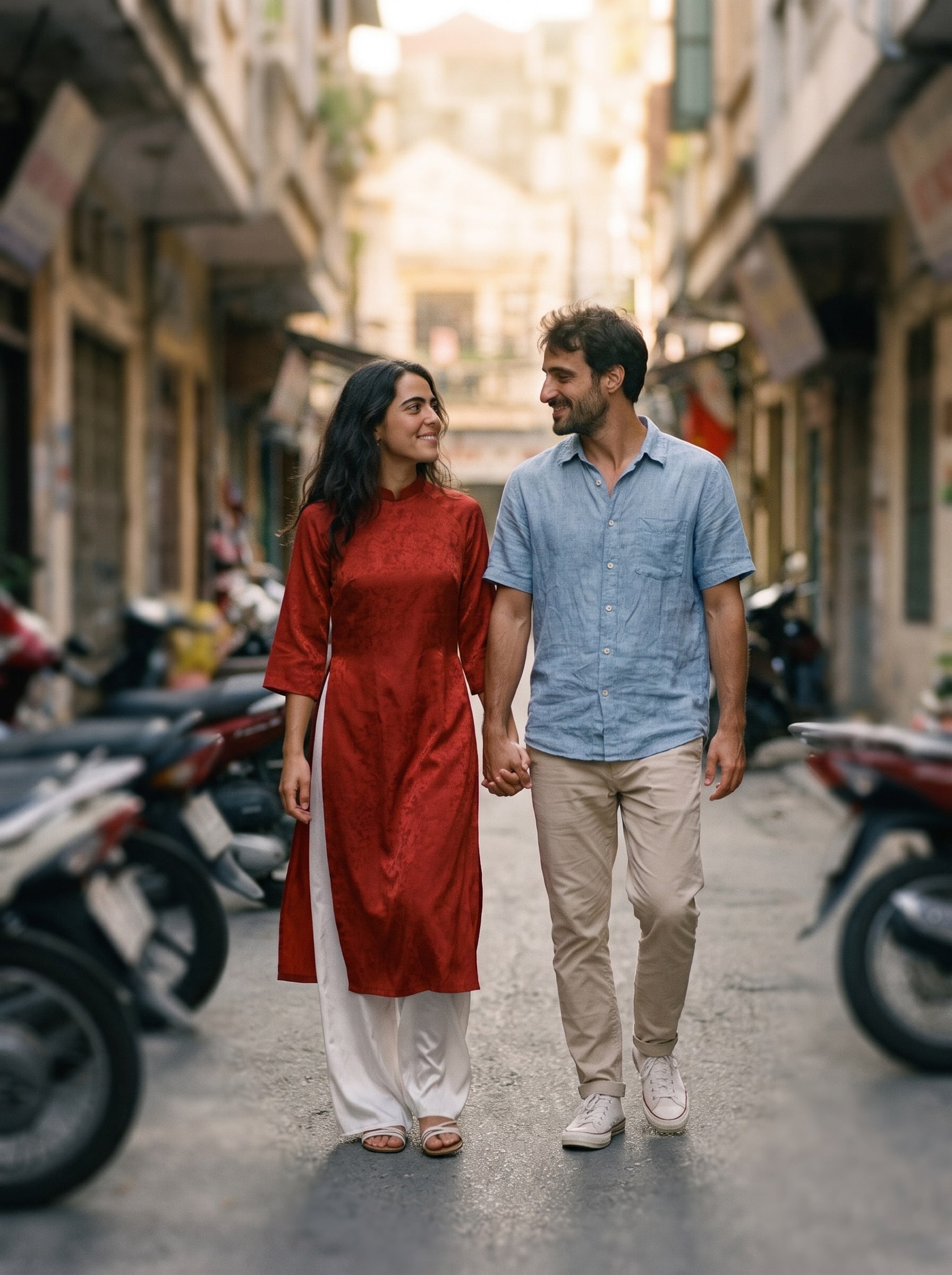
What does the rental process actually involve from booking to return?
You start by contacting Ao Dai Diaries via WhatsApp/Zalo +84 338 762 340 (or visit /rent to see city-specific contacts). Share your event date, preferred size range, color or style preference, and whether you need delivery. You'll receive availability confirmation and deposit details within hours. Next, you visit the rental location for a 20–30 minute fitting appointment (or, if you're not in-country yet, staff take detailed measurements via photo). During fitting, the staff adjusts the tunic and pants, confirms comfort and movement, and photographs the garment for condition records. You sign a rental agreement stating your return date/time and deposit amount (non-refundable if the ao dai is damaged beyond normal wear). On your event day, wear the ao dai exactly as fitted—no DIY alterations. After your event, return the garment clean (light wear stains wash out; heavy stains may incur a cleaning fee). The deposit is refunded within 3–5 business days if there's no damage. Multi-day rentals cost more than same-day; ask for current rates specific to your city and garment choice. This system exists because an ao dai is not disposable—each rental piece is maintained for dozens of future wearers.
What is the core etiquette rule non-Vietnamese wearers must understand?
The ao dai is not a costume or novelty. It is ceremonial dress with centuries of cultural meaning—a symbol of Vietnamese identity, resilience, and grace. When you wear one, you are honoring Vietnam and its women. This means: never wear it mockingly, don't alter it without permission, don't sit or move carelessly, and don't pose in ways that are sexually suggestive or disrespectful to temples or sacred spaces. If you're visiting a pagoda or religious site, ask if an ao dai is appropriate for that location. If you're wearing traditional ao dai to a wedding, follow the dress code (elders may wear dark, formal colors; younger guests wear brighter hues). If you're renting for a photoshoot, work with a photographer and rental staff who understand cultural respect—the goal is beauty and authenticity, not exoticization. Vietnamese women have worn the ao dai with dignity through French colonialism, war, and modern times. Wearing it well means honoring that legacy. Learn more in our ao dai guide.
What to check before you book or finalize your rental
- Garment condition: Ask for photos or inspect in person. Look for stains, loose seams, or fading.
- Fit precision: Bring exact measurements or book a fitting appointment before your event.
- Rental period: Clarify same-day vs. multi-day rates and return deadlines.
- Event location: Confirm your rental shop can deliver to your hotel or event venue.
- Deposit terms: Know the amount, refund conditions, and how damage is assessed.
- Occasion alignment: Ensure the style (traditional vs. modern) matches your event's formality and cultural context.
- Return logistics: Understand cleaning expectations and late-return fees.
Frequently asked questions
Can a foreigner wear an ao dai respectfully?
Yes, absolutely. Respect means understanding its cultural significance, wearing it correctly (proper fit, no mockery), and following local etiquette for your specific occasion. Ao Dai Diaries rental staff will guide you.
What's the difference between renting in Hoi An vs. Ho Chi Minh City?
Hoi An is the cultural and photographic epicenter with heritage backdrops; HCMC offers faster logistics and trendy modern designs. Choose based on your event location and aesthetic preference.
How long does fitting and fitting adjustments take?
A typical fitting appointment is 20–30 minutes. If alterations (hemming, seam adjustments) are needed, allow 1–2 extra days unless you book rush service.
What happens if the ao dai tears or stains during my rental?
Light wear stains (sweat, food dust) are normal; you're not charged. Heavy stains, tears, or seam damage may incur a cleaning or repair fee. Your rental agreement specifies the threshold.
Is there a size that doesn't exist in stock?
XS–XXL sizes are available across most Ao Dai Diaries locations. If your size is unavailable on your desired date, staff will either suggest a nearby size with fitting adjustments or offer a backup date. Always confirm early.
Can I rent an ao dai for multiple days?
Yes. Multi-day rentals are available; rates are higher than same-day. You keep the garment for your full rental period and return by the agreed deadline.
Dozens of colours, all sizes XS–XXL, delivered to your hotel in Hanoi, Saigon, Hoi An or Da Nang. One WhatsApp or Zalo message.
More guides
You might also like
The ao dai is Vietnam's iconic silk dress, worn for celebrations and formal occasions. Ao Dai Diarie
May is Vietnam's hottest month before monsoon season. We'll help you choose the right outfit—whether
December weather in Vietnam is cool and dry—ideal for wearing the ao dai. Here's what suits the seas