guide/ao-dai
What Not to Wear in Vietnam: Ao Dai Rental Guide 2026
Ao Dai Diaries team · All guides →
Vietnam's heat invites light clothing, but disrespect to tradition isolates you. Avoid short shorts, sleeveless shirts, religious symbols, and athletic wear in temples or formal settings. Women's ao dai—a long silk tunic over fitted pants—offers elegance, comfort, and respect in one garment. At Ao Dai Diaries, rental includes fitting in your size (XS–XXL), cultural styling advice, and same-day delivery to your Hanoi, Saigon, Hoi An, or Da Nang hotel. Deposit required; return within 5 days. Rentals suit photoshoots, Tet, graduations, and city walks. Why guess what's appropriate when a ao dai—often under see packages & prices per day—signals respect and photographs beautifully? Book via WhatsApp/Zalo +84 338 762 340 to confirm fit, occasion, and delivery timing before arrival. 👗 Rent your ao dai — WhatsApp/Zalo +84 338 762 340 ---
Why Shorts and Sleeveless Tops Read as Disrespectful in Vietnam
Vietnam's dress norms reflect 2,000 years of Confucian values emphasizing modesty and respect for shared spaces. Temples, pagodas, royal palaces, and family altars are sacred; bare shoulders, thighs, or midriffs signal carelessness to locals. Tourists in tank tops are routinely asked to cover up or denied entry. Beyond temples, Vietnamese communities—especially in rural areas and Tet celebrations—view bare limbs as casual or casual-Western rather than formal. This is not prudishness; it's a boundary between public (covered, composed) and private (relaxed, home). Wearing beach wear to a restaurant, wedding, or government office will mark you as uninformed rather than carefree. When you rent an ao dai, you skip this friction entirely. The garment is inherently modest, universally welcomed, and photographs brilliantly—no rewashing, no UV sunburn, no apologies. Locals will photograph you, not frown.
📸 Ao dai + photoshoot packages
Which Fabrics Keep You Cool Without Compromising Cultural Respect?
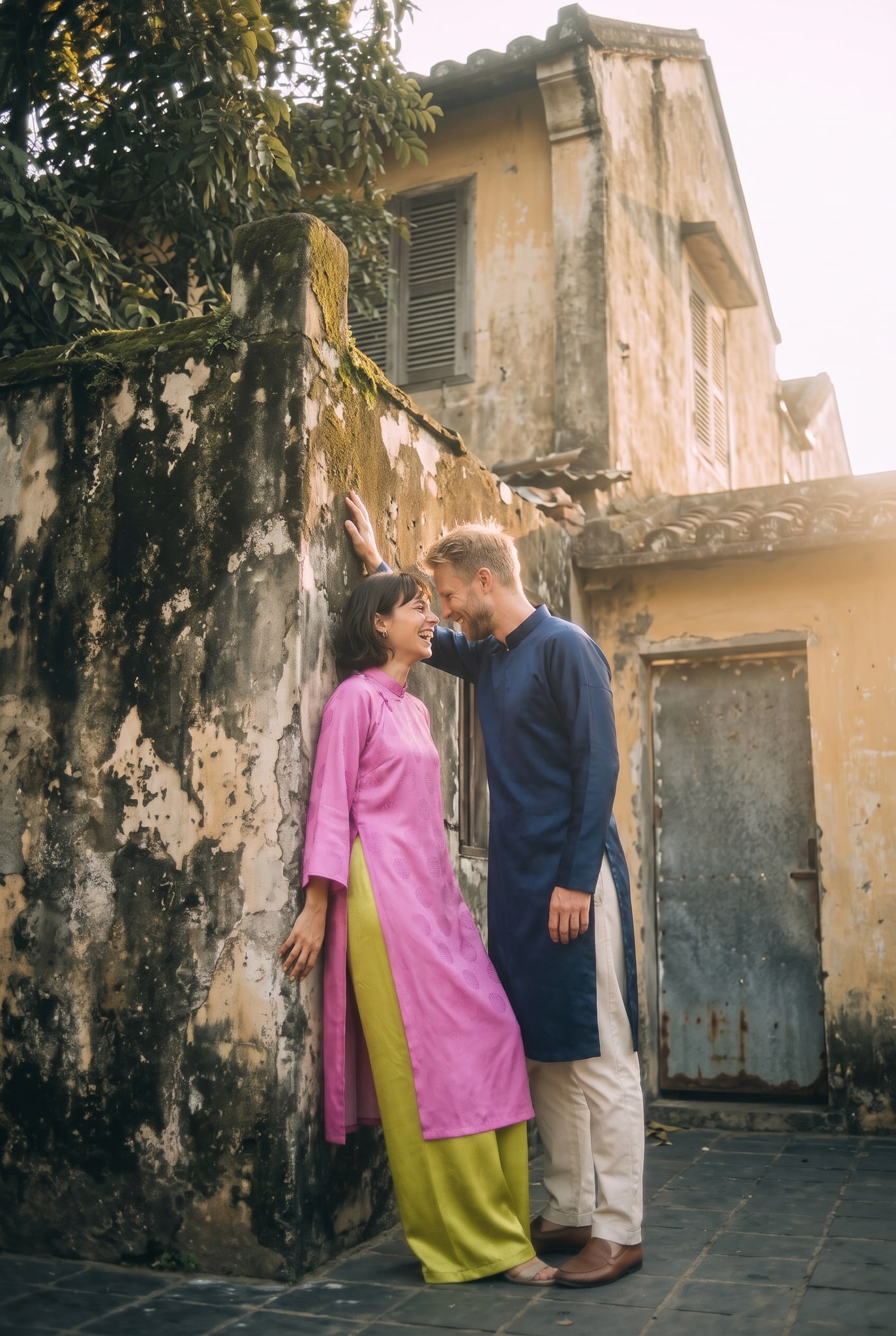
Most rental ao dai use breathable silk or linen blends designed for Vietnamese heat—never polyester-heavy synthetics that trap sweat. Silk offers drape and shimmer; linen breathes faster but wrinkles. Cotton blends split the difference. A lightweight ao dai worn over loose silk pants lets air flow at the neck, arms, and legs while covering everything. Compare this to Western summer dresses: a sleeveless shift dress exposes arms and often hems above the knee, whereas a traditional ao dai—even in white or pastel—covers neck to ankle, sleeves to wrist. The fabric choice matters: if you book a rental in Hanoi, specify "summer weight" or "linen blend" when you contact us on WhatsApp, and the stylist will reserve appropriately. No guessing. Standard rental sizes run XS through XXL; custom lengths are available for tall or petite frames.
Religious Sites, Temples, and Formal Dress Codes—What's Actually Required?
Buddhist and Taoist temples (including the Temple of Literature, Jade Mountain Temple, and Cao Dai Holy See) enforce no-bare-legs, no-bare-shoulders, no-hats, no-shoes rules. Some pagodas ask women to avoid white or black (colors of mourning); others welcome any respectful attire. Before visiting, check site-specific guidance online—but a ao dai preempts every rule. Mosques (found in Saigon and Hanoi's Muslim communities) require covered hair, arms, and legs for women; men wear long pants and closed shoes. Christian services in Vietnam are typically Western-casual but appreciate long pants or skirts. The safest rule: if your outfit would be immodest at a funeral or court hearing in your home country, it's too casual for Vietnam's sacred spaces. A ao dai—particularly in neutral tones (white, cream, black, pastels)—works everywhere. For Saigon ao dai rentals, ask our team to match your temple itinerary when you book. We'll ensure color and style align with etiquette.
What to Wear Instead: A Practical Comparison Table
| Scenario | ❌ Avoid | ✅ Ao Dai Rental | Why It Works |
|---|---|---|---|
| Temple visit | Shorts, tank, hats | Rental ao dai in cream or white | Covers all rules; deeply respectful. |
| Tet celebration | Jeans, sneakers, sleeveless | Rental ao dai in red, gold, or silk | Photographs beautifully; honors tradition. |
| Wedding / dinner | Short dress, visible straps | Rental ao dai in jewel tone | Elegant, formal, culturally appropriate. |
| Photoshoot (Hoi An old town) | Casual Western summer dress | Rental ao dai + styling | Iconic backdrop demands dress; rental includes hair/makeup tips. |
| City walk (Hanoi) | Bikini top, hot pants | Rental ao dai in linen | Cool, covered, and blends with locals. |
| Beach day | Swimwear cover-up only | Long pants + modest top (not ao dai) | Beaches are informal; ao dai not needed there. |
Note: Ao Dai Diaries rentals include fitting, cultural guidance, and same-day delivery. Prices depend on fabric and occasion; book via WhatsApp for exact costs.
Which Cities and Occasions Make Ao Dai Rental Essential—Not Optional?
Hanoi (Old Quarter, temples, graduations): Tet, family altars, Temple of Literature photoshoots, and formal university events demand a ao dai. Hanoi ao dai rentals are busiest December–February (Tet prep) and June (graduation season). Book 2–3 weeks early. Museums and government buildings expect formal dress; ao dai signals respect immediately.
Saigon (Reunification Palace, Cao Dai temples, weddings): The Cao Dai Holy See in Tây Ninh requires respectful dress; ao dai is ideal. Wedding guest lists in Saigon often encourage traditional wear. Saigon rentals are most in-demand during lunar holidays and wedding seasons (September–November, January–February). Rental shops in District 1 offer fast fittings.
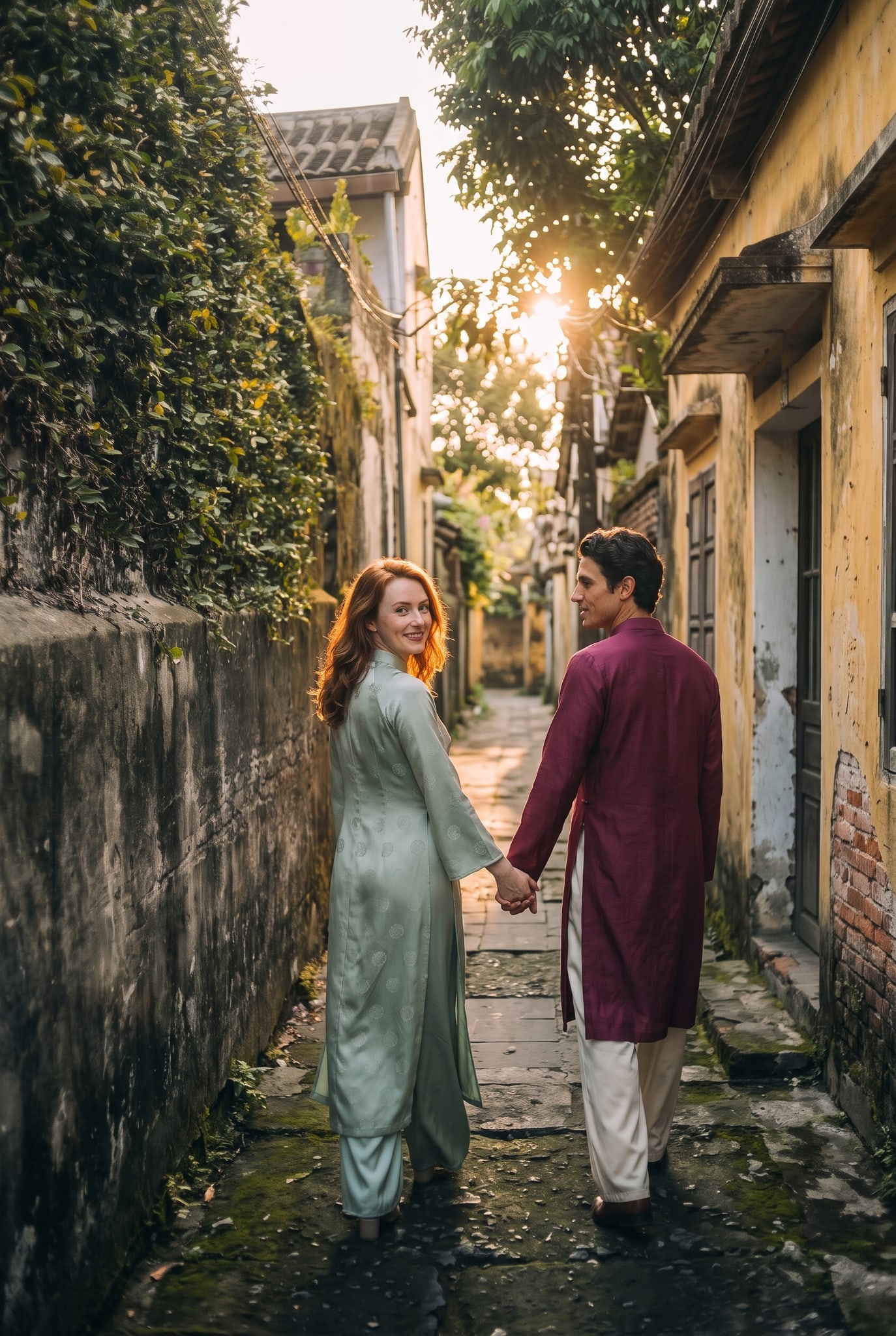
Hoi An (Ancient town photoshoots, lantern festivals): The UNESCO Old Town is THE ao dai backdrop. Lantern Festival (14th lunar month) draws thousands in traditional dress. Hoi An ao dai rentals include on-site styling and photographer referrals. Same-day rental common for walk-ins.
Da Nang (beach gateway, but temples nearby): My Khe Beach is casual, but nearby Marble Mountains temple requires coverage. Da Nang rentals serve morning temple visits, then change for beach afternoons. Flexible booking helps.
Each city has distinct peak seasons; plan 1–2 weeks ahead for Tet (January–February) or weddings.
How to Decide: Rent, Buy, or Wear What You Packed?
Rent if: you're visiting 1–2 weeks, don't own formal dress, want authentic photos, or will see temples. Cost is low (~see packages & prices per day); no laundry. Sizes XS–XXL. Deposit (~see packages & prices) refunded on return.
Buy if: you're moving to Vietnam, plan multiple wearings, or want a keepsake. Expect see packages & prices online; shipping 5–10 days in US (free over see packages & prices). Quality varies; check reviews.
Wear what you packed if: you're staying on beach resorts only, have professional travel wear already, or are confident in your modesty. But temples, weddings, and photoshoots will feel awkward or out-of-place.
Honest take: Most tourists underestimate how much they'll encounter sacred spaces or formal events. Renting removes stress, saves luggage space, and ensures you look intentional—not scrambling. Ao Dai Diaries packages bundle rentals with photoshoots, so you get styling, location guidance, and professional images in one booking.
What to Check Before You Book a Rental
- Occasion: Temple, photoshoot, wedding, festival, or casual stroll? Each has style and fabric preferences.
- Dates: Peak seasons (Tet, graduations, holidays) book fast. Confirm rental length and return policy (typically same-day or 5-day).
- Fit: Provide height and weight; XS–XXL covers most frames, but custom lengths (+3–5 inches) available.
- Color/print: Choose neutral (white, cream, black, pastel) for temples; bold (red, gold, jewel) for celebrations.
- Add-ons: Hair/makeup, conical hat (nón lá), photography package, hotel delivery—ask on WhatsApp.
- Deposit: Expect refundable security hold (~see packages & prices). Return condition checked on drop-off.
- Styling advice: Free consultation included; stylist explains etiquette, posture, and photo angles.
👗 Rent your ao dai — WhatsApp/Zalo +84 338 762 340
---
How Ao Dai Rental Works: The Full Process
When you contact Ao Dai Diaries via WhatsApp/Zalo, a stylist asks your occasion, dates, size, and city. You receive 2–3 style photos (color, fabric, embroidery options) within 2 hours. Once you choose, fit is confirmed via video or in-studio (Hanoi, Saigon, Hoi An, Da Nang). Payment and deposit are collected; same-day or next-day delivery to your hotel is standard. On return, the garment is inspected (minor wrinkles expected; stains or damage may incur fees). Deposit refunded within 2–3 days. Total process: 5 minutes booking → 2 hours reply → 1 hour fitting → 1 day wear → 10 minutes return. See how ao dai rental works for full details.
---
Frequently asked questions
Can I wear Western formal wear (long dress, blazer) instead of an ao dai?
Yes, in some settings—hotels, corporate offices, upscale restaurants. But temples, weddings, and cultural events expect or strongly prefer traditional dress. An ao dai is warmer, more mobile, and signals cultural respect; most visitors find it simpler than packing formal wear. Rent for peace of mind.
What if I don't cover my shoulders or legs at temple?
Staff may ask you to wrap in a provided scarf or deny entry entirely (especially pagodas). Fines are rare, but you'll lose time. Renting an ao dai avoids this friction completely.
Is white or black ao dai unlucky?
Not for visitors. White is pure and formal; black is elegant. Locals avoid white/black for Tet and funerals (mourning colors), but tourists wear them year-round at temples and photoshoots. Ask your rental stylist if you're uncertain.
Do I need to wear a conical hat (*nón lá*) with my ao dai?
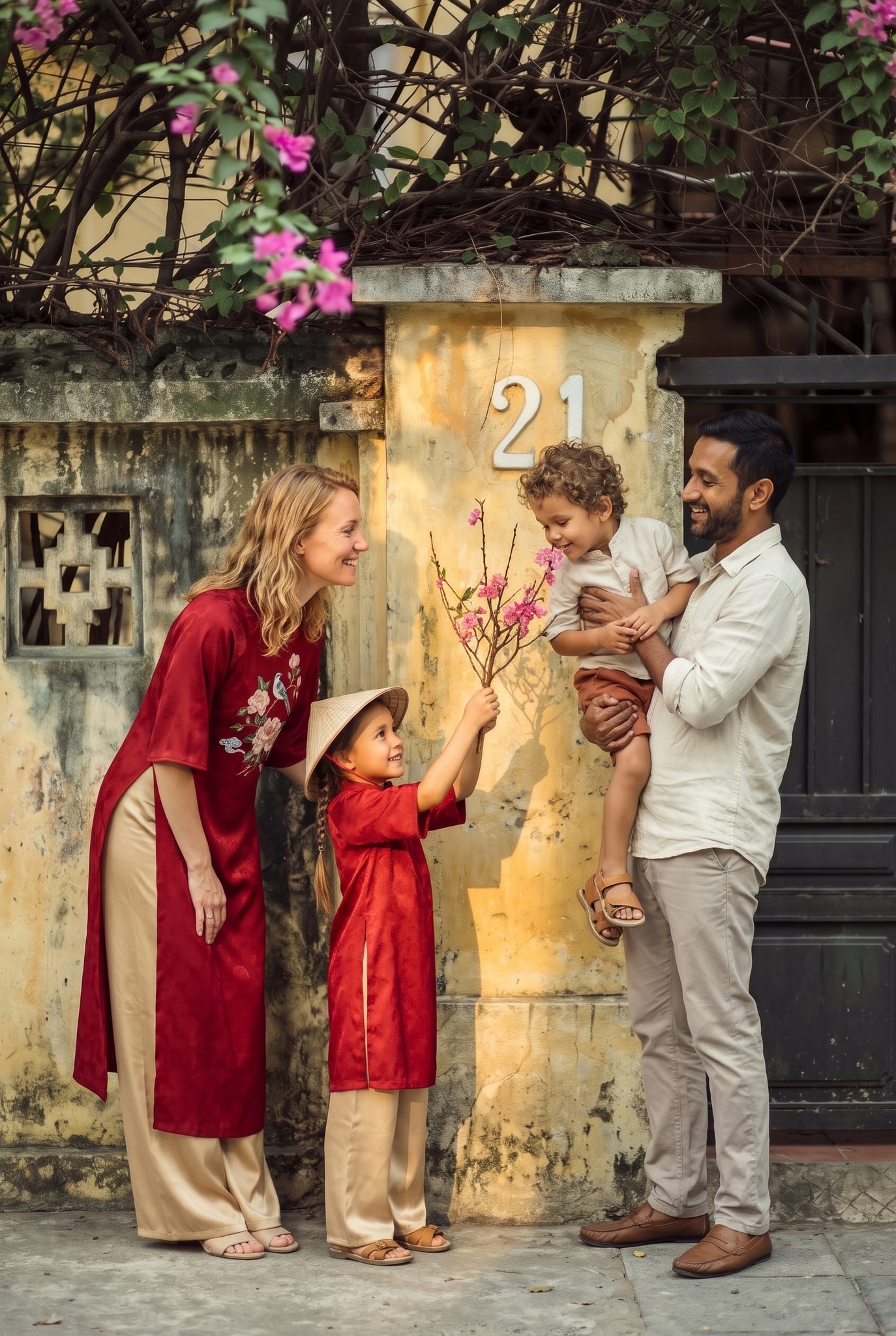
No, unless you want the full traditional look for photos. Most rentals focus on the tunic and pants. Hats are optional add-ons; ask when booking a photoshoot package.
How much do ao dai rentals cost compared to buying?
Rentals run ~see packages & prices–see packages & prices per day; buying starts ~see packages & prices–see packages & prices (plus 5–10 days shipping). If you're in Vietnam for 1–2 weeks, rent. If you're moving there or will wear it multiple times, buy. Most tourists rent and save luggage space. ===INTERNAL LINKS SUMMARY=== 1. rent an ao dai — pillar link ✓ 2. book a rental in Hanoi — city link ✓ 3. Saigon ao dai rentals — city link ✓ 4. Hoi An ao dai rentals — city link ✓ 5. Da Nang rentals — city link ✓ 6. See rental by city — general rental hub ✓ 7. Ao Dai Diaries packages — packages link ✓ 8. See how ao dai rental works — process link ✓
Frequently asked questions
Can I wear Western formal wear (long dress, blazer) instead of an ao dai?
Yes, in some settings—hotels, corporate offices, upscale restaurants. But temples, weddings, and cultural events expect or strongly prefer traditional dress. An ao dai is warmer, more mobile, and signals cultural respect; most visitors find it simpler than packing formal wear. Rent for peace of mind.
What if I don't cover my shoulders or legs at temple?
Staff may ask you to wrap in a provided scarf or deny entry entirely (especially pagodas). Fines are rare, but you'll lose time. Renting an ao dai avoids this friction completely.
Is white or black ao dai unlucky?
Not for visitors. White is pure and formal; black is elegant. Locals avoid white/black for Tet and funerals (mourning colors), but tourists wear them year-round at temples and photoshoots. Ask your rental stylist if you're uncertain.
Do I need to wear a conical hat (*nón lá*) with my ao dai?
No, unless you want the full traditional look for photos. Most rentals focus on the tunic and pants. Hats are optional add-ons; ask when booking a [photoshoot package](/packages).
How much do ao dai rentals cost compared to buying?
Rentals run ~see packages & prices–see packages & prices per day; buying starts ~see packages & prices–see packages & prices (plus 5–10 days shipping). If you're in Vietnam for 1–2 weeks, rent. If you're moving there or will wear it multiple times, buy. Most tourists rent and save luggage space. ===INTERNAL LINKS SUMMARY=== 1. [rent an ao dai](/guide/ao-dai) — pillar link ✓ 2. [book a rental in Hanoi](/hanoi) — city link ✓ 3. [Saigon ao dai rentals](/ho-chi-minh-city) — city link ✓ 4. [Hoi An ao dai rentals](/hoi-an) — city link ✓ 5. [Da Nang rentals](/da-nang) — city link ✓ 6. [See rental by city](/rent) — general rental hub ✓ 7. [Ao Dai Diaries packages](/packages) — packages link ✓ 8. [See how ao dai rental works](/how-it-works) — process link ✓
Dozens of colours, all sizes XS–XXL, delivered to your hotel in Hanoi, Saigon, Hoi An or Da Nang. One WhatsApp or Zalo message.
More guides
You might also like
The ao dai is Vietnam's iconic silk dress, worn for celebrations and formal occasions. Ao Dai Diarie
May is Vietnam's hottest month before monsoon season. We'll help you choose the right outfit—whether
December weather in Vietnam is cool and dry—ideal for wearing the ao dai. Here's what suits the seas