guide/ao-dai
What to Wear in Sapa Vietnam in January: Layering + Ao Dai Guide
Ao Dai Diaries team · All guides →
Sapa's January climate demands layering: expect 40–50°F (5–10°C) mornings, rare frost, and humidity. Wear thermal leggings or thick tights under trousers; add a long-sleeve base layer beneath jackets or sweaters. If you're renting an ao dai for cultural photos or evening gatherings, choose silk-blend or cotton-lined versions (available from Ao Dai Diaries' Hanoi rental or Da Nang branch, ~30–45 min drive to Sapa) rather than lightweight silk—they retain warmth. Pair with a fitted cardigan, linen shawl, or tailored blazer. Avoid bare shoulders, thin fabrics, or open-toe sandals. Book ao dai 5–7 days ahead; deposits are refundable if you cancel ≥48 hours prior. Most visitors layer Western thermals under ao dai for 2–3 hour photoshoots, then change into warm jackets for hiking or dining.
January in Sapa means cold mornings, possible mist, and a chance to blend traditional elegance with practical warmth. Here's how to dress for the mountains without sacrificing comfort—and why an ao dai rental makes sense.
Why January in Sapa Requires Smarter Layering Than Summer Visits
Sapa sits at 3,143 feet (958 m) elevation in northern Vietnam's Fansipan Mountains. January temperatures drop to 40–50°F (5–10°C) at dawn, with humidity lingering from recent monsoon remnants. This is not tropical Vietnam. Lightweight linen, loose cotton, or sleeveless ao dai—ideal for Hanoi's summer heat—will leave you cold during a morning walk or photography session. The key difference: winter ao dai rentals are thicker, lined, and styled for warmth without bulk. If you're planning cultural photo sessions or Tet gatherings in nearby towns (like Cat Cat village, 6 km away), booking an ao dai 5–7 days in advance through Ao Dai Diaries ensures the rental center has insulated versions available, not just lightweight silk meant for warm months.
👗 Rent your ao dai — WhatsApp/Zalo +84 338 762 340

What Layering System Keeps You Comfortable Without Bulk?
Most travelers to Sapa in January ask: "Can I actually move and sit comfortably in three layers?" Yes—if you layer thin, breathable fabrics rather than chunky sweaters. Start with a merino wool or thermal base layer (long-sleeve undershirt, 100–150 gsm weight), then add thick tights or fleece-lined leggings under trousers or an ao dai's wide-leg bottom. Top with a fitted cardigan, structured blazer, or wool scarf. This three-part system traps warm air without adding visible bulk. When photographing in an ao dai, you wear the ao dai's tunic over your thermal base layer and cardigan—the ao dai's loose cut hides the extra layers. Afterward, slip into a heavy parka or shawl for outdoor activity. Local rental shops in Hanoi and Da Nang (see rental options by city) often stock ao dai in heavier cotton-silk blends or with internal fleece liners; these run 15–25% heavier than summer versions but are cut to the same silhouette. Always ask the rental assistant: "Is this version lined?" before finalizing your booking.
Ao Dai vs. Western Warm-Weather Layers: Which Works Best in Sapa?
| Outfit Choice | Best For | January Comfort | Key Advantage | Rental Lead Time |
|---|---|---|---|---|
| Ao dai + thermal base + cardigan | Photos, cultural events, short indoor time | 2–3 hours outdoor | Elegant, culturally respectful, photos | 5–7 days ahead via Hanoi or Da Nang |
| Western thermals + wool blazer + scarf | Full-day hiking, villages, exposed areas | All-day outdoor | Most mobility, proven cold-weather kit | No booking needed |
| Hybrid: ao dai morning, Western jacket afternoon | Mixed itinerary (temple + trek) | Flexible, 4–6 hours total | Best of both, Instagram-worthy shift | 3–5 days ahead |
Each approach works—choice depends on your itinerary. If your Sapa plans include 4+ hours of walking (Cat Cat waterfall, minority villages), Western layers dominate. If you're staying in town for meals, evening photoshoots, or Tet celebrations, an ao dai rental justifies the 5–7 day advance booking through Ao Dai Diaries' Hanoi branch (120 km, 2.5 hr drive to Sapa) or the Da Nang location (380 km, 7 hr drive—less ideal, but available for same-day emergency rentals). Hybrid travelers rent the ao dai for morning photos, return it by early afternoon, then switch into insulated Western gear for afternoon treks.
📸 Ao dai + photoshoot packages
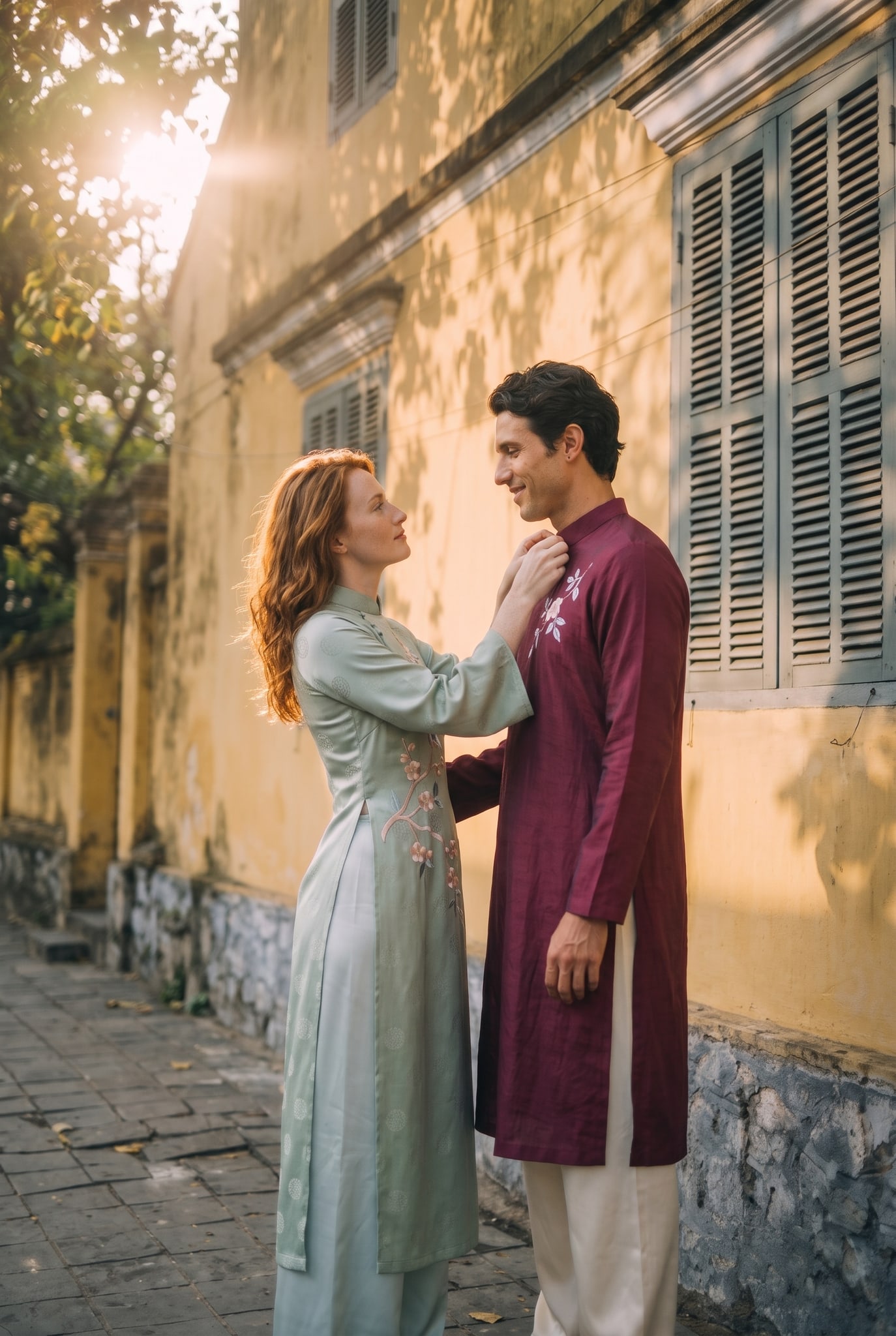
Specific Fabrics and Styles That Perform Best in January Mountain Conditions
Lightweight silk ao dai (the norm for Ho Chi Minh City summer weddings) provides zero insulation and will feel damp and cold in Sapa's January humidity. Instead, request:
- Cotton-linen blend ao dai: retains warmth, breathes, resists wrinkles. Slightly stiffer than pure silk; ideal for first-time wearers and winter conditions.
- Silk-lined cotton ao dai: warm outer layer, smooth inner lining for comfort against thermal base layers. Avoids static and chafing.
- Fleece-back ao dai (specialty winter stock): rare, but some high-end Hanoi rental shops stock them. Heavier, less graceful drape, but genuinely warm for 3–4 hour outdoor photo sessions.
Avoid pure silk without lining. Avoid sleeveless or "ao dai tam" (sleeveless ao dai tunic) entirely in January. Always wear long sleeves beneath—either the ao dai's built-in sleeves or a thermal base layer visible at the wrist (acceptable and common for January rentals). For color, rich jewel tones (emerald, deep blue, burgundy) photograph better than pastels in Sapa's misty, overcast light and visually "warm" the image. Neutral grays and blacks flatten in low-contrast winter lighting; avoid unless it matches your personal brand. Request a fitted cardigan rental add-on (many Hanoi shops offer these for see packages & prices extra) to layer over the ao dai's shoulders for the walk from your hotel to photo spots.
How to Prevent Wet, Uncomfortable Fabrics During Sapa's Misty Mornings
Sapa's January fog is not rain—it's humidity. An ao dai's delicate fabric can absorb moisture, feel clammy, and lose its drape within 30 minutes of morning mist exposure. Prevention:
- Book a waterproof silk shawl or light rain cape as a rental add-on (5–7 days ahead, Hanoi branch). Drape over shoulders during misty walks; remove for photos.
- Limit outdoor wear to 2–3 hour blocks. Rent the ao dai, photograph, return, dry it, then re-rent in afternoon if needed—some shops offer same-day re-rentals at a 20–30% discount.
- Choose cotton-blend ao dai over pure silk when booking (ask explicitly: "Do you have a winter-weight version?"). Cotton resists moisture cling better.
- Carry a compact microfiber towel. Dab, don't wring, the hem and sleeves every 30 minutes if you're caught in mist. Bring it in your rental deposit package to return with the ao dai in good condition.
- Schedule photo sessions for midday (10 a.m.–2 p.m.), when mist lifts and light is stronger. Avoid sunrise shoots in January unless you specifically want moody, misty aesthetic.
Rental centers in Hanoi and Da Nang understand January conditions; mention when booking: "We're shooting in morning mist—do you have a water-resistant version?" This question flags to the staff that you're aware of the climate, and they'll allocate a more robust ao dai to your booking rather than a delicate silk piece suited to indoor weddings.
📍 See rental by city
What to Check Before You Confirm Your Ao Dai Rental Reservation
Sapa rentals are usually arranged through regional hubs (Hanoi is the closest major center, 120 km away). Before you commit:
- Confirm delivery or pickup location. Does the Hanoi rental center deliver to your Sapa hotel, or do you pick up on the way? Delivery costs see packages & prices and takes 1–2 days; pickup saves money but adds 1 hour to your Sapa arrival day.
- Verify fabric and lining. Ask: "Is this ao dai lined? Is it cotton or silk? Will it keep me warm at 50°F for 2 hours?" Honest rental staff will tell you: "Yes, it's lined cotton" or "No, it's lightweight—not ideal for January."
- Check the deposit amount and refund terms. Standard deposits are refundable within 48 hours if the ao dai is returned unworn and clean. Confirm in writing via WhatsApp (easier for refund disputes than phone calls).
- Request a fitting video call if booking remotely. Many Hanoi-based shops now offer 10-minute video fittings to check length, arm fit, and comfort before deposit payment. This prevents the "arrived and it doesn't fit" scenario.
- Ask about add-ons and timing. Cardigan rental? Shawl? Underslip? How many hours is included? (Typical: 4–6 hours). What time does late return start charging? (Often after 6 p.m., incurring see packages & prices per hour).
- Clarify weather contingency. If heavy rain makes photos impossible, will the rental shop extend your hours at no cost, or offer a rescheduling discount? Ask this upfront.
Write your confirmation in WhatsApp after the call to lock in details and protect yourself.
---

Frequently asked questions
Can I wear an ao dai while hiking in Sapa's mountains, or is it only for photos?
Ao dai is not designed for hiking—the floor-length tunic catches mud, the fabric tears easily on brush, and the fit restricts striding. Wear it for village visits, temple stops, or scheduled photo sessions (1–2 hours max), then change into trekking pants and boots. Many travelers combine both: ao dai for morning stroll + cultural photos in town, Western thermals + hiking boots for afternoon Cat Cat waterfall or rice terrace treks.
Will a standard size M ao dai from Hanoi fit me if I'm 5'7" or taller?
Ao dai length is determined by inseam, not height alone. If you're 5'7"–5'9" and average build, you're likely a size M–L. However, Sapa-bound travelers should video-call the rental center (ask when booking) to confirm length—ao dai should graze the top of your shoes when standing; if it pools on the floor, it looks awkward in photos and drags in mud. Rental shops in Hanoi stock XS–XXL; tall travelers (5'10"+) may need a custom or premium size, ordered 7–10 days in advance.
Is January too cold to comfortably wear an ao dai for more than 30 minutes?
No—if you layer correctly. A thermal base layer + insulated ao dai (cotton or fleece-lined) + fitted cardigan keeps you warm for 2–3 hours of light activity (walking, sitting for photos, sightseeing). Avoid standing still in wind or open-air locations for >45 min at a time. If you're doing a 1-hour photo session, choose a sheltered garden, indoor courtyard, or tea house patio. Sapa's January mist is cold but still air—true wind chill is rare, so proper layering works well.
Can I rent an ao dai in Sapa town itself, or do I have to book from Hanoi or Da Nang?
Sapa has limited local ao dai rental (few shops, limited inventory, no advance sizing consultations). Booking 5–7 days ahead through Hanoi or Da Nang ensures choice, proper fitting, and cold-weather fabrics in stock. If you arrive in Sapa without a pre-booked rental, you can contact Ao Dai Diaries' Hanoi center for same-day emergency delivery (add see packages & prices–see packages & prices rush fee), but sizing by phone is risky. Recommend booking before you leave your home country.
What if the ao dai arrives wrinkled or damaged—can I get a refund or replacement?
Rental deposits are fully refundable if the ao dai is returned in rental condition (no stains, tears, or odors). If it arrives damaged, contact the rental center immediately via WhatsApp with photos; they'll replace it at no charge. Minor wrinkles are normal and part of rental; a light steam or iron (done by the rental team) is standard. Always inspect the ao dai within 30 minutes of arrival; report any issues before you wear it. Keeps both you and the rental shop protected.
Should I buy my own ao dai instead of renting for a Sapa trip?
Renting is smarter for one-time January Sapa trips. Buying a quality ao dai costs see packages & prices–400+ USD; renting costs see packages & prices–see packages & prices for 4–6 hours. Rental also means: no laundry risk (the shop cleans it), no storage hassle, and no regret if the style doesn't match future photos. Buy if you plan 3+ ao dai wears per year or live in Vietnam long-term. For a single winter hill trip, rent through Ao Dai Diaries. --- 👗 Rent your ao dai — WhatsApp/Zalo +84 338 762 340 Ready to book? Contact us on WhatsApp or Zalo to confirm January availability, discuss fabric weight, and arrange delivery to your Sapa hotel. Mention "January hill trip" in your opening message—staff will know to allocate insulated, weather-ready stock. See our full rental guide for sizing, deposit, and return details.
Frequently asked questions
Can I wear an ao dai while hiking in Sapa's mountains, or is it only for photos?
Ao dai is *not* designed for hiking—the floor-length tunic catches mud, the fabric tears easily on brush, and the fit restricts striding. Wear it for village visits, temple stops, or scheduled photo sessions (1–2 hours max), then change into trekking pants and boots. Many travelers combine both: ao dai for morning stroll + cultural photos in town, Western thermals + hiking boots for afternoon Cat Cat waterfall or rice terrace treks.
Will a standard size M ao dai from Hanoi fit me if I'm 5'7" or taller?
Ao dai length is determined by inseam, not height alone. If you're 5'7"–5'9" and average build, you're likely a size M–L. However, Sapa-bound travelers should video-call the rental center (ask when booking) to confirm length—ao dai should graze the top of your shoes when standing; if it pools on the floor, it looks awkward in photos and drags in mud. Rental shops in [Hanoi](/hanoi) stock XS–XXL; tall travelers (5'10"+) may need a custom or premium size, ordered 7–10 days in advance.
Is January too cold to comfortably wear an ao dai for more than 30 minutes?
No—if you layer correctly. A thermal base layer + insulated ao dai (cotton or fleece-lined) + fitted cardigan keeps you warm for 2–3 hours of light activity (walking, sitting for photos, sightseeing). Avoid standing still in wind or open-air locations for >45 min at a time. If you're doing a 1-hour photo session, choose a sheltered garden, indoor courtyard, or tea house patio. Sapa's January mist is cold but still air—true wind chill is rare, so proper layering works well.
Can I rent an ao dai in Sapa town itself, or do I have to book from Hanoi or Da Nang?
Sapa has limited local ao dai rental (few shops, limited inventory, no advance sizing consultations). Booking 5–7 days ahead through [Hanoi](/hanoi) or [Da Nang](/da-nang) ensures choice, proper fitting, and cold-weather fabrics in stock. If you arrive in Sapa without a pre-booked rental, you can contact [Ao Dai Diaries' Hanoi center](/hanoi) for same-day emergency delivery (add see packages & prices–see packages & prices rush fee), but sizing by phone is risky. Recommend booking before you leave your home country.
What if the ao dai arrives wrinkled or damaged—can I get a refund or replacement?
Rental deposits are fully refundable if the ao dai is returned in rental condition (no stains, tears, or odors). If it *arrives* damaged, contact the rental center immediately via WhatsApp with photos; they'll replace it at no charge. Minor wrinkles are normal and part of rental; a light steam or iron (done by the rental team) is standard. Always inspect the ao dai within 30 minutes of arrival; report any issues before you wear it. Keeps both you and the rental shop protected.
Should I buy my own ao dai instead of renting for a Sapa trip?
Renting is smarter for one-time January Sapa trips. Buying a quality ao dai costs see packages & prices–400+ USD; renting costs see packages & prices–see packages & prices for 4–6 hours. Rental also means: no laundry risk (the shop cleans it), no storage hassle, and no regret if the style doesn't match future photos. Buy if you plan 3+ ao dai wears per year or live in Vietnam long-term. For a single winter hill trip, rent through [Ao Dai Diaries](/guide/ao-dai). --- [👗 Rent your ao dai — WhatsApp/Zalo +84 338 762 340](https://wa.me/84338762340) Ready to book? Contact us on WhatsApp or Zalo to confirm January availability, discuss fabric weight, and arrange delivery to your Sapa hotel. Mention "January hill trip" in your opening message—staff will know to allocate insulated, weather-ready stock. See our [full rental guide](/how-it-works) for sizing, deposit, and return details.
Dozens of colours, all sizes XS–XXL, delivered to your hotel in Hanoi, Saigon, Hoi An or Da Nang. One WhatsApp or Zalo message.
More guides
You might also like
The ao dai is Vietnam's iconic silk dress, worn for celebrations and formal occasions. Ao Dai Diarie
May is Vietnam's hottest month before monsoon season. We'll help you choose the right outfit—whether
December weather in Vietnam is cool and dry—ideal for wearing the ao dai. Here's what suits the seas