guide/ao-dai
What to Wear in Sapa Vietnam in September: Ao Dai + Layers
Ao Dai Diaries team · All guides →
September in Sapa Vietnam is cool, humid, and misty—daytime temps hover around 60–66°F, with mornings near 50°F and frequent cloud cover. Wear a lightweight, long-sleeved ao dai in breathable silk or cotton (not heavy brocade), paired with a fitted cardigan, linen blazer, or quilted gilet. Avoid sleeveless designs; Sapa's altitude (3,143 feet) keeps nights chilly. Layer with thermal leggings or long pants under the ao dai's split skirt. Bring a compact rain jacket—September sees 8–12 rain days. Ao Dai Diaries rents climate-appropriate ao dai in sizes XS–XXL; book 3–5 days ahead for fitting, deposit, and same-day or hotel delivery across Vietnam. Choose light colors (white, pale blue, cream) to reflect cool mountain light for better photography.
Sapa transforms into a moody masterpiece each September: limestone peaks vanish into clouds, rice paddies turn emerald, and temperature swings can shift by 15°F between sunrise and midday. The ao dai—Vietnam's iconic long tunic and flowing pants—fits this landscape perfectly if you choose the right weight, length, and layers.
This guide explains what to wear in Sapa in September, with honest detail on climate, ao dai rental options, and how to avoid cold, damp discomfort during your visit or photoshoot.
Why does September in Sapa feel colder than Hanoi or Saigon?
Sapa sits at 3,143 feet elevation in the Hoang Lien Son mountains. September's northeast monsoon brings cool, moist air from China; humidity stays 80–90% but temperature rarely climbs above 66°F. Compare that to Hanoi's September average of 75–80°F—Sapa is 10–15°F cooler. Early mornings near rice terraces can drop to 50°F. This isn't cold by winter standards, but it is cold enough that a sleeveless ao dai or light cotton tunic won't be comfortable for more than an hour outdoors, especially if you're standing still for photos or trekking. The key: long sleeves, a second layer, and wind resistance.
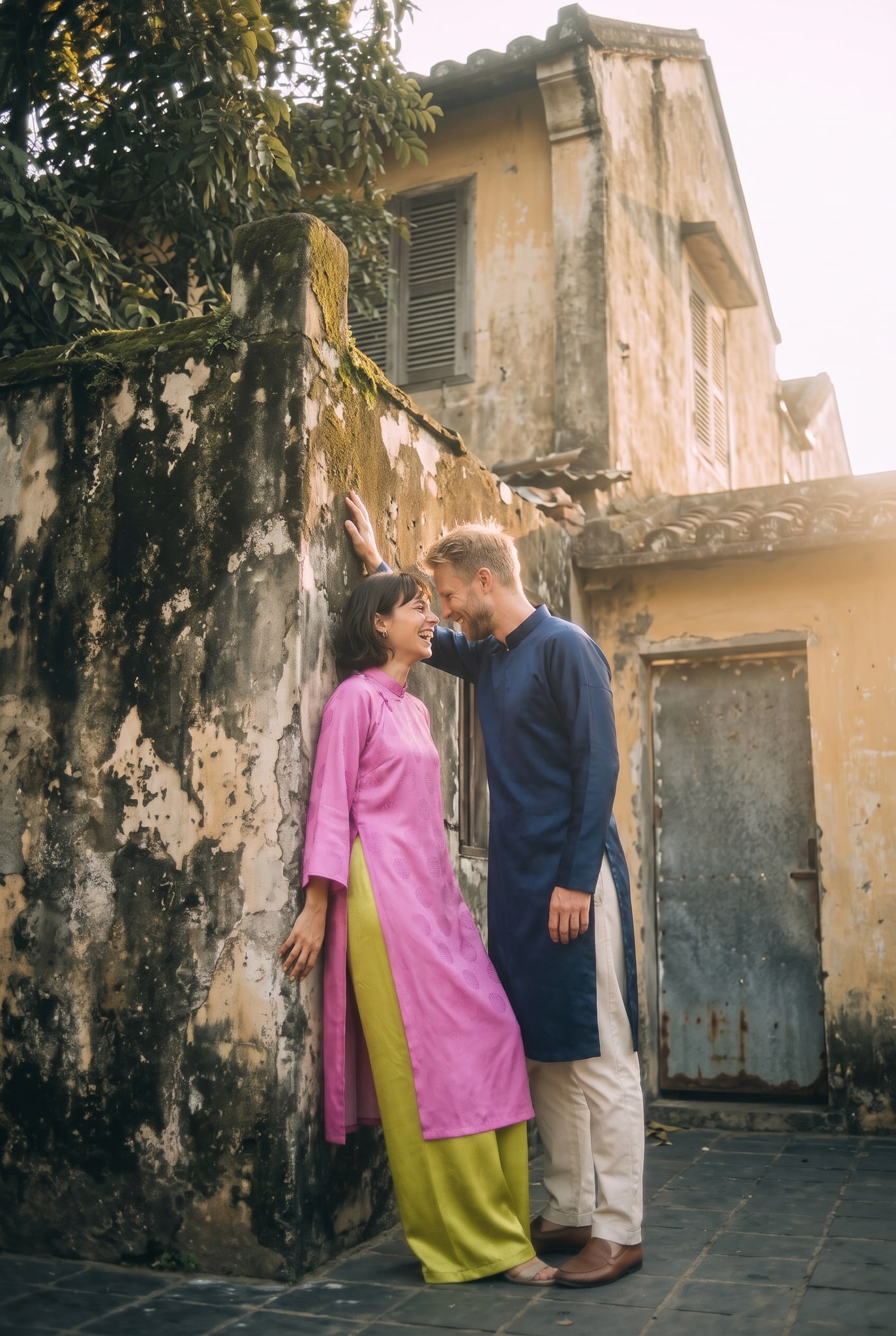
Which ao dai style works best for Sapa's weather?
Lightweight, natural-fiber ao dai in linen, cotton, or thin silk—not heavy brocade or polyester. Sapa-appropriate rentals feature:
- Thin silk blend or cotton ao dai (breathable, drapes well, wicks moisture)
- Long sleeves standard (no sleeveless options for September)
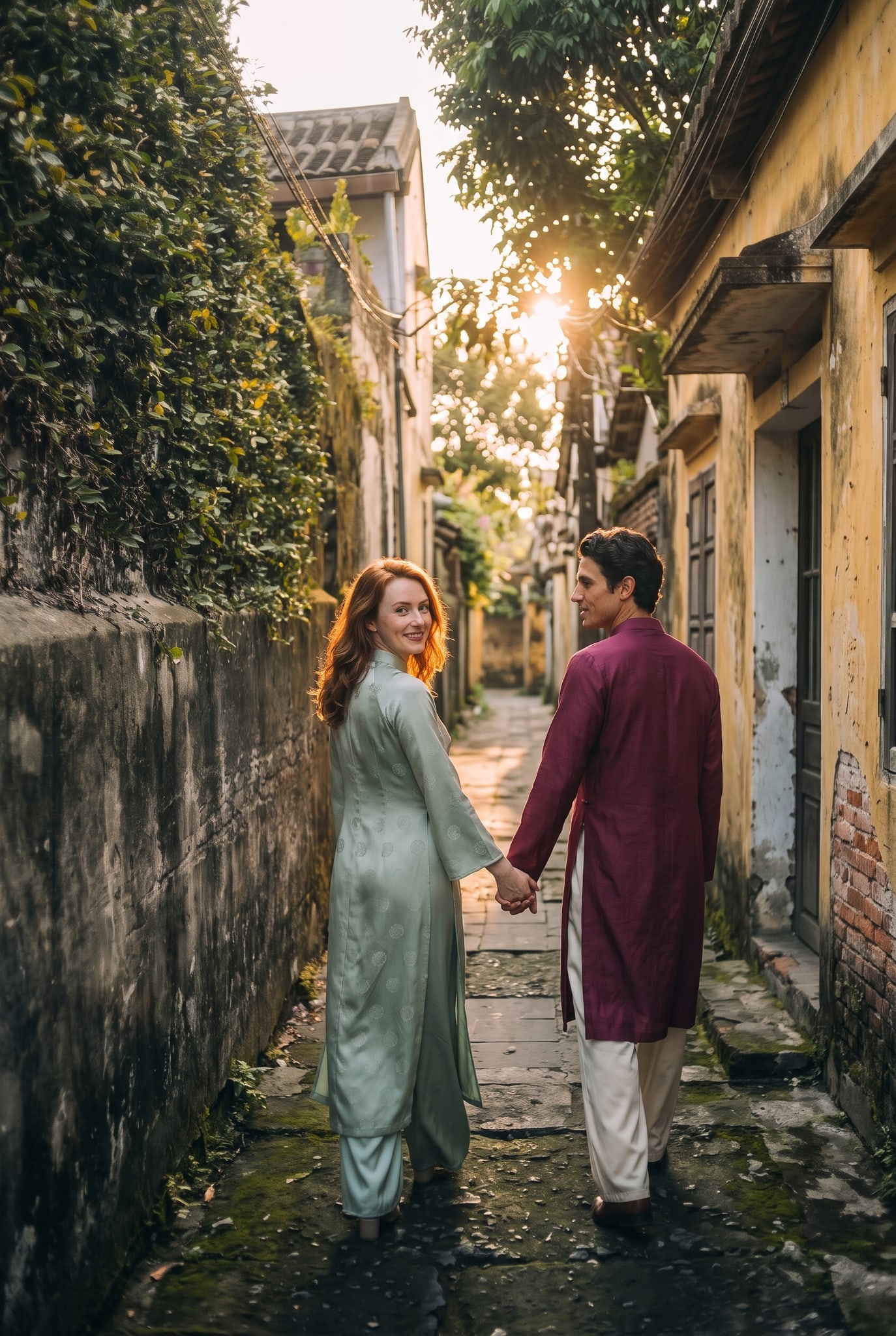
- Pale or cool colors (white, cream, soft blue, sage green) reflect light and show off mountain mist in photos
- Higher-waist, fitted bodice (sits snug so a cardigan or blazer over top doesn't bulk
- Slightly shorter length (ankle-length is traditional, but consider midi-length if you'll be hiking or in wet grass)
Avoid: heavy embroidered áo dài, thick polyester (traps sweat and humidity), dark colors that absorb mist glare, or sleeveless designs. Rental shops in Hanoi and Ho Chi Minh City stock lightweight options year-round; ask about "September/cool-weather ao dai" when you book. Allow 5–7 business days for a custom fit if you're tall, petite, or have specific color requests.
What layers should go under or over the ao dai for September?
The ao dai's genius is its flexibility—the tunic and pants can accommodate multiple layers underneath and graceful outerwear on top. Here's what works:
| Layer | Function | When to wear | Check before ordering |
|---|---|---|---|
| Thermal tights or long thermal leggings | Core warmth; worn under the ao dai pants | All day outdoors | Thin enough to fit under ao dai waistband; neutral color so seams don't show under light fabric |
| Cardigan or linen blazer | Light insulation + polished look for photos | Mornings, evenings, indoors | Cropped or hip-length (covers the ao dai's waist seam nicely); breathable linen or knit |
| Quilted gilet or puffer vest | Windbreak; worn over the ao dai tunic | Misty hikes or early morning | Lightweight, down-filled (200–300g); sits above the ao dai's hip curve |
| Silk or cotton scarf | Wind, drape, warmth | Optional for photoshoots | 2–3 meters long; pairs with ao dai color |
| Compact rain jacket | Sapa rain happens fast | Emergency/all-day outdoor plans | Packable; light color so ao dai shows in photos |
Start with the thermal leggings + cardigan combo (warm, traditional-looking). Add a gilet if forecasts show 50°F mornings or rain.
How do rental sizes and fitting work for Sapa visitors?
Ao dai fit is personal—bust, waist, hip, shoulder width, and sleeve length all matter. Here's the rental process at Ao Dai Diaries:
- Book online or WhatsApp (+84 338 762 340) with your bust, waist, hips, height, and shoe size.
- Fitting appointment (same day or next morning): visit the shop, try on 2–3 styles, confirm the fit with a tailor. This takes 30 minutes.
- Adjustment: minor hemming, waist tuck, or sleeve adjustment happens on-site or overnight.
- Deposit: typically 1–3 million VND (roughly see packages & prices) to secure the rental.
- Rental period: 24 hours standard; extensions available.
- Delivery: if you're staying in Sapa town or nearby, some rental shops offer hotel delivery (confirm when booking).
Sizes available: XS–XXL. Many foreign visitors find that Vietnamese sizing runs smaller in the shoulder/bust; if you're between sizes, size up. Tall travelers (5'9"+) should request a custom-length fitting—standard lengths are cut for 5'2"–5'8".
Book 3–5 days before your Sapa trip if renting from Hanoi or Ho Chi Minh City and arranging delivery. Sapa itself has limited rental shops; confirm availability via WhatsApp before traveling.
What photoshoot settings suit the September Sapa landscape?
Sapa in September offers:
- Rice paddies at sunrise (50–55°F, heavy mist, golden light if clouds break): wear the ao dai + cardigan; bring a thin scarf. Mist creates dreamy bokeh.
- Stone pathways and French colonial architecture in town (cool, windy): long sleeves + gilet; pale colors stand out against gray stone.
- Fansipan mountain base or Cable Car viewpoint (cooler, 10–15°F drop; can be windy): ao dai + blazer + wind-resistant scarf essential. Darker hues may disappear into clouds—pale or jewel tones work better.
- Waterfall or stream trekking (wet grass, splashing): midi-length ao dai strongly recommended; wear thermal leggings for grip and warmth.
- Sapa market or town streets (street-level, 60–65°F, variable sun/cloud): ao dai + cardigan, no extra layers needed.
Explore ao dai + photoshoot packages that include styling advice, timing, and location recommendations for cool-weather regions.
What should you check before booking an ao dai rental for Sapa?
Honest checklist:
- Confirm fit deadline: if renting from outside Sapa (Hanoi, HCMC), book 5–7 days ahead for alterations.
- Ask about sleeve type: long sleeves are non-negotiable for September comfort; some shops have rolled or three-quarter sleeves (confirm these fit your arm length).
- Fabric weight: ask "Is this silk or cotton-blend? Will it breathe in humidity?" Heavy polyester will cling and feel cold when wet.
- Color under fluorescent light: Sapa's light is overcast; pale colors photograph better than dark ones, but they stain easily. Ask the shop about fabric treatments or request a stain-release option.
- Thermal layer compatibility: bring your own thermal leggings (most travelers do) rather than renting extras. They're personal and cheaper to pack.
- Rain backup: confirm the rental includes a plastic bag or rain cover for wet storage (many don't). Bring a small waterproof pouch for your phone and deposit slip.
- Return logistics: if you're leaving Sapa early or in bad weather, confirm the return drop-off and any rush fees.
- Shoe recommendation: the ao dai's hem sits at ankle; wear flat shoes (ballet flats, slip-ons, soft hiking boots) that don't catch fabric.
Ask the shop directly: "Has anyone rented this size and color in the past two weeks? Do you have photos?" Honest shops will show you recent rentals.
👗 Rent your ao dai — WhatsApp/Zalo +84 338 762 340
---
Comparison: Sapa in September vs. Other Seasons (Why September Matters)
| Season | Temp range | Best ao dai choice | Photo quality | Why/why not |
|---|---|---|---|---|
| September (monsoon) | 50–66°F, 80%+ humidity, frequent mist | Lightweight cotton/silk, long sleeves, layers | Dreamy mist, moody; colors muted | Cold morning struggles; clouds = golden light later |
| June–August (warm season) | 60–72°F, less rain | Still lightweight but short-sleeve or sleeveless possible | Brighter; terraces lush green | Busier; haze from Vietnam lowlands |
| October–November (cool, clear) | 50–64°F, low humidity, crisp | Same lightweight layers; extra fleece jacket | Clearest skies, best visibility of mountains | Can be dry—mist less dramatic |
| December–February (winter) | 40–55°F, occasional frost | Silk-lined ao dai, wool cardigan, thermal base | Sharp, clean light; fewer tourists | Cold enough to need serious winter layers |
September wins for moody, authentic Sapa atmosphere and fewer tourists—but it demands more planning. You'll look like a seasoned traveler, not a summer rush visitor.
---
📸 Ao dai + photoshoot packages
How to rent ao dai in Sapa or nearby: Which city to book from?
Sapa town itself has limited rental shops with inconsistent stock. Instead:
- Book from Hanoi: 5 hours by car/bus south; arrange delivery to your Sapa hotel or fit in-person if you arrive a day early. Most reliable for sizes and selection.
- Book from Ho Chi Minh City: only feasible if you're there before or after Sapa; delivery would be slow.
- Book directly in Sapa town: possible, but confirm availability 7+ days ahead via WhatsApp. Smaller selection.
Best approach: Message Ao Dai Diaries WhatsApp 3–5 days before your trip with your Sapa hotel name and dates. They'll confirm rental availability, coordinate fitting in Hanoi or Sapa, and arrange hotel delivery. Deposit is held via bank transfer or in-person at fit.
📍 See rental by city
---
Honest advice: What often goes wrong—and how to avoid it
Problem: "I booked a sleeveless ao dai thinking September would be warm like the lowlands." Solution: Always ask "Is this long-sleeved?" when booking. Sapa is 10–15°F cooler than Hanoi. Sleeveless won't cut it.
Problem: "The ao dai fit my chest but the sleeves were way too short." Solution: Provide your full arm length (shoulder to wrist) when booking, not just height. Vietnamese and Western proportions differ. Allow 2–3 days for sleeve hemming.
Problem: "I wore the ao dai hiking and the hem got muddy and tore." Solution: Rent a midi-length or ask for an adjustable hem. Sapa's trails are wet and narrow. Cotton or linen is more durable than silk for outdoor trekking.
Problem: "The thermal leggings I rented were too thick and bunched up under the ao dai pants." Solution: Bring your own thin merino or synthetic leggings. Rentals often include bulky cotton. You control the fit.
Problem: "It rained and the ao dai color ran or got a stain I couldn't remove." Solution: Ask the shop about fabric treatment (some silk is pre-treated to resist stains). Bring a small umbrella or rain cape rather than draping the ao dai. Pay for stain insurance if offered—usually see packages & prices.
---
The ao dai as cultural respect in Sapa
Sapa is home to Red Dao and H'mong ethnic minorities who wear their own traditional dress daily. Wearing an ao dai (Vietnamese-Kinh dress) respectfully shows appreciation for Vietnam's culture—not disrespect to local minorities, provided you:
- Wear it with care and cleanliness (not as a costume or joke).
- Ask permission before photographing yourself near minority villages.
- Buy from local artisans and guides rather than just using the dress as a backdrop.
- Acknowledge that the ao dai is urban, Vietnamese-heritage dress, distinct from H'mong or Dao clothing.
Renting through Ao Dai Diaries means the shop can advise on ethical wearing and appropriate locations—it's part of their service.
---
Final checklist: Packing for Sapa in September with an ao dai
- [ ] Ao dai (rental, fitted 3–5 days prior)
- [ ] Cardigan or linen blazer (your own; won't fit in luggage if you rent)
- [ ] Thermal leggings or thin long underwear (wear under ao dai pants)
- [ ] Closed-toe flat shoes (ballet flats, slip-ons, soft hiking boots)
- [ ] Rain jacket or compact umbrella
- [ ] Silk or cotton scarf (optional; enhances photos)
- [ ] Sunscreen and lip balm (mist is deceptive; UV penetrates clouds)
- [ ] Waterproof phone pouch or small bag for rental deposit slip
- [ ] Copy of rental receipt or WhatsApp confirmation message
👗 Rent your ao dai — WhatsApp/Zalo +84 338 762 340
---

Frequently asked questions
Can I wear a short-sleeved ao dai in Sapa in September?
No. September daytime temps are 60–66°F, mornings near 50°F. Short sleeves leave your arms cold and uncomfortable within an hour. Long sleeves are standard for September rentals; ask the shop to confirm.
Do I need to rent thermal leggings, or should I bring my own?
Bring your own thin merino-wool or synthetic leggings. Rental thermals are often bulky and don't fit well under ao dai pants. Pack lightweight pairs in your luggage—they weigh almost nothing and dry quickly.
How much does it cost to rent an ao dai in Sapa?
Deposit typically runs 1–3 million VND (see packages & prices–$120 USD); rental duration and final cost depend on the shop and ao dai style. Book via Ao Dai Diaries WhatsApp for current pricing and packages.
Will the ao dai fit if I'm tall or have broad shoulders?
It depends on the rental shop's custom-fit options. Ao Dai Diaries sizes XS–XXL and offers tailoring for height and shoulder width. Provide your measurements (bust, waist, hips, height, arm length) when booking so they can assign the best fit.
What should I do if it rains heavily during my rental period?
Keep the ao dai dry. Bring a rain cape or umbrella; avoid draping the jacket over the ao dai for hours (fabric can stain or mildew). Store it in a plastic bag until it dries. Ask the rental shop about stain insurance when you book.
Is it disrespectful to wear an ao dai as a tourist in Sapa?
No, if worn respectfully. The ao dai is Vietnamese-Kinh dress; wearing it shows cultural appreciation. Avoid treating it as a costume. Ask permission before photographing near minority villages, and support local guides and artisans rather than just using the ao dai for photos.
How early should I book a rental for a Sapa trip?
Book 3–5 days ahead if renting from Hanoi with hotel delivery, or 7+ days if you need alterations. Same-day rental in Sapa town is possible but risky (limited stock). WhatsApp your dates and measurements to Ao Dai Diaries as soon as your Sapa dates are set.
Can I hike in an ao dai?
Yes, but choose a midi-length rental and wear thermal leggings and flat hiking shoes. Ankle-length ao dai can snag on wet grass or rocks. Cotton or linen fabrics hold up better than silk on trails.
What color ao dai works best for Sapa's September light?
Pale colors (white, cream, soft blue, sage green) photograph best in mist and overcast skies. Dark colors blend into clouds and look flat. Jewel tones (emerald, deep plum) also work if you want richness without disappearing.
Do I need to return the rental same-day, or can I keep it longer?
Standard rental is 24 hours. Extensions are available; ask the shop about daily rates for longer rentals. Confirm return timing when you book, especially if you're leaving Sapa early.
Dozens of colours, all sizes XS–XXL, delivered to your hotel in Hanoi, Saigon, Hoi An or Da Nang. One WhatsApp or Zalo message.
More guides
You might also like
The ao dai is Vietnam's iconic silk dress, worn for celebrations and formal occasions. Ao Dai Diarie
May is Vietnam's hottest month before monsoon season. We'll help you choose the right outfit—whether
December weather in Vietnam is cool and dry—ideal for wearing the ao dai. Here's what suits the seas