guide/ao-dai
What to Wear in Vietnam as a Tourist: Complete Packing & Rental Guide
Ao Dai Diaries team · All guides →
Vietnam's tropical heat, humidity and respect for tradition mean tourists need lightweight, modest clothing: breathable cotton or linen, closed shoes for temples, and light layers for aggressive air conditioning. Loose pants and knee-length skirts work year-round; avoid beachwear outside resort zones and religious sites. A sunhat, sunscreen and a light scarf are essentials. For genuine cultural immersion—photoshoots, weddings, Tet or city strolls—renting an ao dai (Vietnam's flowing traditional silk tunic and pants) transforms your experience and photographs; Ao Dai Diaries offers same-day and advance rentals in Hanoi, Ho Chi Minh City, Hoi An and Da Nang with full fitting, delivery and professional styling guidance. Plan layering for varying air-con intensity; pack one quality pair of sandals and one formal shoe. This balanced approach keeps you cool, respectful and camera-ready. 👗 Rent your ao dai — WhatsApp/Zalo +84 338 762 340 ---
What clothing fabrics and cuts actually work in Vietnam's climate?
Synthetic blends trap heat and sweat; natural fibers breathe. Vietnam averages 25–35°C (77–95°F) year-round with 70–90% humidity, so cotton, linen, ramie and silk are non-negotiable. Loose-fitting trousers and tunic-style tops let air circulate without exposing skin—both practical and culturally appropriate. Avoid tight jeans, thick denim and nylon; they're uncomfortable within an hour and signal tourist status.
Quick test: if a garment clings to your body in a humid dressing room, it will cling in Saigon. Favor A-line cuts, drawstring waists and open weaves. Natural fibers also dry faster if caught in sudden rain or humidity condensation. A single pair of breathable shorts is acceptable in casual areas, but knee-length trousers and midi skirts protect your legs from sun, insect bites and inadvertent disrespect in temples and family-run shops.
Fabrics to pack:
- Cotton (65%+ of your luggage)
- Linen blouses and lightweight pants
- Silk scarves (doubles as shawl, sun protection, temple modesty)
- Merino wool base layers only if visiting mountain areas (Sapa, Da Lat)
Avoid nylon, polyester-heavy synthetics, and anything marketed as "wrinkle-free" but plastic-feeling. Those garments become sweat traps and feel cheap.
Which shoes are practical and won't offend in temples or homes?
Closed-toe walking shoes or leather sandals work for temples; sneakers signal tourism. Temples require shoe removal anyway, so comfort and ease of on-and-off matter more than style. Lightweight leather sandals (like casual birkenstocks or slippers worn outside) are standard in Vietnam and show respect. Flip-flops are culturally accepted for casual errands but not for formal visits, weddings, or photoshoots.
Pack one pair of closed shoes (leather loafers, canvas slip-ons, or minimalist sneakers) for restaurants where locals wear them, and one pair of walking sandals for daytime exploration. Wet markets, street food stalls and rural areas benefit from closed shoes for hygiene and protection. Streets in older quarters (Hanoi's Old Quarter, Hoi An's Ancient Town) have uneven surfaces; sandals with ankle support prevent stumbles.
Shoe checklist:
- 1 pair breathable closed shoes (under 200g, leather preferred)
- 1 pair adjustable sandals with arch support
- Backup flip-flops (ultra-light, optional)
- No white sneakers (tourist cliché, easily soiled)
Breaking in shoes at home matters; blisters ruin immersion. Pack antibiotic ointment and blister pads as backup.
How much layering do you need for Vietnam's air conditioning?
Indoor air-con in malls, offices, museums and upscale restaurants is set aggressively (often 16–18°C / 60–64°F), creating whiplash between street heat and arctic indoors. Pack a lightweight scarf or thin cardigan; cotton or silk layers stow easily and serve multiple purposes (temple modesty, shoulder coverage, air-con protection). A single long-sleeved linen shirt also works as a UV barrier and layering piece.
This isn't optional: air-con shock can trigger headaches and lethargy. Locals always carry a light wrap. This strategy also means you won't need a heavy jacket; one thin overshirt does the job. A pashmina or cotton shawl (2–3 ounces) occupies minimal packing space and is culturally appropriate in religious and formal settings.
Layering strategy:
- One lightweight scarf or sarong (doubles as beach cover-up)
- One linen or cotton button-up shirt
- Skip heavy cardigans and sweaters entirely
- Reserve woolens only for highland areas
What does the ao dai and when should tourists rent one?
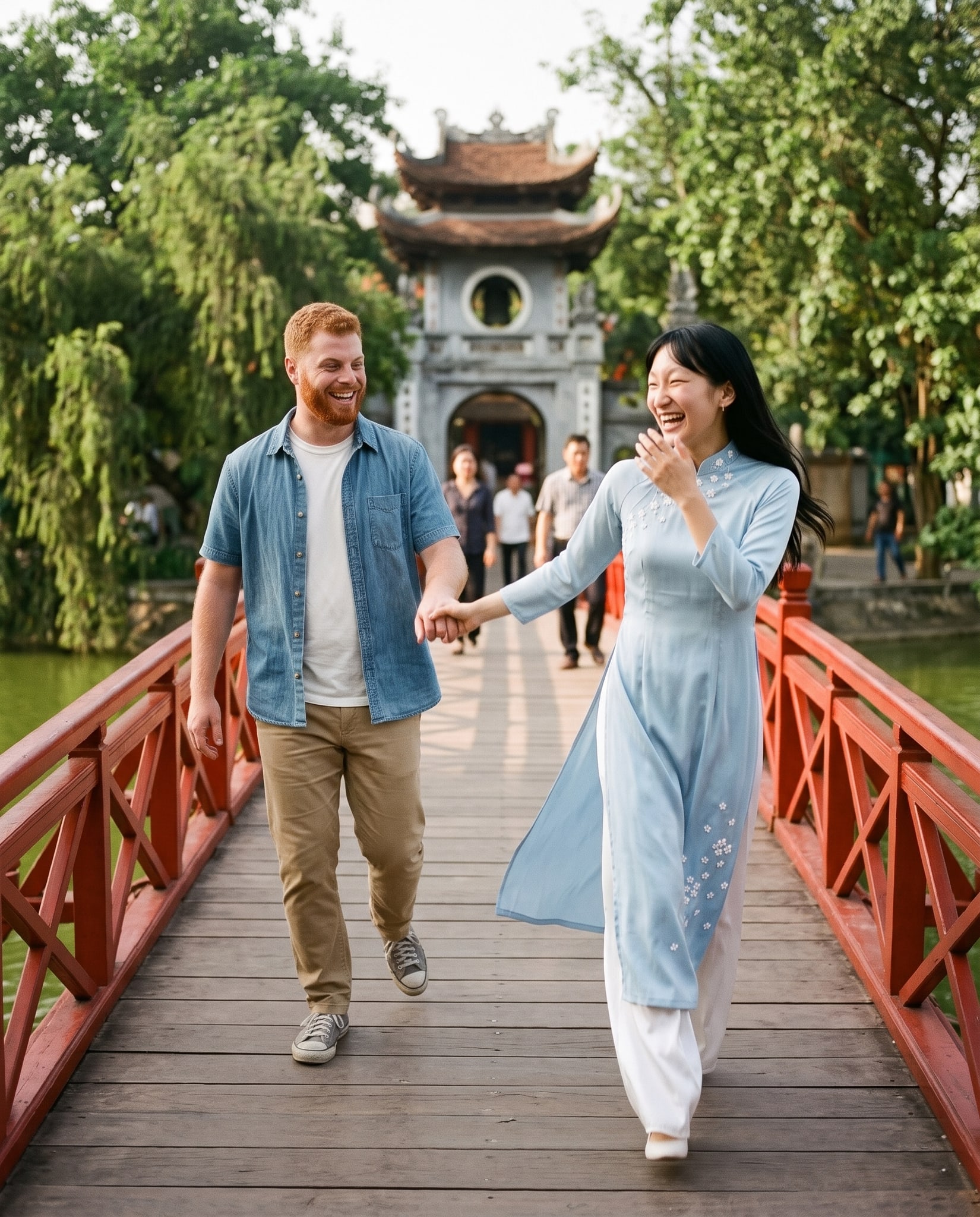
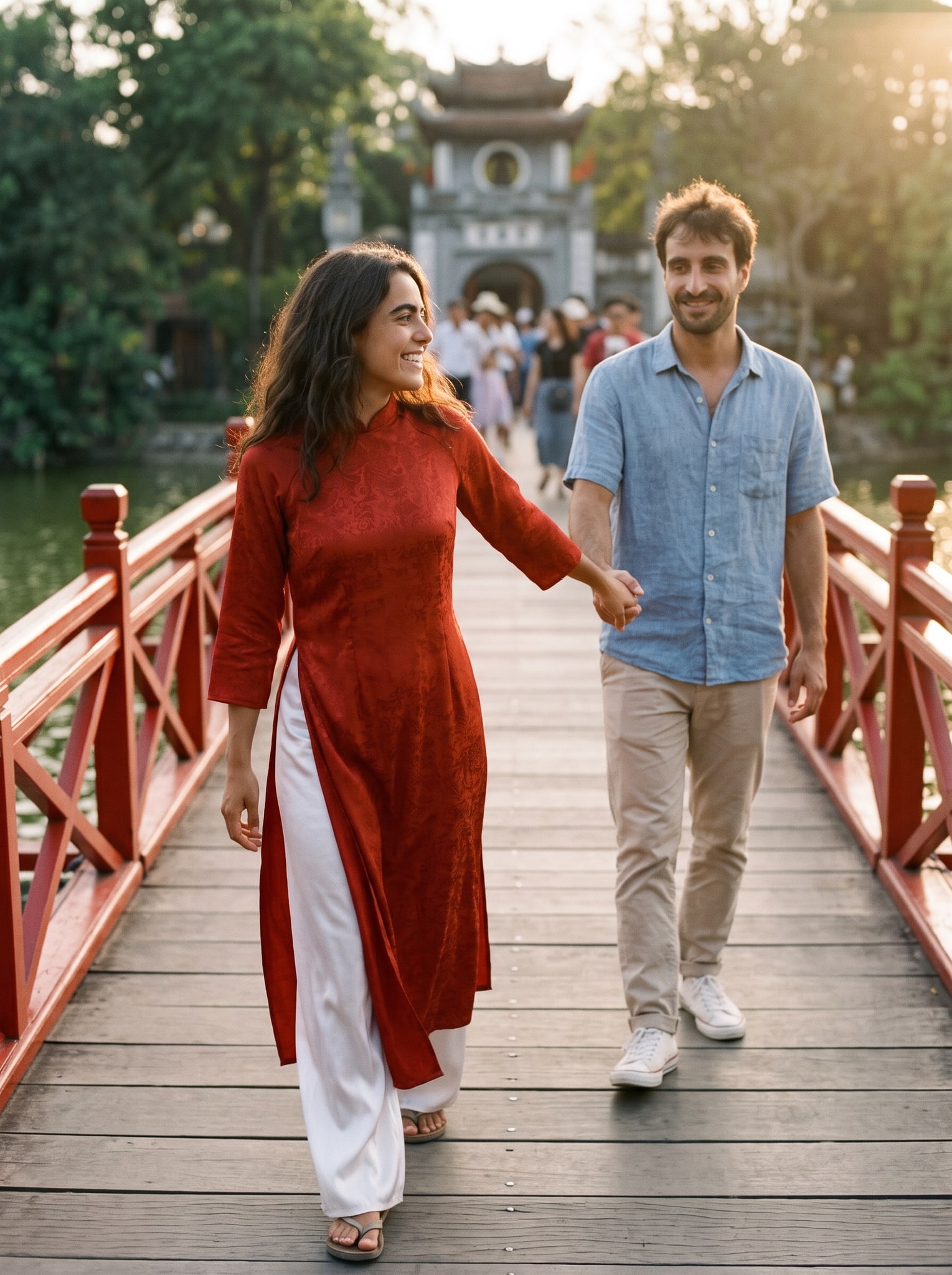
The ao dai is Vietnam's national dress: a floor-length silk or cotton tunic split to the hip, worn over high-waisted trousers. Women wear it for Tet, weddings, graduations and formal events; tourists rent for photoshoots, city strolls and cultural immersion. It's profound respectful wear—not a costume—so approach it with genuine interest, not irony.
Ao Dai Diaries rents genuine silk and cotton ao dai in XS–XXL with professional fitting, same-day and advance booking, and hotel delivery across Hanoi, Ho Chi Minh City, Hoi An and Da Nang. Wearing an ao dai transforms how Vietnamese strangers treat you; you're no longer a tourist moving through the country—you're a guest honoring its culture. Photographs gain depth and authenticity. Most rentals include styling advice, color consultation and care instructions. Combine with professional photoshoot packages for guided imagery in iconic locations.
Occasions to rent an ao dai:
- Tet celebrations (Lunar New Year)
- Wedding ceremonies and receptions
- Graduation photo sessions
- Temple visits and cultural sites
- City exploration and casual photoshoots
- Family portraiture
📍 See rental by city — choose Hanoi, Ho Chi Minh City, Hoi An or Da Nang based on your itinerary.
Comparison: renting an ao dai vs. packing formal wear
| Situation | Packing formal wear | Renting an ao dai | Best choice |
|---|---|---|---|
| Weight in luggage | 2–3 kg (4–7 lbs) | 0 kg; worn directly | Ao dai rental saves packing space |
| Authenticity in photos | Looks foreign, polished | Looks like a guest, honored | Ao dai wins for cultural immersion |
| Respect at temples/weddings | Acceptable but generic | Profound respect, local recognition | Ao dai signals genuine interest |
| Fitting & comfort | May require tailoring | Professional fitting included | Ao dai avoids last-minute adjustments |
| Cost | see packages & prices purchased | see packages & prices per rental | Rental is 80% cheaper |
| Care & transport | Your responsibility | Cleaned & stored by vendor | Rental eliminates laundry hassle |
| Flexibility (color, style, fit) | One outfit | Multiple rental options | Ao dai offers variety |
| Wear again after trip | Once, unless worn regularly | Once per rental; no storage | Rental suits single-use events |
Decision framework: Rent an ao dai if you're visiting for ≤3 weeks, attending one formal event or photoshoot, or want to lighten luggage. Buy formal wear (or a custom ao dai) only if you live in Vietnam, wear traditional dress regularly, or have advanced sewing skills to maintain silk.
👗 Rent your ao dai — WhatsApp/Zalo +84 338 762 340
What to absolutely avoid wearing in Vietnam
Beachwear, workout clothes and tight/revealing garments outside designated resort zones signal disrespect in temples, family homes and formal spaces. Avoid graphic tees with offensive slogans, short shorts above mid-thigh, and see-through fabrics without undergarments. Camouflage patterns have military connotations and are technically restricted in some areas; many locals consider them disrespectful given Vietnam's war history.
Wearing shoes into temples, pagodas and some family homes is forbidden; always watch and follow locals' lead. Loud, neon-bright colors attract too much attention and date you as a tourist. Religious iconography on clothing can be misunderstood; avoid wearing Buddha imagery casually.
Hard no's:
- Swimwear outside beaches and pools
- Camouflage or military-inspired clothing
- Clothing with profanity or offensive imagery
- Visible undergarments or sheer fabrics
- Hats or sunglasses inside temples
- Sleeveless tops in conservative areas (Hanoi Old Quarter, rural villages)
Conservative provinces (Mekong Delta, northern countryside) are stricter; urban zones (HCMC, Hanoi District 1, Da Nang beachfront) are more relaxed. When in doubt, cover shoulders, knees and cleavage. This isn't prudishness—it's practical respect that opens doors, invitations and genuine conversations.
---
What to check before you rent an ao dai
- Fit appointment: Schedule in advance; rush fittings (same-day or next-day) work but allow 1–2 hours for alterations and styling advice.
- Deposit: Clarify whether a refundable deposit (typically 500k–1M VND / see packages & prices) is required and how it's returned after rental.
- Fabric choice: Confirm whether you want silk (formal, drapes elegantly) or cotton (casual, breathable). Silk suits weddings and photoshoots; cotton suits city strolls.
- Size range and your measurements: Provide bust, waist, hip, inseam and sleeve measurements before booking. Ao dai are tailored during fitting, so off-the-rack sizing doesn't apply.
- Delivery and return: If renting outside business hours, arrange hotel delivery and pickup times in writing via WhatsApp/Zalo. Confirm return conditions (damage policy, extension fees).
- Color and style consultation: Ask the stylist which colors suit your skin tone and which style (traditional embroidery, modern minimalist) fits your vision and the event.
- Care instructions and insurance: Clarify who covers accidental damage (stains, tears). Most rentals include basic accident coverage; excessive damage may incur fees.
📸 Ao dai + photoshoot packages — book a guided session with styling included.
---
How Ao Dai Diaries shipping and fit service works
Ao Dai Diaries specializes in in-person fitting in Hanoi, Ho Chi Minh City, Hoi An and Da Nang. You arrive at the studio, try on 3–5 options in your size range, select fabric and embroidery, and receive alterations within hours or days depending on complexity. Same-day rentals (book by 11 AM for evening delivery) are standard; multi-day advance bookings offer deeper customization.
Hotel delivery is available in all four cities; drivers use WhatsApp/Zalo (+84 338 762 340) for check-in coordination. Return pickup is free if arranged. Abroad travelers should book at least 3 days in advance to allow for fitting, minor alterations and delivery coordination.
How ao dai rental works — step-by-step process from booking to styling.
---
Summary: your Vietnam packing and cultural immersion strategy
Pack lightweight cotton and linen in neutral colors; avoid synthetics, beachwear outside resorts, and anything disrespectful to Vietnamese culture. Bring one closed shoe, one sandal, and one lightweight layering piece (scarf or shirt) for aggressive air conditioning. For authentic cultural moments—weddings, Tet, photoshoots, temple visits—rent an ao dai through Ao Dai Diaries in your destination city rather than packing formal wear. This approach cuts luggage weight, ensures perfect fit, earns genuine local respect, and produces photographs that capture who you are as a guest, not a tourist passing through.
Vietnam rewards thoughtful travelers. Modest, breathable clothing and a willingness to wear traditional dress when appropriate transform how the country feels and how you connect with its people.
👗 Rent your ao dai — WhatsApp/Zalo +84 338 762 340
---
Frequently asked questions
Is wearing an ao dai as a tourist considered appropriation or respectful?
It's respectful if approached with genuine interest and worn in appropriate settings (cultural events, photoshoots, city strolls with styling guidance). Vietnamese people generally welcome visitors honoring their culture. Avoid wearing it as a costume or joke; approach it as an honored guest wears formal dress. Professional rental services like Ao Dai Diaries include styling guidance to ensure you wear it authentically.
What's the difference between renting silk and cotton ao dai?
Silk ao dai are formal, drape elegantly and are ideal for weddings and professional photoshoots; they cost more and require careful handling. Cotton ao dai are casual, breathable, perfect for city exploration and daily wear, and more forgiving with stains. Choose silk for formal events, cotton for relaxed strolls and casual photography.
Can I wear an ao dai to a temple or religious site?
Yes, absolutely. An ao dai shows profound respect at temples, pagodas and spiritual sites because it's Vietnam's national sacred dress. Its modesty—covering shoulders, arms and legs—aligns with temple etiquette perfectly. Remove shoes before entering, as you would with any clothing. Wearing an ao dai at a temple often draws kind recognition from locals.
How much does ao dai rental cost and what's included?
Rental pricing varies by city and quality; most rentals range from affordable daily rates for basic cotton pieces to higher rates for silk with embroidery or embellishment. Contact Ao Dai Diaries via WhatsApp/Zalo (+84 338 762 340) for current rates, which typically include fitting, alterations, styling consultation and hotel delivery. A refundable deposit (usually 500k–1M VND / see packages & prices–see packages & prices) is standard.
What if I'm a larger size—does Ao Dai Diaries offer XL or XXL ao dai?
Yes. Ao Dai Diaries stocks sizes XS–XXL with custom fitting for each size range. Provide your measurements (bust, waist, hip, inseam) when booking, and the stylist will have options ready during your appointment. Ao dai are tailored to your body, so standard sizing doesn't apply; an experienced fitter ensures comfort and elegance.
Do I need to book an ao dai rental in advance or can I rent same-day?
Both work. Same-day rentals (book by 11 AM for afternoon/evening wear) are available if you book via WhatsApp/Zalo. Advance bookings (3+ days prior) allow deeper customization, embroidery consultations and alterations. For weddings, Tet or photoshoots, book 3–7 days ahead to secure color, fabric and style preferences.
Dozens of colours, all sizes XS–XXL, delivered to your hotel in Hanoi, Saigon, Hoi An or Da Nang. One WhatsApp or Zalo message.
More guides
You might also like
The ao dai is Vietnam's iconic silk dress, worn for celebrations and formal occasions. Ao Dai Diarie
May is Vietnam's hottest month before monsoon season. We'll help you choose the right outfit—whether
December weather in Vietnam is cool and dry—ideal for wearing the ao dai. Here's what suits the seas