guide/ao-dai
What to Wear in Vietnam December: Ao Dai + Practical Layers Guide
Ao Dai Diaries team · All guides →
December is Vietnam's sweet spot: warm days (around 75°F average), low humidity, and brief cool spells—especially in northern cities like Hanoi. Pack breathable fabrics (cotton, linen), lightweight layers, and comfortable walking shoes. An ao dai is ideal for cultural sites, family photos, and Tet prep; rent one through Ao Dai Diaries for same-day fitting in Hanoi, Ho Chi Minh City, Hoi An, or Da Nang—sizes XS–XXL, deposit-backed, delivery to your hotel available. Pair your ao dai with a light cardigan or shawl for temple visits and evening strolls. Budget roughly see packages & prices (see packages & prices) per day rental. Avoid heavy fabrics, formal leather shoes, and sleeveless layers outdoors; December brings occasional drizzle and cool winds, especially near coasts. ---
Why December Is Vietnam's Best-Dressed Month
December is peak season partly because weather works with, not against, your wardrobe. Humidity drops to 60–70%, temperatures hold steady between 70–78°F, and rainfall is minimal compared to monsoon months. This means your ao dai stays crisp, colors photograph beautifully, and you won't overheat walking ancient streets in Hoi An or exploring Saigon's markets. The stable climate also makes Tet (lunar new year) planning easier—many locals rent or commission ao dai in early December for January celebrations.
Bottom line: December's mild conditions mean fewer wardrobe emergencies and better photo results than any other month.
👗 Rent your ao dai — WhatsApp/Zalo +84 338 762 340

What Does an Ao Dai Actually Do in December Weather?
An ao dai is a two-piece silk or cotton-blend tunic and pants; it drapes loosely, breathing naturally in warm climates, yet covers your shoulders and legs—perfect for temple visits and cultural respect. In December's mild weather, you can wear it unlined (most rentals offer cotton or silk blends) without overheating. The loose fit allows a thin undershirt or long-sleeve thermal beneath for cool mornings; the tunic's length covers you for sunrise boat tours on the Mekong or photoshoots in mountainous Da Nang.
Unlike heavy winter coats, an ao dai works December 1–31 without seasonal compromise. Pair it with a lightweight cotton shawl (included or rentable) for temple entry or evening strolls when wind picks up around 6 p.m. The traditional silhouette photographs exceptionally well in December's soft, even light—no harsh shadows, no sweat damage to fabric.
Bottom line: An ao dai is built for Vietnam's climate; December weather makes it effortlessly wearable, camera-ready, and culturally appropriate in every setting.
How to Layer an Ao Dai for December's Unpredictable Moments
December can surprise you: a warm midday might flip to cool wind by sunset, or a brief drizzle can catch you mid-sightseeing. Layering strategically keeps you comfortable without destroying your ao dai rental's appearance.
Layer framework:
- Base: Thin, moisture-wicking undershirt (white or neutral) under your ao dai—invisible but adds warmth.
- Outer layer: Lightweight cotton or linen cardigan, or a silk-like shawl (many rental packages include this).
- Footwear: Soft, breathable shoes—avoid chunky boots; opt for slip-on sandals or soft leather flats.
- Evening accessory: A pashmina or cotton wrap for temples, pagodas, or early evening when wind cools air by 10–15°F.
Many travelers rent an ao dai with a matching shawl or cardigan as a bundle; this costs less than renting separately and ensures color coordination. Ask about this when you book on WhatsApp/Zalo +84 338 762 340.
What to avoid: Never drape heavy jackets over an ao dai—it ruins the silhouette and can crease the tunic. Stick to lightweight, packable layers you can remove and tie around your waist.
Bottom line: Three-piece layering (undershirt, ao dai, shawl or cardigan) handles December's 60–80°F range without sacrifice.
Ao Dai Rental vs. Buying: A December Visitor's Decision Table
| Option | Best for | Cost basis | Commitment | Why it matters in December |
|---|---|---|---|---|
| Rent for 1–7 days | Tourists, one-off photoshoots, Tet trial | see packages & prices/day (300k–500k VND) | Zero closet space, same-day fit | Try styles before buying; no luggage weight; hotel delivery |
| Rent for 14+ days | Extended stays, multiple city photoshoots | ~see packages & prices total (1.5–3M VND) | Low commitment, flexible returns | Perfect for Dec. holidays + early Tet prep; wear to multiple events |
| Buy (online tailored) | Plan to wear repeatedly, gift for family | see packages & prices shipped (1–2M VND base + tailoring) | 5–10 day US delivery, custom fit | Keepsake quality; if you stay in Vietnam through Tet, you own it |
| Buy ready-made (Vietnam shop) | Permanent residents, multiple celebrations | see packages & prices (600k–1.5M VND) | Immediate ownership, non-returnable | Quick acquisition if you're in Hanoi or Saigon; no rental hassle |
The December logic: Tourists and short-stay visitors rent; locals and Dec.–Jan. planners buy. If you're unsure which style suits you, rent first through Ao Dai Diaries. Most people who rent in December upgrade to a purchase in January for Tet—because they know what fits and what they love.
📍 See rental by city
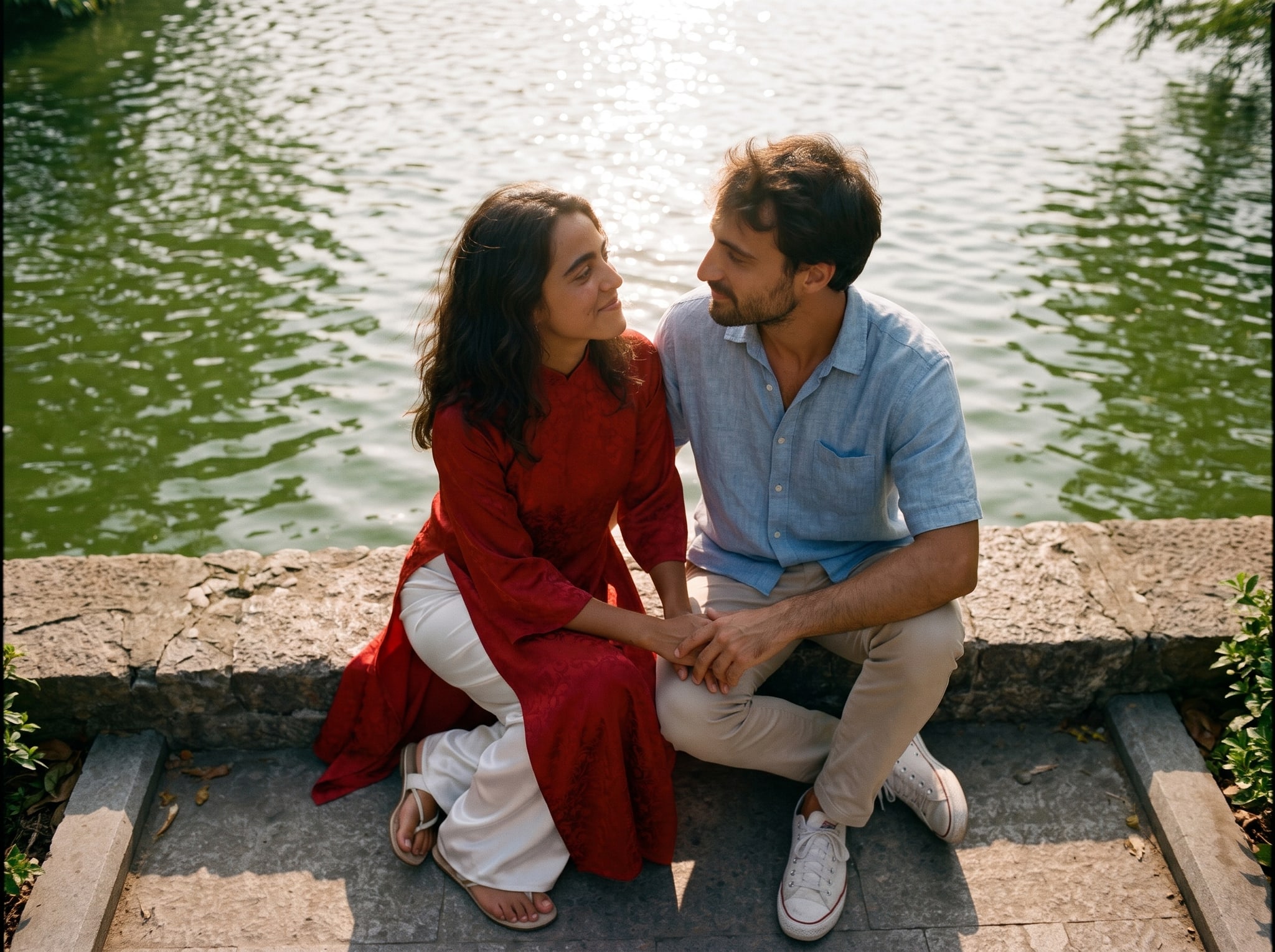
Where to Rent in Vietnam's December Hotspots
Ao Dai Diaries operates across Vietnam's top December destinations. Each city has climate and cultural nuances that shape your ao dai choice:
Hanoi (rental in Hanoi): Cool mornings (60–65°F), warm afternoons. Choose cotton blends; include a light scarf for Old Quarter's temple visits and evening cyclo rides. December is Tet prep season—book early if you want auspicious colors (red, gold).
Ho Chi Minh City / Saigon (rental in Ho Chi Minh City): Consistently warm (75–80°F), occasional drizzle. Silk or silk-blend ao dai works year-round; pair with breathable pants and waterproof small backpack for market walks and photoshoots in District 1's French colonial zones.
Hoi An (rental in Hoi An): Mild (68–75°F), rare drizzle. UNESCO-protected ancient town means foot traffic and temple sensitivity—rent a conservative, neutral-tone ao dai; many come with matching non-slip indoor shoes for hoi an's lantern-lit photoshoots.
Da Nang (rental in Da Nang): Cool evenings (63–70°F), coastal wind. Mountains and beaches demand layering. Rent a heavier silk ao dai and include a cotton shawl; sunset shoots over the Mekong and My Khe Beach are December magic with proper coverage.
Booking tip: Each city's fitting studio stocks sizes XS–XXL and offers same-day rental or next-day delivery to hotels. WhatsApp your preferred city and occasion to +84 338 762 340; the team will send fitting guidelines and availability.
Bottom line: Book location-specific rental 2–3 days ahead in December (peak tourist season); same-day fits are available but crowded. Specify your photoshoot or event for style recommendations.
📸 Ao dai + photoshoot packages
Ao Dai Etiquette & Respect: Non-Negotiables in December
An ao dai is revered in Vietnam—it's worn for weddings, temples, Tet celebrations, and formal family events. Wearing one incorrectly or disrespectfully damages both the garment and the experience. December is Tet prep; locals are especially mindful of tradition.
Do's:
- Wear it to temples, pagodas, cultural sites, and family photos—ao dai is expected at these venues.
- Remove shoes before entering temples and homes (rentals include shoe guidance).
- Sit upright; the tunic's grace depends on good posture.
- Accept compliments on the garment—they're compliments to Vietnam, not just you.
Don'ts:
- Never use an ao dai for casual clubs, bars, or beach partying—it's sacred dress, not a costume.
- Don't sit cross-legged or slouch in the tunic; it creases and looks disrespectful in photos.
- Avoid heavy makeup or western casual styling that clashes with the ao dai's elegance.
- Never wash or alter a rental without permission; most rentals come pre-cleaned.
December-specific consideration: Tet decorations and family gatherings mean you'll see ao dai everywhere. Wearing one respectfully signals cultural awareness and gratitude—locals will appreciate it, and photographers will notice the difference in your posture and authenticity on camera.
What to check before you rent: Ask the rental studio about fabric care, return condition expectations, and whether alterations (hemming for height) are included. Most same-day rentals come pressed and ready; confirm deposit amounts and return deadlines (usually 24–48 hours for day rentals, 7 days for weekly).
👗 Rent your ao dai — WhatsApp/Zalo +84 338 762 340
Practical Packing & Rental Workflow for December Travelers
You're arriving in Vietnam in December with limited luggage. Here's the real workflow:
Before you arrive:
- Message Ao Dai Diaries on WhatsApp +84 338 762 340 with your dates, city, height, and occasion (photoshoot, temple visit, Tet celebration).
- Share your hotel address; delivery is included for most rentals.
- Request color/style preference (neutral for temples, bold for celebrations).
Upon arrival:
- Visit the local studio (Hanoi, Saigon, Hoi An, or Da Nang) or wait for hotel delivery.
- Try on your ao dai; confirm fit around shoulders and tunic length (should reach ankle, not drag).
- Receive a deposit receipt and return instructions (usually 24–48 hours for daily rentals).
On your event day:
- Wear the undershirt and shawl or cardigan you packed.
- Step into the ao dai; have a local friend or hotel staff help you tie the side closure correctly (it's not difficult, but first-timer help is golden).
- Carry minimal items; ao dai pants have small pockets—a phone and key are often enough.
- Shoot, walk, celebrate; the fabric breathes and moves with you.
Return:
- Hand off at the studio or arrange pickup from your hotel.
- No washing, dry cleaning, or spot treatment needed—rentals are pre-handled.
- Receive your deposit back (same-day or next business day).
Honest packing reality: Don't overpack December Vietnam. One light cardigan, 1–2 undershirts, slip-on sandals, and a rain jacket cover your wardrobe. The ao dai rental gives you a entire outfit for cultural events, so you need fewer clothes overall. Many travelers rent in December, realize they overpacked, and leave excess clothes behind for charity.
---
Frequently asked questions
Can I wear an ao dai to a casual beach walk or café in December?
Yes, thoughtfully. Ao dai is appropriate for daytime strolls in tourist zones (Old Town Hoi An, Ben Thanh Market Saigon, Hoan Kiem Lake Hanoi), but avoid beach clubs or nightlife—ao dai is formal/ceremonial, not beachwear. Pair it with sandals and neutral styling for casual contexts; most locals will see it as respectful tourism, not mockery.
What if December drizzle damages my rental ao dai?
Minor rain (light spray) doesn't harm a quality silk or cotton-blend ao dai—they're made for Vietnam's humid climate. However, heavy downpour or puddle splashing can stain. Rental studios assume normal wear; light moisture is expected. If you're renting for outdoor photoshoots, ask for a water-resistant undercoat option or bring a small umbrella. Most deposits cover minor accidents; gross negligence (wine spill, fire) does not.
Is December too early to rent for Tet, or should I wait until January?
Rent in December if you want to trial a style or do early family photoshoots; most people commit to a purchase in late December or early January if Tet is their main event. If you're just visiting Dec. 1–20, rent for that trip. If you're in Vietnam through Tet (late Jan./early Feb.), consider buying a keeper ao dai by mid-December—it's customized, yours forever, and you'll wear it multiple Tet events.
What's the difference between a silk and cotton-blend ao dai for December?
Silk is smoother, photographs better in sunlight, and feels luxurious—ideal for formal Dec. events and Tet. Cotton-blend is breathable, more forgiving for sweat/humidity, and easier to care for if you extend your rental. For most tourists, cotton-blend rentals (see packages & prices–see packages & prices/day) are sufficient; silk upgrades (see packages & prices–25 USD/day) are worth it for professional photoshoots or wedding attendance.
Can I alter a rental ao dai to fit my height, or will that hurt my deposit?
Don't alter a rental yourself; it voids your deposit. Ask the rental studio about hemming or calf-length options before paying. Most studios have multiple sizes (XS–XXL) and offer calf-length alternatives. If you're between sizes, a light cardigan or wrap can hide minor fit gaps. Custom tailoring is a buy-only service; rentals must be returned unaltered.
Do I need to tip or give a gift to the rental studio staff?
Tipping is not expected, but a small thank-you (snack, candy) is appreciated if staff helps with fitting or styling advice. In December, studios are busy—kindness goes a long way if you need rush fitting or last-minute color changes. --- 📍 See rental by city | 📸 Ao dai + photoshoot packages | 👗 Rent your ao dai — WhatsApp/Zalo +84 338 762 340
Frequently asked questions
Can I wear an ao dai to a casual beach walk or café in December?
Yes, thoughtfully. Ao dai is appropriate for daytime strolls in tourist zones (Old Town Hoi An, Ben Thanh Market Saigon, Hoan Kiem Lake Hanoi), but avoid beach clubs or nightlife—ao dai is formal/ceremonial, not beachwear. Pair it with sandals and neutral styling for casual contexts; most locals will see it as respectful tourism, not mockery.
What if December drizzle damages my rental ao dai?
Minor rain (light spray) doesn't harm a quality silk or cotton-blend ao dai—they're made for Vietnam's humid climate. However, heavy downpour or puddle splashing can stain. Rental studios assume normal wear; light moisture is expected. If you're renting for outdoor photoshoots, ask for a water-resistant undercoat option or bring a small umbrella. Most deposits cover minor accidents; gross negligence (wine spill, fire) does not.
Is December too early to rent for Tet, or should I wait until January?
Rent in December if you want to trial a style or do early family photoshoots; most people commit to a purchase in late December or early January if Tet is their main event. If you're just visiting Dec. 1–20, rent for that trip. If you're in Vietnam through Tet (late Jan./early Feb.), consider buying a keeper ao dai by mid-December—it's customized, yours forever, and you'll wear it multiple Tet events.
What's the difference between a silk and cotton-blend ao dai for December?
Silk is smoother, photographs better in sunlight, and feels luxurious—ideal for formal Dec. events and Tet. Cotton-blend is breathable, more forgiving for sweat/humidity, and easier to care for if you extend your rental. For most tourists, cotton-blend rentals (see packages & prices–see packages & prices/day) are sufficient; silk upgrades (see packages & prices–25 USD/day) are worth it for professional photoshoots or wedding attendance.
Can I alter a rental ao dai to fit my height, or will that hurt my deposit?
Don't alter a rental yourself; it voids your deposit. Ask the rental studio about hemming or calf-length options *before* paying. Most studios have multiple sizes (XS–XXL) and offer calf-length alternatives. If you're between sizes, a light cardigan or wrap can hide minor fit gaps. Custom tailoring is a buy-only service; rentals must be returned unaltered.
Do I need to tip or give a gift to the rental studio staff?
Tipping is not expected, but a small thank-you (snack, candy) is appreciated if staff helps with fitting or styling advice. In December, studios are busy—kindness goes a long way if you need rush fitting or last-minute color changes. --- [📍 See rental by city](/rent) | [📸 Ao dai + photoshoot packages](/packages) | [👗 Rent your ao dai — WhatsApp/Zalo +84 338 762 340](https://wa.me/84338762340)
Dozens of colours, all sizes XS–XXL, delivered to your hotel in Hanoi, Saigon, Hoi An or Da Nang. One WhatsApp or Zalo message.
More guides
You might also like
The ao dai is Vietnam's iconic silk dress, worn for celebrations and formal occasions. Ao Dai Diarie
May is Vietnam's hottest month before monsoon season. We'll help you choose the right outfit—whether
December weather in Vietnam is cool and dry—ideal for wearing the ao dai. Here's what suits the seas