guide/ao-dai
What to Wear in Vietnam in June: Female Traveler Guide
Ao Dai Diaries team · All guides →
June in Vietnam means 85–95°F (29–35°C), 70–90% humidity, and afternoon monsoons. Wear lightweight cotton or linen (breathable, quick-dry), loose-fitting pieces, and a lightweight scarf for temples and conservative spaces. Shorts and tank tops work on beaches and casual streets, but avoid bare shoulders and knees in pagodas, villages, and local restaurants. Pack a rain jacket or compact umbrella—daily showers are normal. An ao dai (Vietnam's traditional long tunic dress) is an excellent alternative: it's naturally cooling, ultra-respectful in formal or cultural settings, and solves the "what do I wear to blend in?" question. Ao Dai Diaries offers same-day rentals in Hanoi, Ho Chi Minh City, Hoi An, and Da Nang—book a fitting online, receive sizing guidance, and collect your dress the morning of your event or photoshoot. No packing bulky formal wear; no worrying about temple dress codes. 👗 Rent your ao dai — WhatsApp/Zalo +84 338 762 340 ---
How Hot and Humid Is June in Vietnam Really?
June is Vietnam's transition into the southwest monsoon, with temperatures consistently above 30°C (86°F) in the north and central regions, and often 32–35°C (90–95°F) in Ho Chi Minh City and the south. Humidity hovers at 75–85%, and afternoon thunderstorms are daily. Your clothes must dry fast—cotton and linen absorb sweat and rain; synthetic blends (polyester/nylon mixes) dry 2–3 hours quicker. Bring moisture-wicking fabrics if you plan hiking or walking temples. Pack twice as many lightweight layers as you would for a temperate month; one rain event can soak your outfit, and laundry turnaround in touristy areas is 24–48 hours.
---
What Bottoms Actually Work for June Heat and Respect?
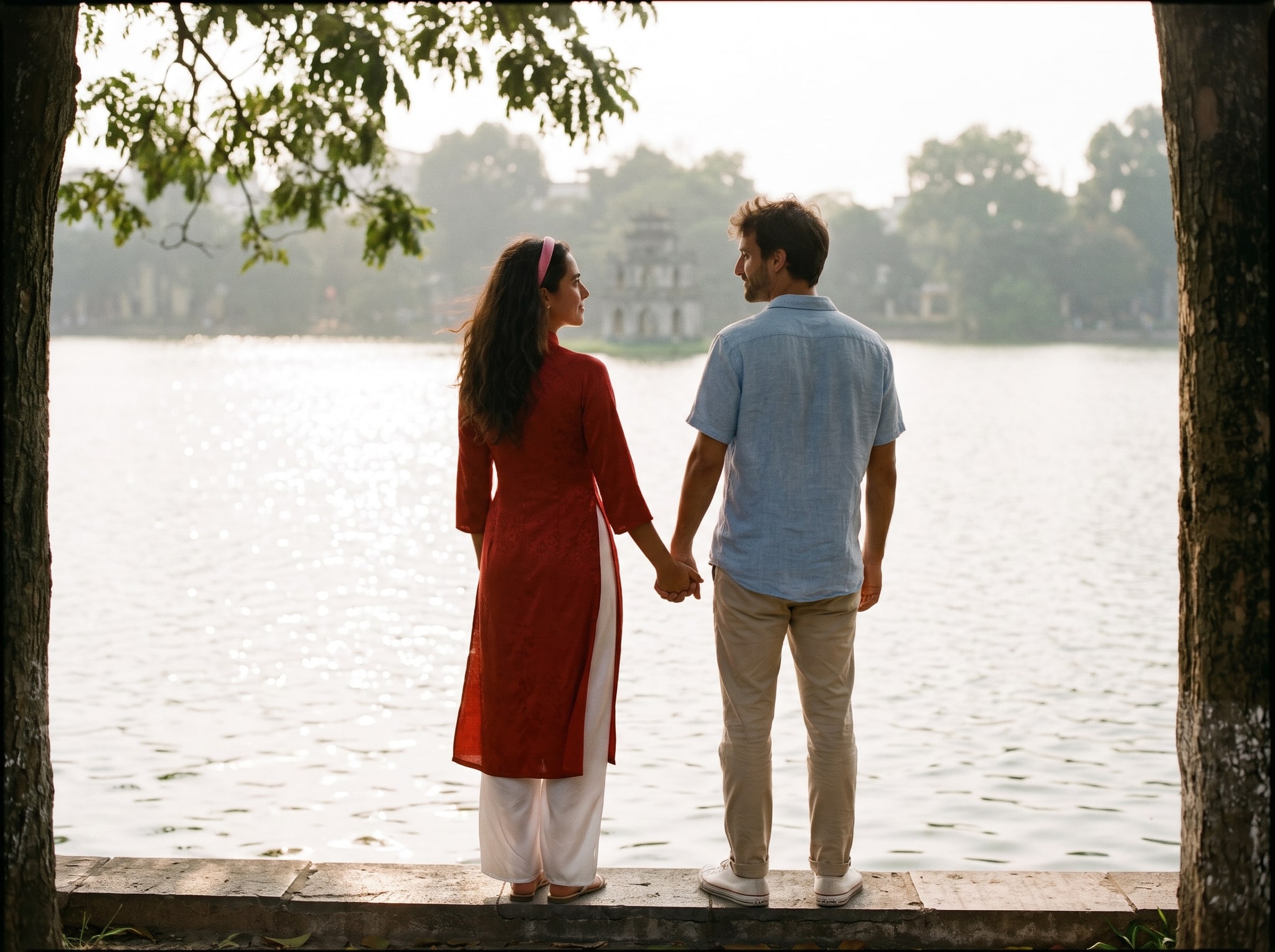
Loose, ankle-grazing pants or midi skirts are your safest bet—they're cooler than jeans, respectful in temples and rural villages, and sun-protective. Linen trousers in neutral colors (white, khaki, black) don't cling when wet with sweat or rain. Shorts are fine on beaches (Nha Trang, Phu Quoc) and casual urban areas, but avoid them in Hanoi Old Quarter and religious sites. Maxi skirts (cotton or linen) feel breezy and tick the modesty box everywhere. If you prefer dresses, go for sleeveless A-line or empire-waist cuts—they don't trap humidity and allow airflow. Never wear shorts above the knee in pagodas, family homes, or rural homestays; locals may not say anything, but a respectful traveler notices.
---
Tops, Layers, and the Sacred Coverage Question
Tank tops and sleeveless dresses are fine for the street and beach but banned in temples and formal dining. Pack a lightweight cardigan, linen shirt, or cotton scarf to throw over your shoulders—it takes up minimal space, dries fast, and turns casual into culturally appropriate in seconds. Loose-fitting shirts (oversized button-ups, camp collars) protect your shoulders, stay cool, and work dressed-up or dressed-down. Avoid anything see-through or crop-top style in public; Vietnamese dress code is modest, and showing midriff or cleavage signals disrespect in family settings and temples. A UV-blocking scarf (quick-dry fabric) is your MVP—use it as a shoulder cover, sun shield, or impromptu head wrap in unexpected temple visits.
---
Rain, Footwear, and Compact Essentials That Actually Fit in a Daypack
June rain doesn't mean a few drops; it's 30–60 minutes of heavy downpour, often daily at 2–4 p.m. A packable nylon rain jacket (weighs 200–300 grams) folds into a small pouch and won't make you sweat more. Waterproof daypack liners or packing cubes keep electronics and documents dry. For footwear, choose water-friendly sandals (leather or quick-dry straps) over canvas sneakers—wet sneakers breed fungus and odor in this heat. Avoid open-toed shoes in rural areas and temples (hygiene and respect). Bring flip-flops for hotel rooms and temple entries (many require barefoot or sock-only entry). Quick-dry socks are worth their weight; they prevent blisters and dry in 4–6 hours. Pack two pairs of lightweight, breathable underwear per day—humidity accelerates laundry cycles and skin issues.
---
Why Renting an Ao Dai Beats Packing Formal Wear for June Events and Photoshoots
An ao dai is a long tunic worn over loose pants—it covers your shoulders, chest, arms, and legs to the ankles, making it the opposite of compromising dress code. If you're attending a wedding, graduation, temple ceremony, or formal dinner in June, a traditional ao dai is more respectful, more memorable, and cooler than a blazer or evening dress. It's made of silk or cotton-silk blends that breathe, drape loosely, and won't stick to sweat. Instead of packing a formal outfit (2–4 kilograms), rent one in your destination city: Ao Dai Diaries offers same-day rentals in Hanoi, Ho Chi Minh City, Hoi An, and Da Nang. You attend a fitting (15 minutes), collect your dress on the day of your event, and return it within 24–48 hours. No luggage weight guilt, no wrinkles, no dry-cleaning cost. A photoshoot package pairs your rental with a local photographer who knows the best temples, streets, and lighting for ao dai photos—perfect for solo travelers and couples marking their Vietnam trip.
📸 Ao dai + photoshoot packages | 📍 See rental by city
---

Decision Framework: What to Wear When in Vietnam in June
| Occasion | Best Choice | Why It Works | Avoid |
|---|---|---|---|
| Beach / casual urban day | Shorts, sleeveless top, UV scarf | Quick-dry, sun-protective, culturally OK on coast. | Crop tops; bare shoulders in markets/temples. |
| Temple / pagoda | Midi skirt/loose pants + cardigan + scarf | Covers legs, arms, shoulders; respectful; easy to add/remove. | Shorts, tank tops, transparency. |
| Casual dinner / café | Linen pants, loose shirt | Breathable, elegant, modest. | Overly tight or revealing cuts. |
| Wedding / formal event | Rented ao dai (Hanoi, HCMC, Hoi An, Da Nang) | Traditional, ultra-respectful, breezy, no luggage. | Borrowed regular dress; showing too much skin. |
| Hiking / rural homestay | Long pants, shirt, quick-dry socks, waterproof jacket | Sun protection, insect barrier, respect. | Shorts; thin, wet-easily fabrics. |
| Night market / street food | Loose-fit dress or pants, sandals, scarf | Cooler, easier movement, modest. | Heels; restrictive clothing. |
---
What to Check Before You Buy or Rent: Fabric, Fit, and Practicality
Fabric content: If buying clothes, prioritize 100% cotton or cotton-linen blends over polyester-heavy synthetics. Read labels—"60% cotton, 40% polyester" dries faster than pure linen but stays breathable. Avoid tight weaves; open weaves (linen, gauze) keep air moving against your skin.
Fit and room to breathe: June's humidity and sweat mean tight clothes feel suffocating and chafe. Buy one size up from your normal fit; loose doesn't mean sloppy, just room for air circulation. Test a garment in humid conditions if possible.
Moisture-wicking and quick-dry: Linen and cotton-linen dry in 3–4 hours; pure cotton takes 6–8. Synthetic blends (poly-cotton) dry in 2–3 hours but may trap heat. Choose based on your daily routine—if you're moving between locations or don't have laundry access, quick-dry matters more.
Color and stain visibility: Dark colors hide sweat stains better but absorb more heat. Pastels and whites stay cooler but show sweat, dirt, and rain. Neutral tones (khaki, beige, gray) balance both. Patterned fabrics mask minor stains.
Rental fit check: If you're renting an ao dai, book your fitting at least 48 hours before the event. Ao Dai Diaries works with you on sizing (XS–XXL) and can adjust hems or sleeves for an additional small fee. Never assume your home country size maps to Vietnam sizing. A quick video fitting or in-person appointment confirms the dress will photograph well and feel comfortable for 4–8 hours of wear.
Deposit and damage policy: Rental deposits (typically 20–30% of the rental cost) are standard; they're refunded in full if you return the dress clean and on time. Understand the rental shop's damage policy—minor stains from food or makeup are usually waived, but rips or major stains may incur a fee. Ask during booking.
👗 Rent your ao dai — WhatsApp/Zalo +84 338 762 340
---
Packing Checklist for June in Vietnam (Female Travelers)
- Tops: 3–4 lightweight, loose-fitting shirts or blouses; 2 sleeveless dresses; 1 linen cardigan.
- Bottoms: 2 pairs loose linen trousers; 1 midi skirt; 1 pair shorts (beach-appropriate).
- Dresses: 1 casual day dress; consider renting an ao dai instead of packing formal wear.
- Outerwear: Packable rain jacket; lightweight scarf (double as sun shield or modesty layer).
- Footwear: Comfortable water-friendly sandals; flip-flops for hotel/temples; quick-dry socks (2–3 pairs).
- Undergarments: 7–8 pairs quick-dry underwear; moisture-wicking bra if relevant.
- Accessories: UV sunglasses; lightweight hat (baseball cap or wide-brim); compact umbrella or rain poncho.
- Extras: Waterproof packing cubes; microfiber towel (dries fast); anti-chafe balm (thighs, underarms).
Pack 40% less than you think you'll need. Laundry in Vietnam is cheap (often included in hostels/hotels) and fast (24–48 hours); you can wash mid-trip.
---
Read the Full Ao Dai Rental Guide for Etiquette, History, and Styling
Learn how to wear an ao dai correctly, what occasions suit it best, and why it's more than a costume—it's a living symbol of Vietnamese culture and identity.
---
Frequently asked questions
Can I wear shorts and a tank top walking around Hanoi or Ho Chi Minh City in June?
Shorts and tank tops are socially acceptable on casual streets, cafés, and shopping malls in urban areas. However, they'll draw stares in rural villages, family homes, and temples. Locals in cities dress modestly too—loose pants and shirts are more typical. Pack a scarf or lightweight cardigan to slip on when entering temples or conservative spaces.
Is June the best month to visit Vietnam, or is it too hot and rainy?
June is not peak tourist season—May and September–October are drier. However, June offers fewer crowds, lower hotel prices, and lush green landscapes after monsoon rains. If you travel in June, embrace the heat and rain; plan indoor activities (museums, cooking classes) for afternoon storms and schedule outdoor sightseeing early morning or late afternoon.
Should I buy clothes in Vietnam or bring everything from home?
Vietnam has excellent cheap tailoring and fast-fashion shops, so you can buy lightweight pieces there if luggage space is tight. However, sizing runs small (XS–M are most common), and quality is hit-or-miss. Bring 1–2 weeks' worth of trusted clothes and shop for extras if needed. For formal wear, renting an ao dai is smarter than buying new clothes.
How do I stay dry and comfortable if it rains while wearing an ao dai?
An ao dai dries fairly quickly because it's made of breathable fabric and designed to hang loosely. A waterproof shawl or rain jacket (worn over top) keeps it clean. Pair your rental with quick-dry socks and water-friendly sandals. Let the dress air-dry indoors after rain; avoid direct sunlight, which can fade silk. Most rental shops accept same-day returns even if the dress has been rained on.
What's the difference between renting an ao dai in Hanoi versus Ho Chi Minh City or Hoi An?
All three cities have ao dai rental services—Hanoi and Ho Chi Minh City (Saigon) offer faster same-day service due to size and tourism volume. Hoi An specializes in custom-tailored ao dai and historic styles; if you have time, a bespoke fitting (2–3 days) yields a one-of-a-kind dress. Da Nang offers shorter turnaround (24–48 hours) and fewer shops, so book ahead. Prices and selection vary; WhatsApp or Zalo the shop directly for current availability and rates.
Can I wear nail polish, makeup, or jewelry with an ao dai?
Yes—ao dai pairs beautifully with makeup, nail polish, and jewelry. Keep makeup light and waterproof (June humidity and rain will test it). Avoid very large, loud jewelry; delicate earrings, a bracelet, and a simple necklace complement the traditional aesthetic. Hair should be neat—loose waves, a braid, or an updo all work well. Ask your rental service for photo styling tips when you book a photoshoot package. ---
Frequently asked questions
Can I wear shorts and a tank top walking around Hanoi or Ho Chi Minh City in June?
Shorts and tank tops are socially acceptable on casual streets, cafés, and shopping malls in urban areas. However, they'll draw stares in rural villages, family homes, and temples. Locals in cities dress modestly too—loose pants and shirts are more typical. Pack a scarf or lightweight cardigan to slip on when entering temples or conservative spaces.
Is June the best month to visit Vietnam, or is it too hot and rainy?
June is not peak tourist season—May and September–October are drier. However, June offers fewer crowds, lower hotel prices, and lush green landscapes after monsoon rains. If you travel in June, embrace the heat and rain; plan indoor activities (museums, cooking classes) for afternoon storms and schedule outdoor sightseeing early morning or late afternoon.
Should I buy clothes in Vietnam or bring everything from home?
Vietnam has excellent cheap tailoring and fast-fashion shops, so you can buy lightweight pieces there if luggage space is tight. However, sizing runs small (XS–M are most common), and quality is hit-or-miss. Bring 1–2 weeks' worth of trusted clothes and shop for extras if needed. For formal wear, renting an ao dai is smarter than buying new clothes.
How do I stay dry and comfortable if it rains while wearing an ao dai?
An ao dai dries fairly quickly because it's made of breathable fabric and designed to hang loosely. A waterproof shawl or rain jacket (worn over top) keeps it clean. Pair your rental with quick-dry socks and water-friendly sandals. Let the dress air-dry indoors after rain; avoid direct sunlight, which can fade silk. Most [rental shops](/rent) accept same-day returns even if the dress has been rained on.
What's the difference between renting an ao dai in Hanoi versus Ho Chi Minh City or Hoi An?
All three cities have [ao dai rental services](/rent)—Hanoi and Ho Chi Minh City (Saigon) offer faster same-day service due to size and tourism volume. [Hoi An](/hoi-an) specializes in custom-tailored ao dai and historic styles; if you have time, a bespoke fitting (2–3 days) yields a one-of-a-kind dress. [Da Nang](/da-nang) offers shorter turnaround (24–48 hours) and fewer shops, so book ahead. Prices and selection vary; WhatsApp or Zalo the shop directly for current availability and rates.
Can I wear nail polish, makeup, or jewelry with an ao dai?
Yes—ao dai pairs beautifully with makeup, nail polish, and jewelry. Keep makeup light and waterproof (June humidity and rain will test it). Avoid very large, loud jewelry; delicate earrings, a bracelet, and a simple necklace complement the traditional aesthetic. Hair should be neat—loose waves, a braid, or an updo all work well. Ask your [rental service](/packages) for photo styling tips when you book a [photoshoot package](/packages). ---
Dozens of colours, all sizes XS–XXL, delivered to your hotel in Hanoi, Saigon, Hoi An or Da Nang. One WhatsApp or Zalo message.
More guides
You might also like
The ao dai is Vietnam's iconic silk dress, worn for celebrations and formal occasions. Ao Dai Diarie
May is Vietnam's hottest month before monsoon season. We'll help you choose the right outfit—whether
December weather in Vietnam is cool and dry—ideal for wearing the ao dai. Here's what suits the seas