guide/ao-dai
What to Wear in Vietnam in Summer: Beat the Heat & Respect Traditions
Ao Dai Diaries team · All guides →
Summer in Vietnam means 30–35°C (86–95°F) heat with 80%+ humidity, so wear loose cotton or linen, breathable fabrics, and light colors; avoid black and dark shades. A lightweight scarf or sarong protects skin and suits cultural sites. For special occasions—weddings, Tet celebrations, photoshoots—renting an ao dai from Ao Dai Diaries in Hanoi, Ho Chi Minh City, Hoi An, or Da Nang lets you wear Vietnam's national dress authentically, with proper fitting and styling guidance. Pack moisture-wicking underwear, sandals with grip, sunscreen, and a compact umbrella for sudden downpours. Avoid shorts above the knee, sleeveless tops at temples, and heavy fabrics; layers work because indoor air-con is strong.
Summer in Vietnam is beautiful and challenging. Humidity peaks May through September; temperatures rarely drop below 28°C at night. Most travelers underpack breathable clothes or disrespect temple dress codes. This guide walks you through what locals and visitors actually wear—plus when renting an ao dai makes sense.
Why does summer in Vietnam feel hotter than the thermometer shows?
Humidity, not temperature alone, makes Vietnamese summer feel oppressive. At 80–90% relative humidity, sweat doesn't evaporate; your body can't cool itself. A 32°C (90°F) day in Saigon or Hanoi feels like 40°C (104°F) in dry climates. Heat stroke, heat rash, and dehydration happen fast. Locals wear minimal, loose clothing and stay indoors 11 a.m.–3 p.m.; tourists who ignore this suffer.
Practical takeaway: Choose fabrics by fiber, not fashion. Cotton and linen breathe; polyester and denim trap heat and sweat. Loose cuts—not tight—let air circulate. Light colors reflect sun; dark ones absorb it.

Which fabrics should you pack for Vietnam's humidity?
Cotton (100% or cotton-blend):
- Breathable, absorbs sweat, soft.
- Wrinkles easily; needs pressing (hotels iron for free).
- Best for daily wear, underwear, sleepwear.
Linen:
- Coolest option; dries fast.
- Wrinkles heavily (locals don't care; tourists do).
- Perfect for loose trousers, shirts, scarves.
Moisture-wicking synthetics (polyester microfiber, nylon):
- Dries faster than cotton.
- Can trap odor if not washed daily.
- Good for activewear, travel days only.
Avoid:
- Denim, wool, heavy blends, rayon (absorbs sweat, clings).
Wear the lightest weight cotton or linen you own; layering breathable pieces beats one heavy garment.
What specific pieces work for a week in Vietnam's summer?
| Item | Why | How many | Notes |
|---|---|---|---|
| Lightweight cotton/linen shirts | Breathable, dries quickly | 5–6 | Short-sleeved or 3/4 sleeves work; long sleeves protect skin at temples |
| Loose cotton trousers | Respect dress codes; breathable | 2–3 | Avoid shorts above knee in religious sites; capris work if pants feel too hot |
| Skirt (knee-length, cotton) | Cooler than trousers; modest | 1–2 | Pair with a fitted top or loose blouse |
| Lightweight scarf/sarong | Sun protection, cultural respectful | 2 | Doubles as temple cover, shawl, beach wrap |
| Undergarments | Moisture-wicking crucial | 7+ | Moisture-wicking briefs/boxer-briefs prevent chafing; wash daily |
| Lightweight sleepwear | Cotton or linen | 2 | Hotels have AC; one set for humid nights outdoors |
| Sandals or slip-ons | Open-toed, easy to remove | 2–3 | Grip soles prevent slipping on wet pavement; wear socks at temples |
| Lightweight jacket/cardigan | Overpowering AC indoors | 1 | Malls, hotels, restaurants blast air-con; you'll feel cold |
| Hat or cap | Sun protection; prevents heat stroke | 1 | Lightweight, packable baseball cap or sun hat |
Pack 7–10 lightweight tops, 2–3 bottoms, rotate them. Laundry is cheap (hotels, street cleaners charge see packages & prices per day). Consolidate: one pair of shoes for walking, one for temples, sandals for casual. Aim for 5–7 days of wear before laundry.
👗 Rent your ao dai — WhatsApp/Zalo +84 338 762 340
When should you wear an ao dai instead of your own clothes?
An ao dai (pronounced "ow-yai") is Vietnam's national dress—a fitted, floor-length tunic over wide trousers. It's iconic, photos stunning, and deeply respectful. Renting beats buying if you want one for 1–3 occasions.
Occasions where ao dai shines:
- Weddings: Guests wear ao dai; it's more elegant than Western formal wear and suits summer heat.
- Tet (Lunar New Year) celebrations: Ao dai is traditional; you'll blend into family or community gatherings.
- Photoshoots: Instagram-worthy, culturally authentic, styled by professionals.
- Temple visits or spiritual ceremonies: Shows respect; locals notice and appreciate.
- City strolls in Hoi An: The old town feels like stepping into 19th-century Vietnam; ao dai completes the immersion.
Renting avoids luggage weight and custom sizing. Ao Dai Diaries in Hanoi, Ho Chi Minh City, Hoi An, and Da Nang offers same-day or next-day fittings, sizes XS–XXL, and delivery to your hotel. Staff help you choose colors and styles that suit your skin tone, body shape, and occasion. Rental lasts 4–24 hours; deposit holds the dress (refunded on return).
Why rent? Weight limit on flights (ao dai silk is delicate), authentic styling help, no dry-cleaning hassle abroad, and you support local artisans.
📸 Ao dai + photoshoot packages
What's the etiquette for wearing an ao dai as a visitor?
An ao dai is not a costume; it's the Vietnamese national dress. Wearing it respectfully honors the culture.
Do:
- Wear it cleanly; minor wrinkles are normal.
- Combine with traditional conical hat (nón lá) at temples or heritage sites.
- Ask permission before photos in sacred spaces.
- Accept compliments graciously; locals often smile or say "beautiful."
Don't:
- Wear it clubbing, for alcohol-heavy events, or in overly casual settings (beach, street food stalls).
- Pair it with Western jewelry, sneakers, or bold makeup that clashes.
- Sit or squat in a way that wrinkles or disrespects the garment.
- Wear it if you can't pronounce the wearer's name or culture correctly in conversation.
Renting from a local shop means staff remind you of etiquette and answer questions. If you're unsure, ask. Locals appreciate honest curiosity over ignorance.
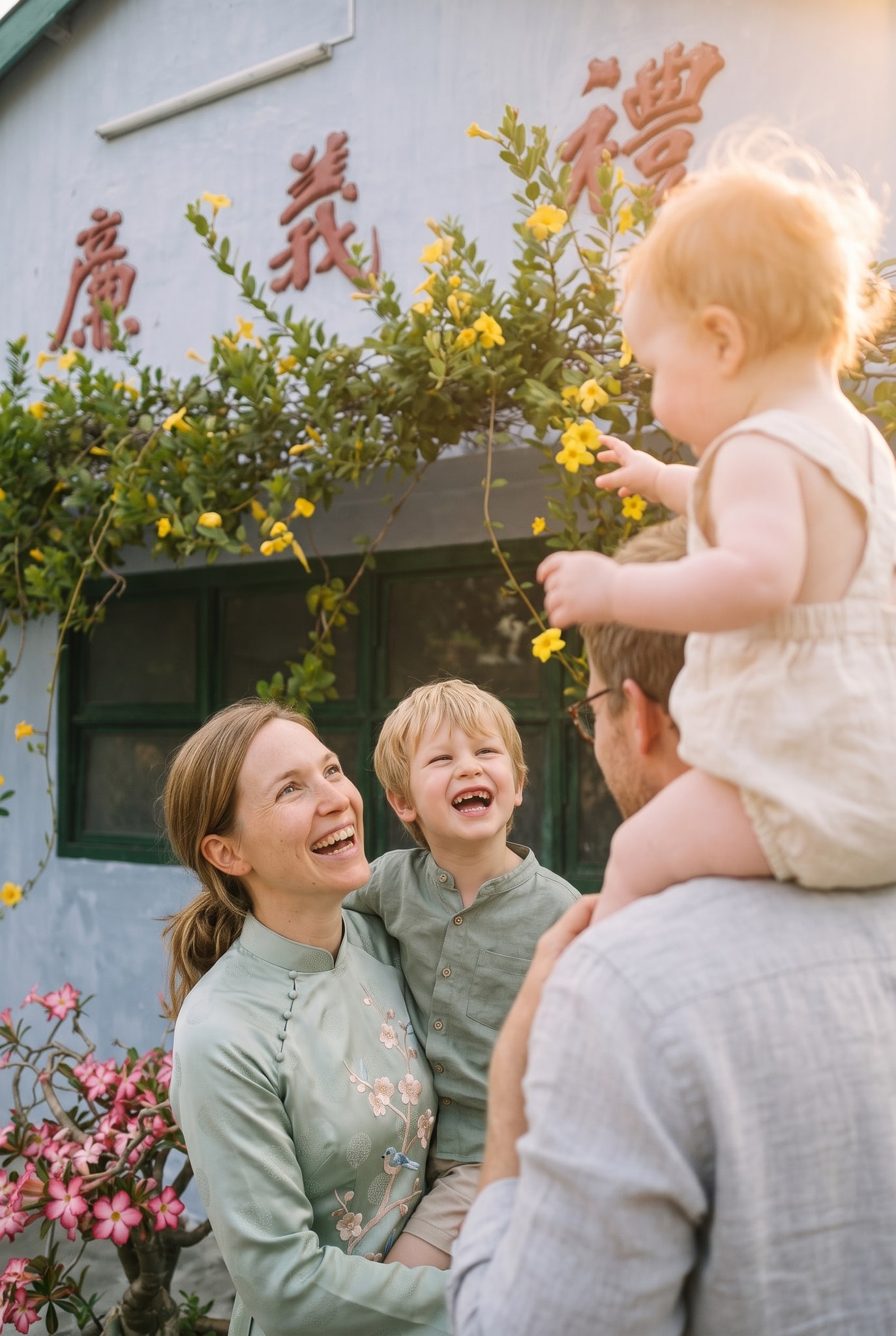
What should you check before booking an ao dai rental?
Fitting & sizing:
- Confirm your measurements (bust, waist, inseam, height) in cm; the tailor adjusts same-day if needed.
- Try it on; a proper ao dai hugs your waist and shoulders, not too tight.
- Ask how much adjustment is included (most shops offer 1–2 free tweaks).
Deposit & duration:
- Understand the deposit amount (usually 30–50% of rental cost) and refund policy.
- Confirm rental hours: same-day return, overnight, or 24-hour?
- Ask about late fees (typically charged per hour).
Condition & damage:
- Inspect the dress for stains, tears, odors, or loose threads before accepting.
- Ask what counts as "normal wear" vs. damage (minor wrinkles ≠ damage; rips, stains, odor = charges).
- Request a written condition checklist.
Styling & accessories:
- Confirm what's included: dress, trousers, belt, or add-ons like conical hat, scarf, jewelry?
- Ask for hair/makeup advice or vendor referrals (many shops partner with stylists).
- Clarify if alterations (hem, tuck, tie) are free or cost extra.
Delivery & logistics:
- If renting in a different city than your hotel, does the shop deliver? (Most do, for a small fee.)
- Get an emergency contact (WhatsApp, phone) in case of issues on the day.
- Ask for return instructions and late-night drop-off options.
Questions to ask:
- "How much is the deposit, and when is it refunded?"
- "What counts as damage vs. normal wear?"
- "Is styling help included, or do I hire a separate stylist?"
- "Can you adjust the dress same-day?"
- "What's the cancellation policy?"
📍 See rental by city
---
What to pack for temples, beaches, and indoor dining in summer Vietnam?
Temple visits (Hanoi, Hoi An, Ho Chi Minh City):
- Long trousers or maxi skirts (knee coverage mandatory).
- Loose, long-sleeved shirt (protects skin, shows respect).
- Lightweight scarf for shoulders if wearing sleeveless.
- Socks (you'll remove shoes at entrances; bare feet on hot pavement hurt).
- Hat and sunscreen (courtyards have little shade).
Beach days (Da Nang, Nha Trang, Phu Quoc):
- Lightweight cover-up (linen shirt, sarong, or thin kaftan).
- Rash guard or swim shirt if sensitive to sun.
- Flip-flops with grip (rocks and shells are sharp).
- Reef-safe sunscreen; locals protect marine ecosystems.
- Lightweight scarf for hair and neck.
Restaurants, malls, indoor spaces:
- Bring a lightweight cardigan or thin jacket (air-con is intense; expect 18–20°C indoors).
- Wear closed-toe shoes or dressy sandals (temples, upscale venues prefer shoes).
- Avoid loud patterns or overly casual wear at fine-dining restaurants.
How does Ao Dai Diaries' ao dai rental process work, step by step?
Step 1: Browse & contact — Visit how it works or message +84 338 762 340 (WhatsApp, Zalo) with your dates, city, and occasion.
Step 2: Fitting appointment — Come to the shop (or they arrange a meeting point) with measurements or in person. Staff show you colors, styles, and fabrics. Try on 2–3 dresses.
Step 3: Styling consultation — Choose accessories, hat, and get advice on hair and makeup. Staff recommend a professional stylist if needed.
Step 4: Confirm details & deposit — Agree on rental duration, delivery, and pay deposit. Receive a receipt and the shop's emergency contact.
Step 5: Collect (or receive delivery) — Same-day or next morning, collect the dressed (or receive it at your hotel). Staff do a final fit check.
Step 6: Wear & enjoy — Take photos, attend events, celebrate. Treat the dress as you would your own clothes (normal wear is fine).
Step 7: Return — Return clean or lightly soiled (light sweat, dust is normal). Staff inspect and refund the deposit within 24–48 hours.
📍 Ao dai rental in Hanoi, Ho Chi Minh, Hoi An, Da Nang
---
What's a realistic packing list for summer in Vietnam?
Tops (7 pieces):
- 4 loose cotton/linen short-sleeved shirts.
- 2 long-sleeved lightweight shirts (temples, UV protection).
- 1 moisture-wicking athletic top (if hiking or touring outdoors).
Bottoms (3 pieces):
- 2 lightweight cotton or linen trousers (neutral colors: white, beige, khaki).
- 1 knee-length cotton skirt or capris.
Underwear & socks (7 sets + 3 pairs socks):
- Moisture-wicking briefs or boxer-briefs (wash daily if possible).
- Lightweight socks for temples and flights.
Outerwear (1 piece):
- 1 lightweight cardigan or thin shirt jacket (for over-air-con indoor spaces).
Footwear (3 pairs):
- 1 pair closed-toe walking shoes (breathable mesh, supportive).
- 1 pair temple-appropriate sandals or slip-ons (easy to remove).
- 1 pair casual flip-flops or beach sandals.
Accessories:
- 2 lightweight scarves or sarongs (sun, temple cover, fashion).
- 1 wide-brimmed hat or packable baseball cap.
- 1 belt (neutral color, for trousers).
Sleepwear (2 sets):
- Lightweight cotton shorts + t-shirt, or thin pajama pants.
Swimwear (1–2 pieces):
- Quick-dry swim shorts or one-piece.
- Rash guard or cover-up (sun protection).
Extras:
- Lightweight rain jacket or packable poncho (monsoon season = sudden downpours).
- Compact umbrella (doubles as sun shade).
- Moisture-absorbing foot powder or antiperspirant spray.
- High-SPF sunscreen (reef-safe, high UV-UVA).
- Blister-prevention tape and foot care (new sandals + humidity = blisters).
What NOT to pack:
- Heavy jeans, wool, denim jackets, formal shoes (unwearable; waste space).
- Thick sweaters or winter layers (hotels have heat; you won't need them).
- Excess jewelry or valuables (heat, humidity, and theft risk).
---
Final: What to check before you buy or rent summer wear for Vietnam?
Fabric check:
- Touch it. Is it stiff, scratchy, or limp? (Stiff = heavy; limp = weak. Choose supple cotton/linen.)
- Check the care label: "100% cotton" beats blends. Linen requires ironing but breathes best.
Fit check (before packing):
- Wear the shirt around your home for 1 hour. Does it cling? Ride up? Feel restrictive? (Return it.)
- Sit, squat, and raise your arms. Seams shouldn't pull or gap.
- Trousers should sit at your natural waist, not tight at the hips (airflow matters).
Ao dai rental check (before confirming):
- Cleanliness: No stains, odors, or discoloration.
- Fit: Waist snug but not tight; shoulders relaxed; hem touching your shoes (ao dai should be floor-length).
- Accessories: Confirm what's included (belt, socks, hat, scarf).
- Written agreement: Get a photo or receipt listing the dress color, size, condition, deposit, return date/time, and damage terms.
If renting in multiple cities:
- Book in advance (2–3 days) if traveling Hanoi → Da Nang → Ho Chi Minh; each city has its own rental shops.
- Check rental options by city; confirm if your hotel city offers same-day or needs advance notice.
---
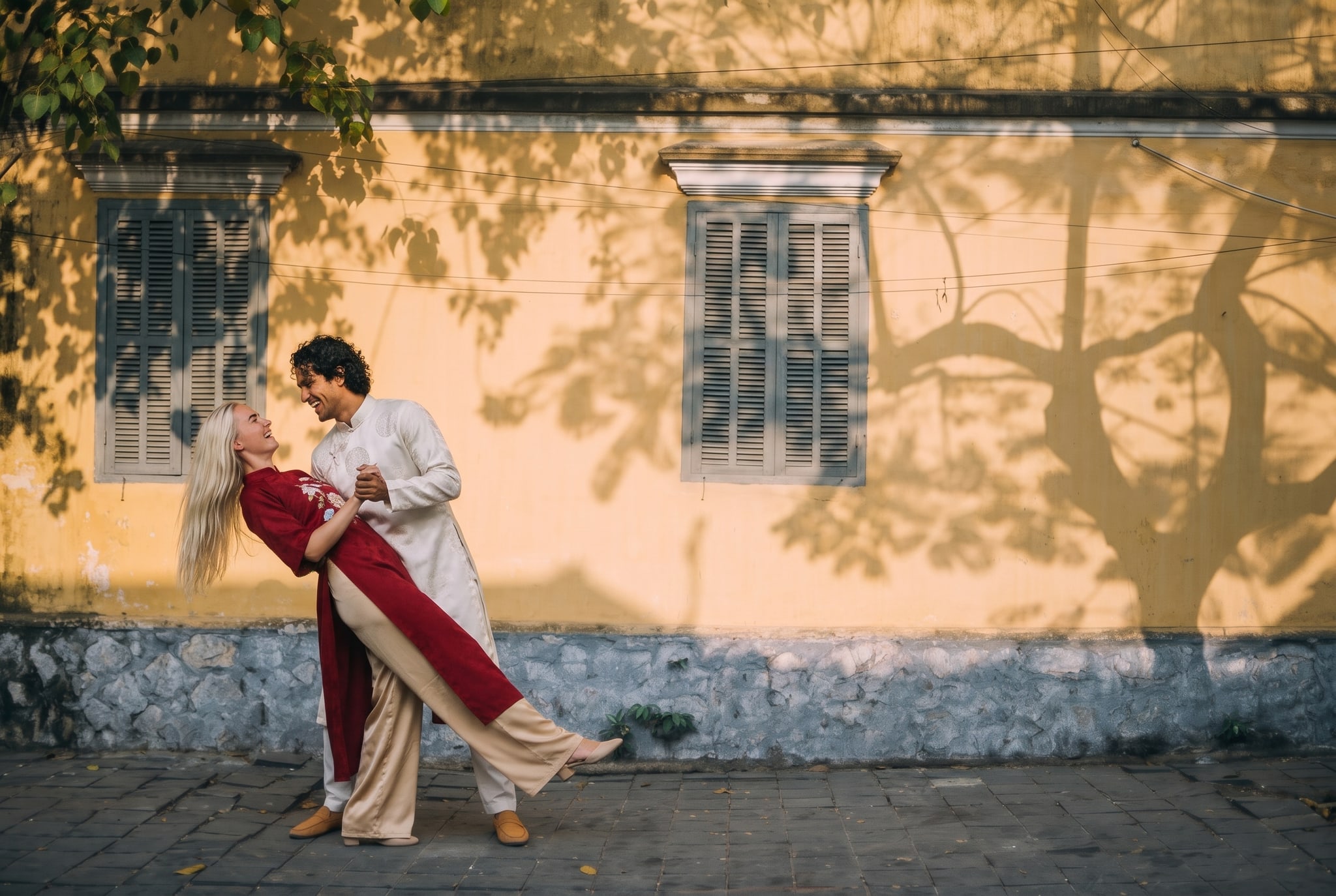
Frequently asked questions
Can I wear shorts or sleeveless tops in Vietnam summer?
Shorts above the knee and bare shoulders are fine for tourist areas, beaches, and casual streets. At temples, pagodas, and spiritual sites, cover knees and shoulders out of respect. Locals dress more conservatively; immodest clothing may draw stares. Pack layers (light scarf, thin shirt) for sacred spaces.
Is renting an ao dai worth it if I'm only visiting for 3 days?
Yes, especially for a specific event (wedding, photoshoot, Tet celebration). Rental costs less than buying, saves luggage space, includes professional fitting and styling advice, and supports local artisans. Even a 4–8 hour rental for one occasion is worthwhile for the experience and photos.
What's the difference between summer ao dai and regular ao dai?
Summer ao dai use lighter fabrics (cotton, cotton-silk blend) vs. heavier silk brocade for winter. Lighter versions cost the same to rent; colors are often brighter (pastels, vibrant hues) to reflect heat. Fitting is identical. Ask the rental shop which styles suit the season when booking.
How do I prevent heat rash and chafing in Vietnam's humidity?
Wear moisture-wicking cotton underwear, change into dry clothes after sweating, and apply antiperspirant or moisture-absorbing powder to chafe-prone areas (inner thighs, underarms, heels). Shower twice daily if possible. Loose, breathable garments reduce friction. If rash develops, keep the area dry and wear loose clothing until it clears.
Can I return an ao dai late or extend the rental?
Contact the rental shop immediately via WhatsApp/Zalo (+84 338 762 340) or their contact number. Most shops allow extensions if the dress is available, charging a late fee (usually hourly or per day). Some offer 24-hour + 4-hour grace periods. Always confirm the return deadline and any costs upfront to avoid surprises.
What should I do if the ao dai tears or gets stained during my rental?
Stop wearing it and contact the shop's emergency number. Minor stains from sweat, dust, or food may be forgiven as normal wear. Tears, burns, bleach stains, or odors typically incur a damage fee (deducted from your deposit). Prevent damage by avoiding eating in the dress, sitting carefully, and handling it gently. Get a written "condition checklist" before rental to avoid disputes. === 👗 Rent your ao dai — WhatsApp/Zalo +84 338 762 340 📍 See rental by city
Frequently asked questions
Can I wear shorts or sleeveless tops in Vietnam summer?
Shorts above the knee and bare shoulders are fine for tourist areas, beaches, and casual streets. At temples, pagodas, and spiritual sites, cover knees and shoulders out of respect. Locals dress more conservatively; immodest clothing may draw stares. Pack layers (light scarf, thin shirt) for sacred spaces.
Is renting an ao dai worth it if I'm only visiting for 3 days?
Yes, especially for a specific event (wedding, photoshoot, Tet celebration). Rental costs less than buying, saves luggage space, includes professional fitting and styling advice, and supports local artisans. Even a 4–8 hour rental for one occasion is worthwhile for the experience and photos.
What's the difference between summer ao dai and regular ao dai?
Summer ao dai use lighter fabrics (cotton, cotton-silk blend) vs. heavier silk brocade for winter. Lighter versions cost the same to rent; colors are often brighter (pastels, vibrant hues) to reflect heat. Fitting is identical. Ask the rental shop which styles suit the season when booking.
How do I prevent heat rash and chafing in Vietnam's humidity?
Wear moisture-wicking cotton underwear, change into dry clothes after sweating, and apply antiperspirant or moisture-absorbing powder to chafe-prone areas (inner thighs, underarms, heels). Shower twice daily if possible. Loose, breathable garments reduce friction. If rash develops, keep the area dry and wear loose clothing until it clears.
Can I return an ao dai late or extend the rental?
Contact the rental shop immediately via WhatsApp/Zalo (+84 338 762 340) or their contact number. Most shops allow extensions if the dress is available, charging a late fee (usually hourly or per day). Some offer 24-hour + 4-hour grace periods. Always confirm the return deadline and any costs upfront to avoid surprises.
What should I do if the ao dai tears or gets stained during my rental?
Stop wearing it and contact the shop's emergency number. Minor stains from sweat, dust, or food may be forgiven as normal wear. Tears, burns, bleach stains, or odors typically incur a damage fee (deducted from your deposit). Prevent damage by avoiding eating in the dress, sitting carefully, and handling it gently. Get a written "condition checklist" before rental to avoid disputes. === [👗 Rent your ao dai — WhatsApp/Zalo +84 338 762 340](https://wa.me/84338762340) [📍 See rental by city](/rent)
Dozens of colours, all sizes XS–XXL, delivered to your hotel in Hanoi, Saigon, Hoi An or Da Nang. One WhatsApp or Zalo message.
More guides
You might also like
The ao dai is Vietnam's iconic silk dress, worn for celebrations and formal occasions. Ao Dai Diarie
May is Vietnam's hottest month before monsoon season. We'll help you choose the right outfit—whether
December weather in Vietnam is cool and dry—ideal for wearing the ao dai. Here's what suits the seas