guide/ao-dai
What to Wear Travelling in Vietnam: Ao Dai vs. Casual (2026 Guide)
Ao Dai Diaries team · All guides →
Travellers in Vietnam wear lightweight cotton or linen for daily heat (28–35°C year-round), but visiting temples, weddings or Tet celebrations calls for modest, respectful dress. An ao dai—Vietnam's iconic long tunic and trousers—is the safest, most photogenic choice for formal occasions and cultural sites; you can rent one same-day in Hanoi, Saigon, Hoi An or Da Nang through Ao Dai Diaries rather than buy and pack. Casual tourists wear breathable shorts, t-shirts and sandals in markets and beaches, but temples require covered shoulders and knees. Bring a lightweight scarf or sarong (doubles as sun protection and temple cover), waterproof bag for monsoon months, and closed-toe shoes for temple steps. Budget 2–3 pairs of shoes and one dressier outfit; rental is 90% cheaper than buying. Always check the venue's dress code before arrival.
Lightweight cotton or linen is essential for Vietnam's tropical climate, but travellers often pack too much formal wear and regret it. The real question isn't what looks good—it's what keeps you cool, respects local culture, and works across temples, night markets, beaches and family dinners. This guide helps you choose between buying, packing and renting, with honest trade-offs.
Why casual summer clothes fail in Vietnamese temples and formal events
Vietnam's temple etiquette is strict: shoulders, chest and knees must be covered. Sleeveless tops, short shorts and beach wear are disrespectful and may prevent entry. Casual travellers who show up in vests and briefs waste time buying a scarf at the gift shop or turning back. Formal events—weddings, Tet celebrations, family dinners—expect more; jeans and trainers signal you didn't prepare. The ao dai solves both: it covers everything, signals respect and looks authentic in photos. Renting beats packing because ao dais are bulky, wrinkle easily in luggage, and fit varies wildly (sizing is not standardised across makers). If you rent, you get a fitted garment pressed fresh each morning. Most temple visits don't require formal wear, but if you'll attend even one wedding or Tet gathering, rent an ao dai for 1–2 days instead of buying a dress or suit you'll wear once.
👗 Rent your ao dai — WhatsApp/Zalo +84 338 762 340
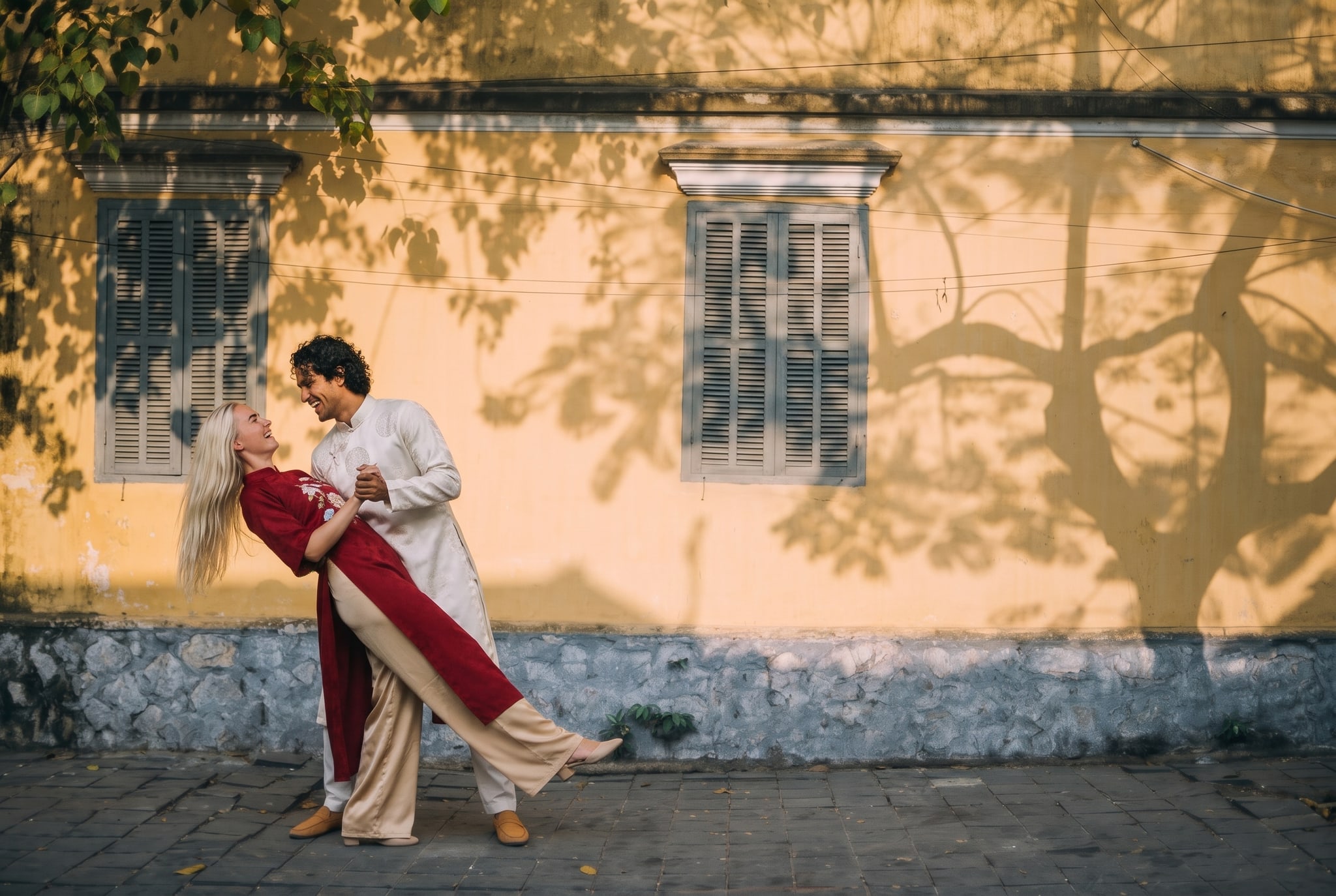
What does renting an ao dai include vs. buying one?
Rental includes the tunic, trousers, and sometimes a matching headpiece or belt; fitting is done in-store or by video call. See how Ao Dai Diaries rental works to understand the process: you book 2–7 days ahead, visit or have the garment delivered to your hotel, try it on (alterations take 1–2 hours), and return it clean within your rental window. Deposit is typically refundable and held via card (no cash charges reported from users). Buying means owning a single-colour piece you must pack, press and store—useful only if you plan multiple Vietnam trips or wear traditional dress at home. Rental in Hanoi, Saigon, Hoi An and Da Nang runs from budget (simpler fabrics, basic fitting) to premium (silk, bespoke embroidery, same-day delivery). Buying a handmade silk ao dai costs 5–10 times a 2-day rental; a machine-made version online (shipped to the US) arrives in 5–10 days but may not fit, and returns are slow. For travellers, rental is almost always the right call.
Climate and season: what layers and extras actually work
Vietnam is hot and humid year-round (25–35°C); monsoon (May–September in the south, August–October in the north) brings short, heavy rain. Pack:
- Cotton or linen shirts (breathes faster than synthetics; dries in 2 hours after sweat or rain).
- Lightweight scarf or sarong (covers shoulders in temples, doubles as sun protection, dries fast).
- Waterproof bag (for phone, cash, during monsoon).
- Closed-toe slip-on shoes (temples have steps; sandals slip on wet stone; trainers are too heavy).
- Lightweight trousers (linen or cotton, knee-length minimum for temples and formal events).
Avoid jeans (absorb sweat and take 8+ hours to dry), heavy fabrics, and white cotton (stains show fast). An ao dai handles heat better than Western formal wear because it's designed for Vietnam; the loose tunic lets air flow, and trousers protect your legs from sun. If you're in Vietnam May–September, expect daily rain at 2 p.m.; locals dry off in 30 minutes because cotton dries. Packing one oversized linen shirt lets you cover up quickly without bulking luggage.
📍 See rental by city
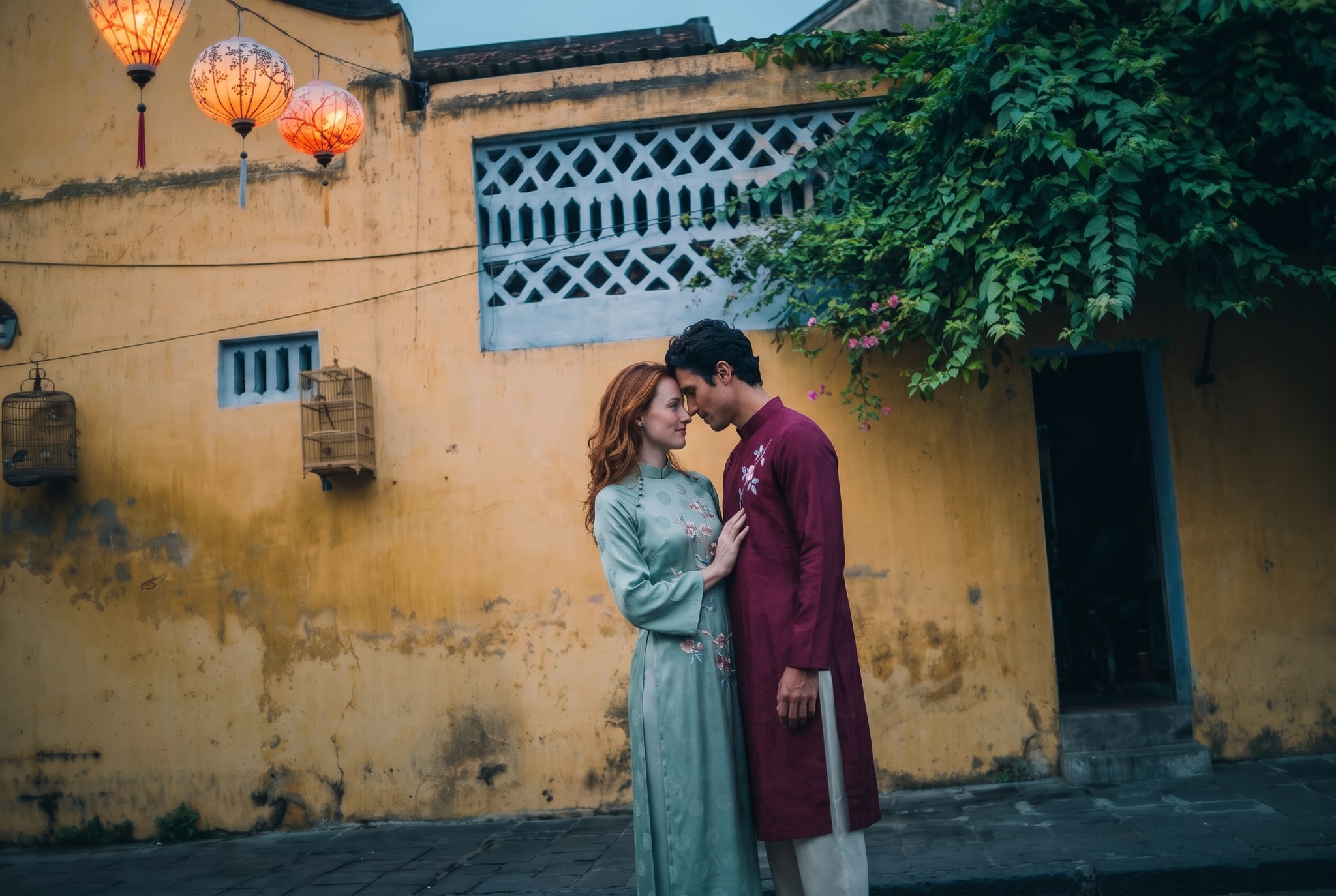
Comparing rented ao dai vs. buying travel wear: a quick decision table
| Scenario | Rented ao dai | Buying travel clothes | Buying ao dai online |
|---|---|---|---|
| Temple visit | ✓ Covers everything, respectful | ✗ May need scarf | ✓ Covers, but packing risk |
| Tet or wedding | ✓ Perfect fit, fresh, professional | ✗ Jeans/t-shirt look casual | ✓ Authentic, fits if you measure |
| Beach day | ✗ Not for water | ✓ Works; breathable | ✗ Not waterproof |
| Night market | ✓ Unique photo, comfortable | ✓ Practical, less memorable | ✓ Stands out; hard to move |
| Luggage weight | ✓ Nothing to pack | ✓ Lightweight cottons | ✗ Bulky, wrinkles |
| Cost (2-week trip) | ~see packages & prices total | see packages & prices | see packages & prices |
| Fit guarantee | ✓ Same-day fitting | N/A (varies by brand) | ✗ Returns difficult |
Why this matters: Temple and wedding visits are non-negotiable in Vietnam. Renting an ao dai for those 1–2 days costs less than one pair of jeans and keeps your luggage light. Buy casual clothes instead—cotton shorts, linen shirts, lightweight trousers. If you're confident in your measurements and have time for returns, buying online works; most travellers regret not renting when they see photos later.
By city: where to rent and what to wear
Rent an ao dai in Hanoi, Saigon, Hoi An or Da Nang. Each city has different styles:
- Hanoi: Formal, tailored silhouettes; many visitors rent for temple visits (Hoan Kiem Lake, Temple of Literature). Weather is cooler September–March; April–August is very humid. Wear breathable casual clothes daily; reserve ao dai for one temple or museum visit.
- Saigon (Ho Chi Minh City): Fastest pace; rentals often same-day. Demand spikes for Tet and weekends. Book ahead. Casual dress is more tolerated in the city; ao dai shines at family dinners or photoshoots. See Saigon rentals.
- Hoi An: Ancient town, UNESCO site. Temples and heritage homes have strict dress codes. Ao dai rental is popular for wandering the old quarter at sunset—locals and tourists alike wear them for evening strolls and photos. Check Hoi An options.
- Da Nang: Beach city; casual wear dominates. Rent an ao dai for formal dinners, weddings or city photoshoots rather than daily wear. Explore Da Nang rentals.
Book on WhatsApp/Zalo +84 338 762 340 with your arrival date, city, size (XS–XXL) and occasion. Video fitting is available if you can't visit in person.
What to check before you book or buy: a simple checklist
Before you commit, verify:
- Occasion & dress code: Is it a temple visit (modest required), wedding (formal ao dai recommended), beach (casual clothes fine), or casual stroll (either works)? Check with the host if unsure.
- Your measurements: Chest, waist, inseam, height. Ao dai sizing varies; get fitted in-store if possible, or provide measurements for video fitting.
- Rental window: How many days do you need it? Peak season (Tet, holidays) books fast; book 1 week ahead.
- Delivery vs. pickup: Is your hotel accessible? Will you travel between cities during the rental? (Returning to a different city may incur fees.)
- Colour & style: Do you want traditional (silk, embroidered) or contemporary (simpler, lighter fabrics)? Traditional feels more authentic but is heavier; contemporary works for hot days.
- Care: Rental ao dais are already cleaned and pressed. Just avoid spills and return on time. If buying, dry-cleaning costs money and time.
📸 Ao dai + photoshoot packages
Most issues arise from underestimating travel time (allow 30 minutes to pick up and try on) or forgetting dress codes (call ahead to confirm). Ao Dai Diaries holds a refundable deposit to ensure garments are returned clean; no damage charges have been reported as long as you return within the rental period.
Frequently asked questions
Do I really need to wear an ao dai if I'm just visiting temples as a tourist?
No. Temples require covered shoulders and knees, which any long-sleeved shirt and trousers satisfy. An ao dai is respectful and photogenic, but a scarf over a t-shirt works. Rent only if you want the cultural experience or photos.
What's the best time of year to visit Vietnam, and does it change what I pack?
October–April is coolest (18–28°C) and driest; pack light layers. May–September is hot, humid, and rainy; bring waterproof bag and quick-dry fabrics. Year-round: breathable cotton, scarf, closed shoes. Ao dai renting is easier October–April because fewer tourists crowd same-day bookings.
How much does ao dai rental cost compared to buying one online?
Rental is typically 1/5 to 1/10 the cost of buying. Exact prices vary by city and fabric; book to confirm. Buying online is cheaper long-term only if you wear ao dai at home or make multiple Vietnam trips.
Can I wear an ao dai to a beach or swimming?
No. Ao dais are not waterproof and take hours to dry. Wear casual swimwear or beach linen. Reserve ao dai for temple visits, dinners, photoshoots, and walks.
What if my ao dai doesn't fit after I rent it?
Most rentals include in-store or video fitting before you commit. If you book same-day without fitting, alterations (hemming, waist adjustment) take 1–2 hours on-site. Return within your rental window; deposits are refunded if the garment is returned clean and on time.
Do I need to tip or pay extra when I return the ao dai?
No. Rental price is all-inclusive. Tipping is appreciated but not required. Just return clean and on time; late returns may incur daily fees per your agreement.
Dozens of colours, all sizes XS–XXL, delivered to your hotel in Hanoi, Saigon, Hoi An or Da Nang. One WhatsApp or Zalo message.
More guides
You might also like
The ao dai is Vietnam's iconic silk dress, worn for celebrations and formal occasions. Ao Dai Diarie
May is Vietnam's hottest month before monsoon season. We'll help you choose the right outfit—whether
December weather in Vietnam is cool and dry—ideal for wearing the ao dai. Here's what suits the seas